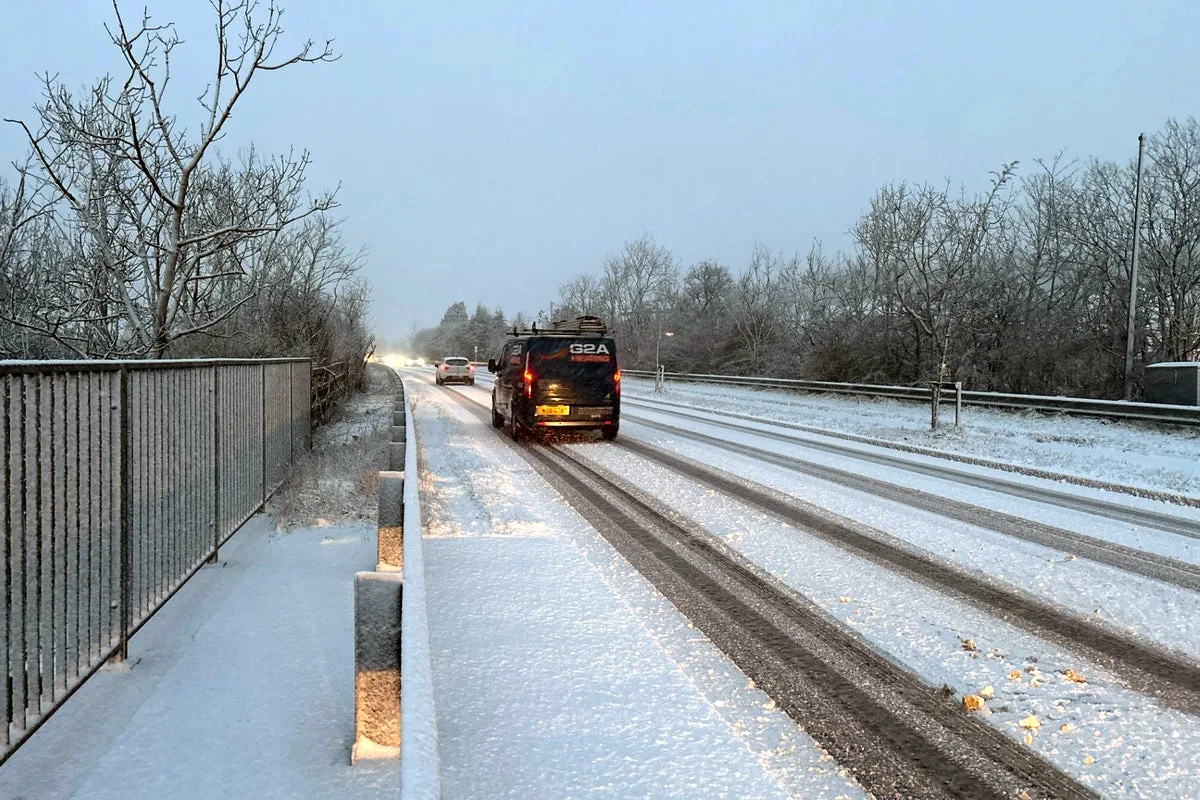
Storm Goretti has caused widespread disruption across the UK, with gusts of up to 99mph recorded and more than 65,000 homes losing power in southwest England alone. The Met Office issued a rare red weather warning for the Isles of Scilly and Cornwall, indicating a risk to life and substantial disruption to travel and energy supplies.
Emergency alerts were sent to mobile phones in the affected areas, sounding an alarm even if devices were set to silent. National Grid reported that over 65,000 properties in southwest England, 11,000 in the West Midlands, and 2,600 in Wales were without power as of Thursday.
The storm, described as a 'weather bomb' due to rapid pressure drops, brought a mix of violent winds, ice, heavy snow, and rain. An amber warning for snow was in place across a large swathe of the UK from southeast England to south Wales and southwest England to Yorkshire and Scotland, with up to 30cm expected in the Midlands on Friday.
Travel chaos ensued, with all trains in Cornwall suspended from 6pm on Thursday, and services on several Devon routes also cancelled. Avanti West Coast cancelled one in three trains between London, Birmingham, and Manchester. British Airways cancelled 30 flights to and from London Heathrow. The RAC urged drivers to avoid roads in red warning areas, warning of falling trees and cars being buffeted by gusts.
In Scotland, more than 250 schools remained closed for a fifth day due to intense snow and ice. Dozens of schools in Cornwall finished early on Thursday, and others in the Midlands and Wales decided to close on Friday. Met Office chief forecaster Neil Armstrong described Storm Goretti as a 'multi-hazard event', with significant impacts expected from snow in parts of Wales and the Midlands, and very strong winds in the far southwest.