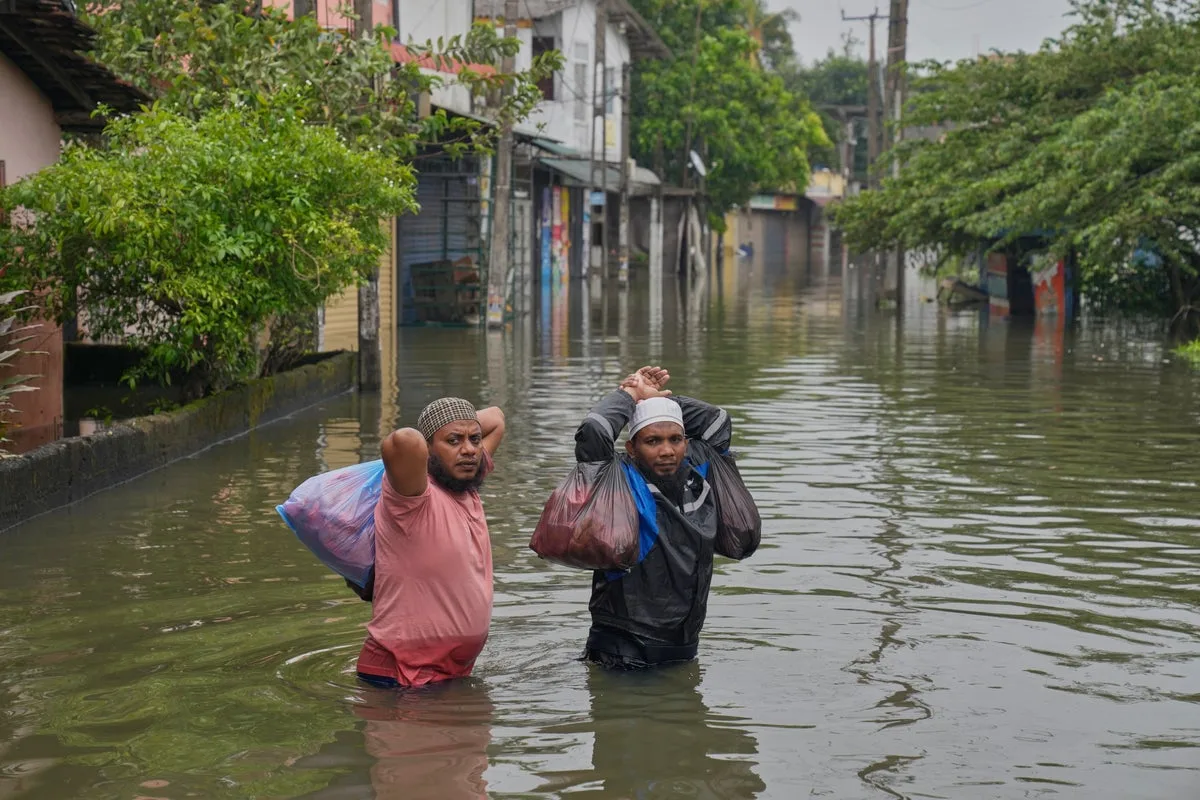
Authorities in Sri Lanka are racing to rescue hundreds of missing people as the death toll from Cyclone Ditwah rose to 366, making it one of the worst disasters in the island's history. Satellite images from Planet Labs show the Kelani River bursting its banks, submerging low-lying areas. More than one million people have been affected, with nearly 218,000 forced into 1,275 shelters, according to the Disaster Management Centre.
President Anura Kumara Dissanayake described the event as the 'largest and most challenging natural disaster in our history', surpassing the 2004 tsunami in damage. He appealed for international aid, noting the severe destruction across the nation. Flooding and landslides have been reported in over half of Sri Lanka's 25 districts, prompting a military deployment for rescue operations.
Over 24,000 police, army and air force personnel, aided by Indian aircraft, are searching for 367 missing people. More than 120 people were airlifted after water breached the Mavil Aru Reservoir dam, and 2,000 others moved to higher ground. In Colombo, dozens of families remain trapped by floodwaters.
The irrigation department reported the Kelani River's water level receding but warned residents in lower catchment areas to stay vigilant. The situation is expected to improve as the cyclone moves towards India. Survivors like Siriyalatha Adhikari, 74, lost everything, saying, 'We didn’t have time to remove anything from the house.'
The cyclone deals a heavy blow to Sri Lanka's fragile economy, still recovering from the 2022 crisis. In Kelaniya, cooked food is supplied by state agencies and donations, but many report inadequate help. Sunethra Priyadarshani, 37, rescued after two days trapped with her sister and four children, said, 'We only have the clothes we were wearing. We really need help.'