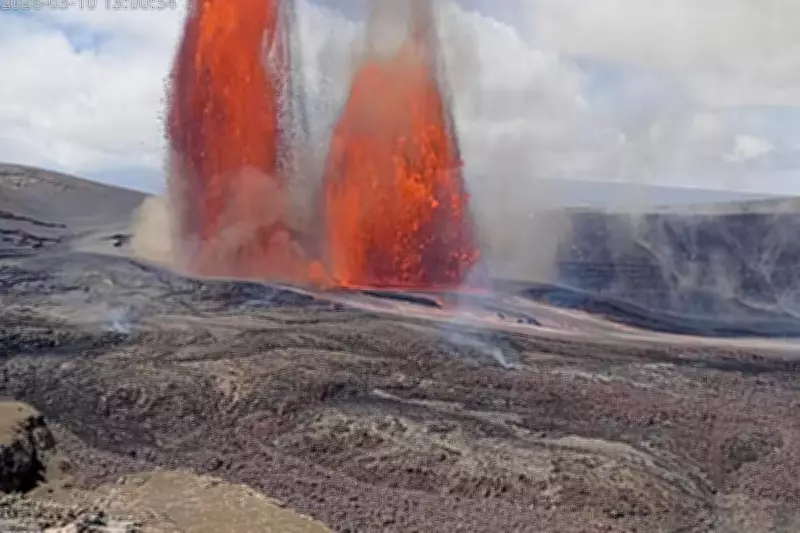
Hawaii's Kilauea volcano has erupted with spectacular lava fountains reaching heights of up to 1,000 feet (300 meters), triggering temporary closures at Hawaii Volcanoes National Park and a key highway on the Big Island. The eruption, which began on Tuesday morning, marks the 43rd episode since the volcano's activity started in December 2024, with falling ash and glassy volcanic fragments posing risks to nearby communities.
Eruption Details and Immediate Impacts
The latest fountaining episode sent bright-red lava and smoke soaring into the sky, as captured on livestream footage. While the molten rock remains confined within Kilauea's summit crater and does not currently threaten homes or buildings, it has caused significant disruptions. The volcanic fragments, known as tephra, have led to the temporary closure of areas around the summit in Hawaii Volcanoes National Park and a partial closure of Highway 11, a vital route encircling the island.
Safety Measures and Community Response
In response to the eruption, Hawaii County officials have opened a shelter at a district gymnasium for residents and tourists affected by the road closures or falling tephra. Although no one had used the shelter shortly after its opening, according to county spokesperson Tom Callis, the precautionary measures highlight the potential dangers. The National Weather Service has issued an ashfall warning, as tephra can irritate eyes, skin, and the respiratory system, and may clog water catchment systems common in parts of the Big Island.

This is not the first time such eruptions have caused issues; during a previous episode, ash fell so heavily that county civil defense workers had to assist communities in cleaning up ash-coated homes. Kilauea, one of the world's most active volcanoes, has been captivating residents and visitors for over a year with its intermittent eruptions, though the duration of this latest fountaining remains uncertain, with past episodes lasting from a few hours to several days.