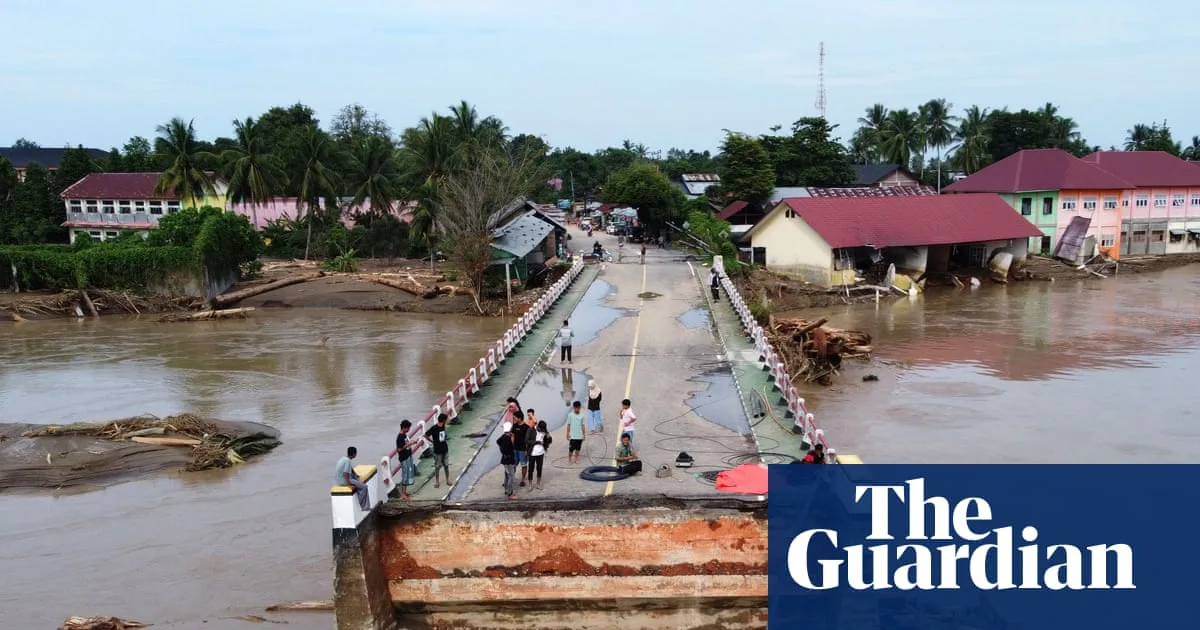
More than 1,100 people have died across Asia after torrential monsoon rains, compounded by tropical cyclones, caused devastating floods in Indonesia, Sri Lanka, Thailand, Malaysia and Vietnam. Survivors have described harrowing escapes as waters swept away homes and possessions.
In Indonesia's Aceh province, 63-year-old Aminah Ali spent 24 hours on her rooftop after floodwaters reaching three metres high inundated her village. 'I saw many houses being swept away,' she said. 'Now my house is ruined, full of mud. I never imagined a situation like this.'
Busra Ishak, also from Pidie Jaya, lost his house entirely. He survived by swimming to a coconut tree, where he clung for over 12 hours. 'There were hundreds of tons of logs, and even an elephant could be killed by the incredibly strong current,' he said. His older sister was killed in the disaster.
In southern Thailand's Hat Yai, Natchanun Insuwano was stranded with his parents for nearly three days with only one bottle of water. They had heeded local advice that water levels would be manageable, but by the time a national disaster agency ordered evacuation, it was too late. The family was rescued by a volunteer boat on Tuesday morning; his mother was unconscious but later recovered.
Another Hat Yai resident, Chutikan Panpit, was bitten by a Malayan pit viper while checking water levels and could not reach hospital for 32 hours due to the floods. 'I was scared of dying. My son just turned one. He just learned how to say mummy a few days earlier,' she said. She survived but feels lucky to be alive.
The failure of Thai authorities to provide adequate warnings has been strongly criticised. Waters have now receded in many areas, but tens of thousands of homes are damaged and the clean-up effort is immense. Debris and mud remain widespread, and many survivors have lost everything.