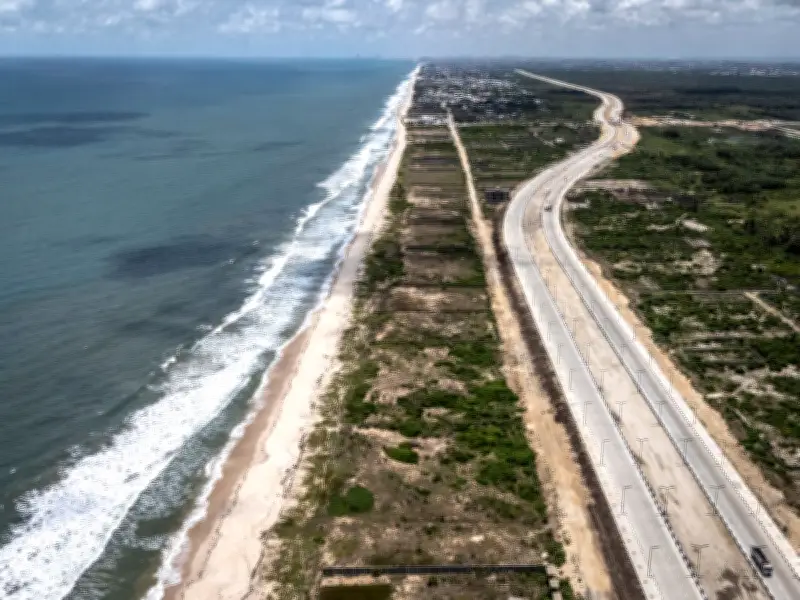
Nigeria has embarked on an ambitious £8.1 billion project to build a 430-mile coastal highway linking Lagos to Calabar, near the Cameroon border. The mega-road aims to transform the West African nation's transport infrastructure and boost tourism, but environmentalists warn it is highly vulnerable to rising sea levels.
Project Details and Economic Promise
The Lagos-Calabar Coastal Highway, championed by President Bola Tinubu, is expected to be completed by 2028. At a ceremony marking the opening of the first section, Tinubu declared: "We have a road that will outlive all of us here." The highway is designed to create Africa's largest economic corridor, stimulating development and improving transportation across the region.
The government will fund 30% of the $12 billion budget, with Hitech Construction Company Ltd. covering the rest. Hitech will recoup its investment through toll collections over 15 years. The company is also behind the Eko Atlantic mega-city, a $6 billion project protected by a five-mile concrete barrier.

Environmental Concerns
Environmentalists have strongly criticized the project. Nnimmo Bassey, former chair of Friends of the Earth International, called it "the very embodiment of climate denial." He noted rapid sea-level rise along Nigeria's coastline, warning the highway will be highly vulnerable. The fishing port of Aiyetoro lost 50 buildings in a single ocean surge in 2024 and has seen its population plummet from 30,000 to 5,000 due to coastal erosion.
According to a 2022 study in the Journal of African Earth Sciences, 89% of Lagos State's 180 kilometers of coastline receded by an average of 2.80 meters per year between 1973 and 2019. The highway will also cut through Stubbs Creek Forest in Akwa Ibom, a protected area home to endangered species. Nigeria has lost nearly 90% of its forest cover in the last 30 years, according to the Nigerian Conservation Foundation.
Mitigation Measures and Controversy
Hitech plans to protect the road with sea walls and natural barriers like mangroves and dunes to reduce erosion and absorb carbon. However, the environmental impact assessment, conducted after construction began, claims a 0.5-meter sea-level rise would not affect the project. It predicts a 0.48-meter rise with 1.5°C warming and 0.55 meters with 2°C. But IPCC forecasts suggest warming could exceed 3°C by 2100, leading to a rise of over 0.6 meters.
Despite the controversy, President Tinubu has made the highway a centerpiece of his re-election campaign, arguing it is vital for Nigeria's economic future. The project had been stalled for nearly 50 years before his administration pushed it forward.