Royal and Dutch marines saved the life of a climber found on Ben Nevis in a blizzard with “solid blocks of ice” clinging to his face. The man was discovered curled up in the snow on Britain’s highest mountain in sub-zero temperatures of -20C with the wind chill.
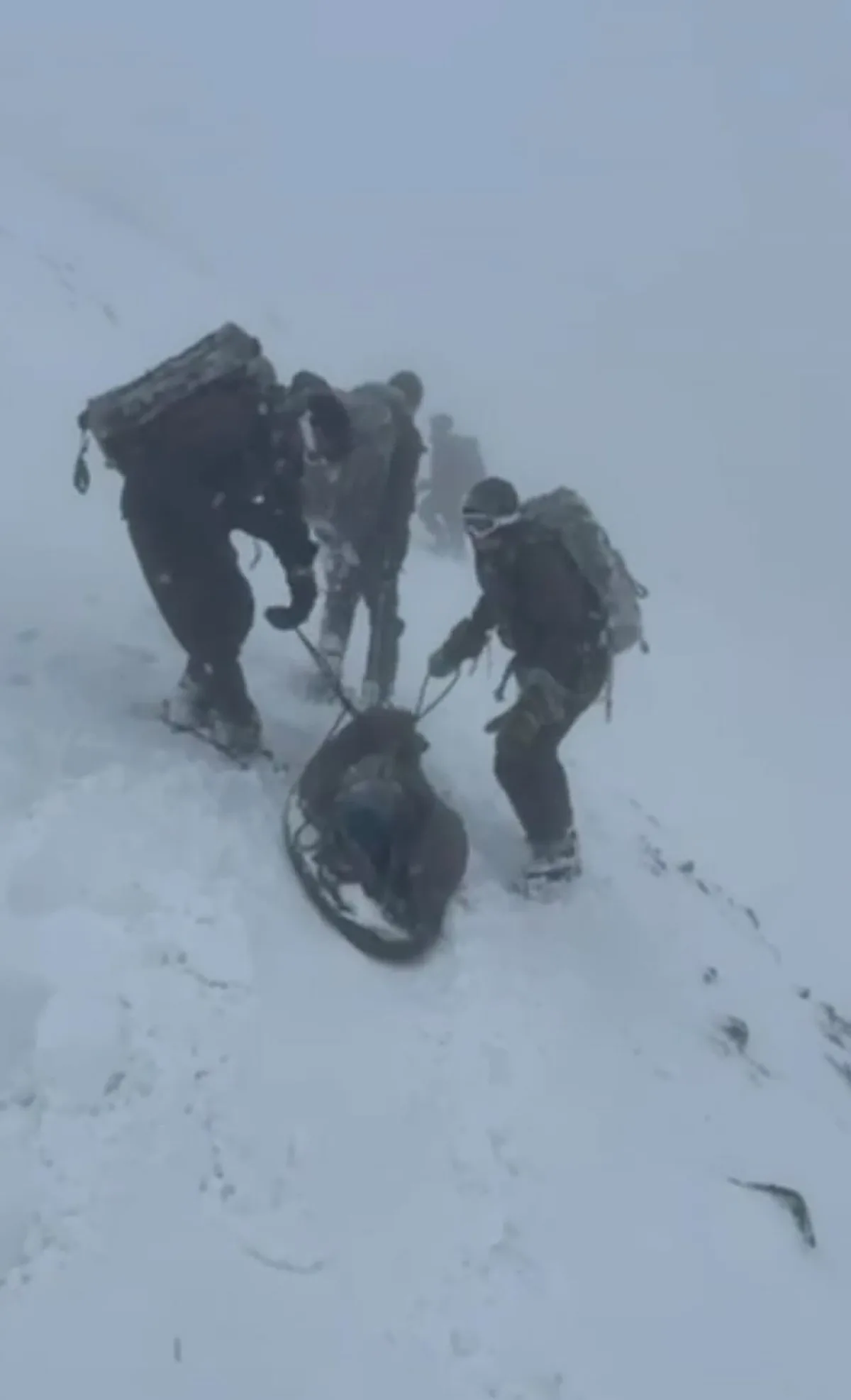
As the military team tried to help him down the mountain his condition worsened towards hypothermia. Eventually, they made a makeshift stretcher to carry him to safety.
“Solid blocks of ice clung to his eyebrows, hat, and gloves – evidence of long exposure to freezing conditions,” said Colour Sergeant McKenzie from the Royal Marines Reserve. “One walking pole was bent; the other appeared broken or fully collapsed. When spoken to, he revealed that he had become separated from his two friends and had no idea where they were.”

The climbing party, a mix of reservist green berets from Royal Marine Reserves Scotland and their counterparts from the Dutch Korps Mariniers, first hauled the climber down the slope. “The wind was biting and relentless, and based on conditions we had experienced earlier in the week during Royal Marines mountain training, we estimated gusts to be around 40 mph,” C/Sgt McKenzie added. “Combined with the summit temperature, this put the wind chill somewhere in the region of –15C to –20C, making any exposed skin sting almost instantly.”
The climber did not have crampons so slipped on the icy slope and all the marines were also starting to feel the effects of exposure. “During the final stop to fix a crampon, his deterioration became unmistakable. His posture sagged, his coordination faltered, and his responses slowed. Then he said he couldn’t bend his leg, a clear sign that cold, exhaustion, and exposure were now affecting his physical functions. He was entering hypothermia, and it was obvious he would not be walking in the immediate future,” said C/Sgt McKenzie.
The marines used a waterproof bivvy sack, ropes, a mat and a thick jacket to create an improvised stretcher to carry the climber down the mountain. “If we hadn’t seen him, he certainly would not have survived,” said Sgt Onno Lankhaar, section commander for the Dutch marines, who were in Scotland for Exercise Highland Warrior. Once the group reached the snowline, the climber was well enough to walk independently and was handed over to emergency services as a precaution. His two fellow walkers had made their way safely down the mountain.