
A full year has passed since catastrophic wildfires tore through Los Angeles communities, yet thousands of residents remain unable to return to their homes. New data reveals a stark reality of prolonged displacement and systemic recovery failures affecting countless families across the region.
The Lingering Aftermath of Destruction
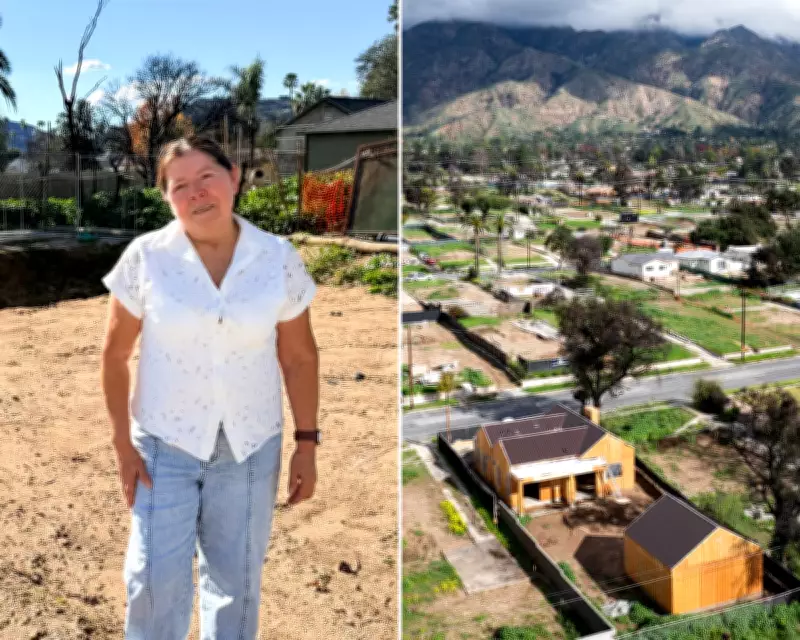
Esmeralda Rodas, 64, sits quietly on the barren plot where her Altadena home once stood, haunted by memories of the life she lost. In 1989, her husband Hector presented her with the modest house as a birthday gift—a cherished castle with windows overlooking the San Gabriel Mountains. Last January, those same mountains glowed ominously red as wildfires consumed their neighborhood, along with thousands of other structures across Los Angeles County.
Today, Esmeralda and Hector live in a borrowed house in nearby Glendale. "It's not mine," Hector, 67, says with palpable grief. "It's not what I worked for." Their story echoes throughout communities devastated by the Eaton and Palisades fires, among California's most destructive blazes on record.
Staggering Statistics of Displacement
A recent report from the Department of Angels, a nonprofit supporting wildfire survivors, reveals alarming figures. More than seven in ten residents from affected areas like Altadena and Pacific Palisades have not returned home. Among those planning to rebuild, only one in seven has actually begun construction. The fires destroyed over 16,000 structures, displacing tens of thousands who now live in temporary housing across California, other states, or even other countries.
"People are transitioning from being displaced to being homeless," warns Joy Chen, executive director of the Eaton Fire Survivors Network. With temporary housing benefits expiring and rebuilding delays mounting, many face increasingly precarious situations.
Systemic Barriers to Recovery
The path home remains obstructed by multiple challenges. Surging rent prices, bureaucratic permit delays, and contentious insurance battles create what survivors describe as an exhausting quagmire. On the fire anniversary this January, fewer than a dozen homes had been rebuilt in Los Angeles County's burn zones, despite thousands receiving construction permits.
Insurance disputes prove particularly devastating. Many survivors report delayed claims and inadequate damage estimates from insurers. Claire Thompson, 37, and her husband Tim Szwarc, 40, exemplify this struggle. While their Altadena home survived the flames, environmental tests revealed dangerous toxin levels. Their insurer, State Farm, has rejected the certified hygienist's report recommending remediation.
"This is what recovery looks like," says Thompson, balancing thick binders of correspondence and documentation at a recent survivors' press conference. The Department of Angels survey indicates up to 15% of survivors now struggle to feed their families and pay bills.
Toxic Realities and Financial Strain
Environmental contamination presents another hidden crisis. Most surviving homes in burn zones show elevated toxin levels, yet some residents have no choice but to inhabit these potentially hazardous spaces. Meanwhile, financial pressures mount relentlessly.
"Their trauma is growing every day," Chen explains. "They've blown through their time and savings, maxed out credit cards, and taken on crushing debt just to stay housed."
Varied Paths Forward
Recovery journeys diverge dramatically among survivors. In Pacific Palisades, Cherie Marquez, 51, continues living month-to-month in an Airbnb in Culver City—the most affordable option since her 1940s Craftsman-style home burned. Her property now sits as an empty lot filled with rainwater from recent storms, further delaying construction of the modular home she hopes will replace what she lost.
"I think I've been patient," Marquez says. "I don't want this construction piece to draw out." She aims to return by year's end, driven by longing for her neighborhood community.
Others have chosen more radical changes. John Kim, a licensed therapist and author, moved his family to Costa Rica after their Altadena home of four years burned. "The fires represent an untethering," Kim reflects from his new tropical setting. While acknowledging his relative privilege, he sees tragedy creating space for reinvention. "I think for many people, they're just going to do the best they can to create a life that starts to eclipse the old."
Community Transformation and Hope
Neighborhood dynamics shift as recovery stalls. Real estate investors have purchased up to 40% of fire-impacted lots, according to Redfin analysis, potentially altering community character permanently. For those remaining, nostalgic memories of unlocked doors, neighborhood bake-offs, and streets feeling like extended family contrast sharply with current realities.
Esmeralda and Hector Rodas have depleted their savings to make ends meet, their homeowners' insurance having been cancelled months before the fire—a common occurrence in high-risk zones. Yet on the anniversary of their loss, Esmeralda finds glimmers of hope as construction sounds echo nearby.
"I feel that there is hope," she says, her back to rising frames of a neighbor's new home. "And someday, we're gonna come back here." Her words capture the resilient spirit persisting amid one of Los Angeles' most challenging recovery efforts, where the definition of "home" continues evolving for thousands still displaced.




