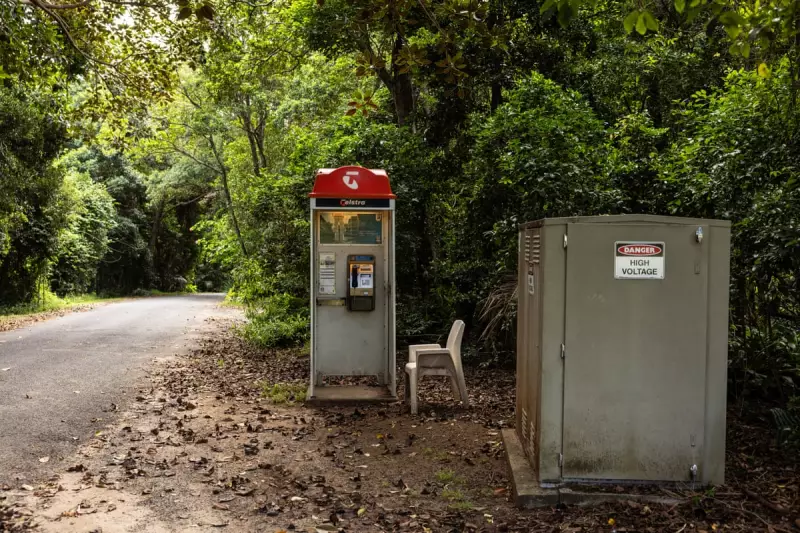
In an era where every digital interaction often carries a price tag, a simple, cost-free gesture can carry profound meaning. For one family, this came in the form of a child's delighted discovery: the ability to call Santa Claus from a public payphone, completely free of charge.
The Hidden Value of a Communication Safety Net
This festive feature highlights a significant, yet frequently overlooked, Australian policy. In 2021, Telstra, the nation's privatised telecommunications giant, made all local and national calls from its public payphones free. While this might seem an antiquated nod in a nation obsessed with mobile devices, it underscores a critical piece of social infrastructure.
Telecommunications are a fundamental public good, enabling connection, access to services, and personal security. This is starkly evident in crises; refugees fleeing conflict often cling to phones as vital lifelines. Recognising this, when Telstra was privatised, it was legally bound by a universal service obligation to maintain this network.

For many, mobile phones are ubiquitous. Yet, public phones remain essential for vulnerable populations, including people experiencing homelessness or those fleeing domestic situations where a personal device can be a weapon of coercive control. They also serve as a crucial backup for anyone who has lost a phone, had it stolen, or run out of battery during an emergency.
The Surprising Economics of Free Public Goods
Telstra's move to free calls was not purely altruistic; it was also economically astute. The company discovered that collecting and processing coins from payphones cost around $6 million annually, while only generating about $5 million in revenue. Eliminating fees simply made sound financial sense.
This case is part of a broader pattern where the marginal cost of providing universal access to a public good is far outweighed by the societal benefits. Cities worldwide have explored free or low-cost public transport for similar reasons. For instance, when Richmond, Virginia, introduced free buses, it improved scheduling and slashed enforcement costs related to fare evasion.
Other compelling examples include:
- Libraries abandoning late fines, as the cost of collection often exceeded the revenue and deterred patrons.
- Wales, Scotland, and Northern Ireland making medical prescriptions free, improving equity while reducing administrative costs of means-testing.
- Authorities providing free smoke alarms, proving more cost-effective than awareness campaigns alone.
Beyond Revenue: The True Measure of Public Good
The core value of these initiatives extends far beyond balance sheets. This summer, Australians will access countless free or heavily subsidised public goods: beaches, museums, public barbecues, and sports facilities like Queensland's famed $2 swimming pools.
These services foster community, improve equity, and enhance quality of life. The free payphone network, capable of connecting a child to Santa or a victim to emergency services, stands as a potent symbol of this principle. It is a tangible reminder that in a commercialised world, the greatest societal assets are often those we choose to share freely.
As Dr Cressida Gaukroger, an ethicist and public policy consultant, highlights, the benefits of such universal access are immense, providing a foundational layer of security and connection that the market alone cannot guarantee.