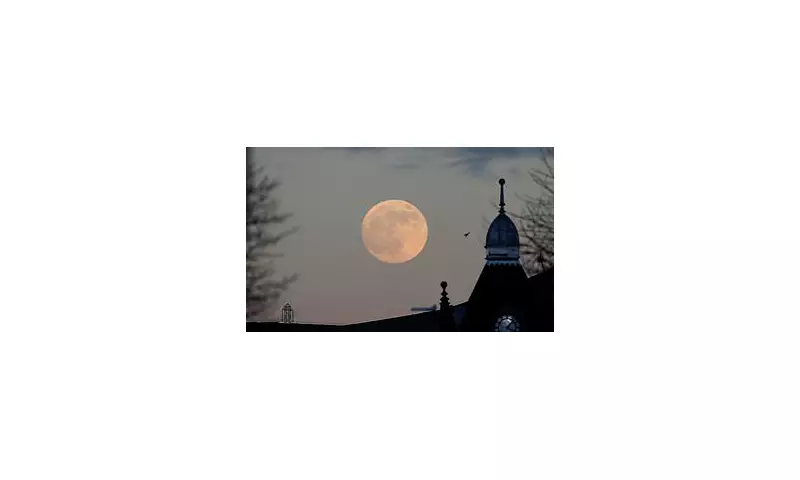
Skywatchers across the United Kingdom are in for a spectacular treat tomorrow evening as the first supermoon of the year, known as the Wolf Moon, rises with a rare triple brightness boost. This celestial event promises to be one of the biggest and brightest lunar displays of 2026.
A Rare Celestial Alignment
Tomorrow's full moon is not just any supermoon. A supermoon occurs when a full moon coincides with the moon's closest approach to Earth, or perigee. During this event, the moon will be approximately 225,130 miles (362,312 km) from our planet, making it appear about 14% larger and up to 30% brighter than a typical full moon at its furthest point.
However, astronomers highlight that two additional factors will amplify its brilliance. In a remarkable coincidence, the supermoon happens within hours of Earth reaching its annual closest point to the sun, an event called perihelion. At this time, sunlight reaching Earth is about 6.5% more intense, meaning the light reflected off the lunar surface is also stronger.

Perfect Winter Viewing Conditions
The third element in this triple boost is the UK's winter atmosphere. Cold, dry air allows more light to penetrate and causes less atmospheric disturbance. With high-pressure bringing clear, crisp conditions over much of the country, visibility is expected to be excellent. Those at higher altitudes, such as in national parks like Snowdonia, Exmoor, or the South Downs, will enjoy even clearer views above any low-lying haze.
Jess Lee, an astronomer at the Royal Observatory Greenwich, told the Daily Mail: "You don't need any special equipment to view a supermoon, and you don't need to travel outside of light-polluted areas. It's a lovely sight even from a city or a town." She confirmed the moon will be visible from around 16:00 on January 3rd until 09:00 the following day.
How and When to Watch
For the most dramatic view, look to the horizon shortly after moonrise. The 'moon illusion' makes our celestial neighbour appear significantly larger when it is low in the sky, often compared to familiar objects like trees and buildings. Moonrise in the UK will begin from approximately 15:15, with timings varying slightly by location.
The Met Office forecasts largely clear skies for most of England and Wales, with some patchy cloud in Scotland and northeast England. Stargazers are advised to check local forecasts and dress warmly, as yellow and amber snow and ice warnings are in effect for parts of the nation.
This Wolf Moon supermoon is a relatively rare occurrence, with only two more supermoons scheduled for 2026: the Beaver Moon on November 24th and the Cold Moon on December 24th. Don't miss this dazzling opportunity to witness one of the year's most luminous celestial events.