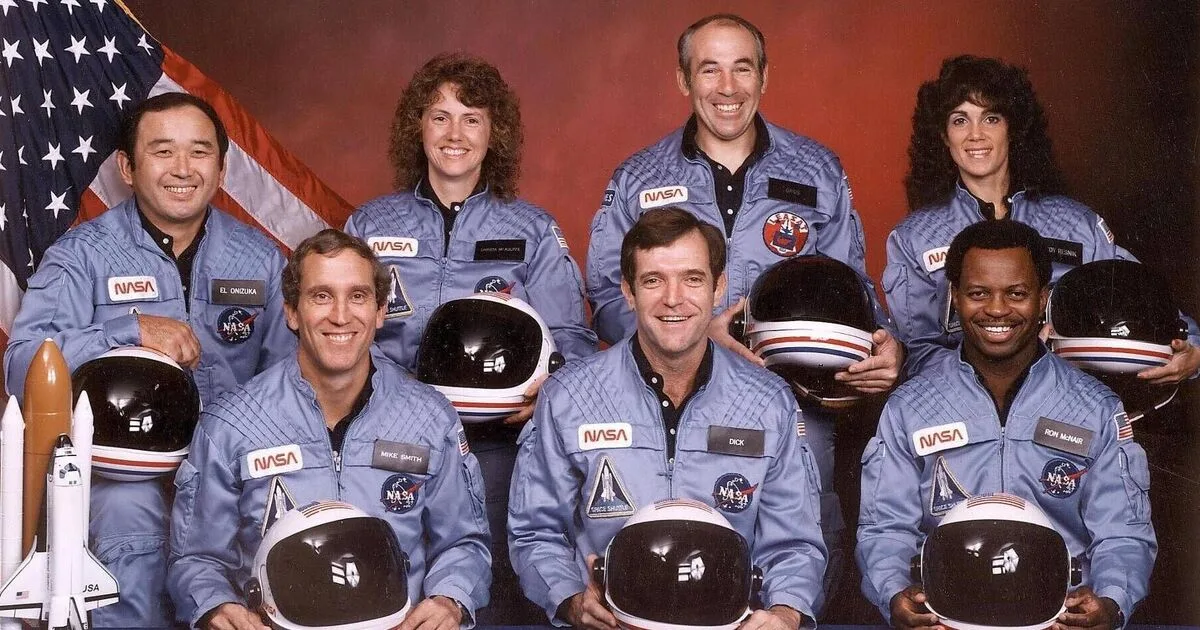
New evidence has emerged suggesting that the seven astronauts aboard the Space Shuttle Challenger may have survived the initial explosion and remained conscious during the final moments of the disaster. The shuttle broke apart 73 seconds after launch on 28 January 1986, killing all on board, but a report by Dr Joseph Kerwin indicates the explosion itself was not enough to cause death or serious injury.
The crew module was recovered from approximately 100 feet of water, 18 miles from the launch site. Dr Kerwin's report, released six months after the tragedy, concluded that the cause of death was inconclusive. He noted that the force of the explosion was insufficient to kill the crew, contradicting NASA's assertion that they died instantly.
Evidence suggests that several of the astronauts' emergency air packs had been manually activated. Three of the packs were found to have been triggered, indicating that the crew may have been alive and conscious after the breakup. Dr Kerwin proposed that a sudden drop in cabin pressure could have rendered them unconscious, but he also noted that the middeck floor showed no signs of damage from rapid pressure loss, suggesting a slower decompression that would have left them aware.

The Challenger disintegrated at 48,000 feet but continued to ascend for another 25 seconds before falling into the Atlantic. During this time, the crew may have been fully conscious, aware of their impending fate. The disaster was caused by a failed booster seal that led to a fuel tank rupture, engulfing the shuttle in flames.