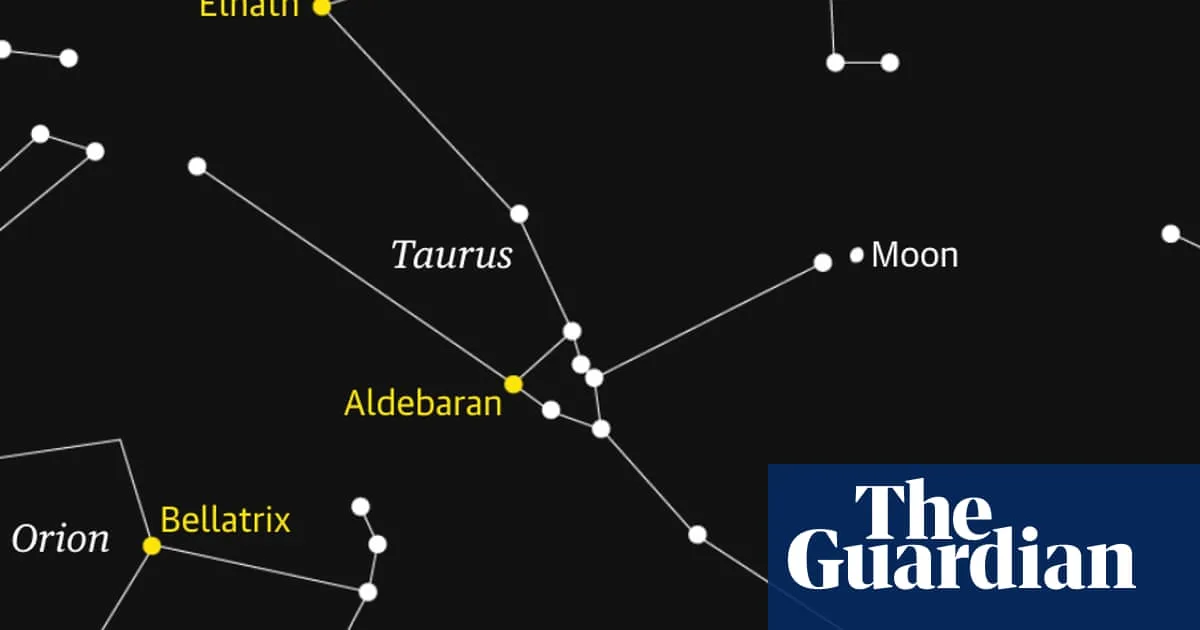
In a captivating celestial event, the moon is set to perform a rare occultation of the Pleiades star cluster on the night of 27 January. This astronomical phenomenon will see the moon temporarily obscure some of the brightest members of this iconic group, offering stargazers a unique opportunity to witness the dynamic interplay between our closest celestial neighbour and distant stellar siblings.
A Glimpse into the Seven Sisters
The Pleiades, often referred to as the seven sisters, reside approximately 440 light years away within the constellation of Taurus, the Bull. Renowned as one of the most recognisable structures in the winter sky, this star cluster comprises stars that all originated from the same colossal cloud of molecular gas. At a youthful age of around 100 million years, these stellar siblings remain tightly bound together, though they will eventually disperse across the galaxy over time.
The Occultation Event Explained
On 27 January, the moon will glide in front of the Pleiades, occulting or hiding its brightest stars from view for about an hour. In stark contrast to the distant cluster, the moon is merely a little over a light second away, allowing observers to track its motion against the starry backdrop over the course of an hour. To fully appreciate this event, enthusiasts are encouraged to dedicate an hour or two in the late evening to watch as the moon traverses through the cluster.
The dark side of the moon will be facing its direction of motion, making it relatively easy to see the stars 'wink out' as they disappear behind the lunar disk. Approximately an hour later, they will reappear from behind the opposite hemisphere of the moon, creating a mesmerising visual spectacle.
Viewing Details and Recommendations
The chart provided illustrates the view looking south-southeast from London at 9pm on 27 January, which is roughly 10 minutes before the first of the seven sisters, Taygeta, vanishes from sight. However, it is crucial to check online for localised timing information, as even across the UK, the exact times of disappearance and reappearance can vary by about 15 minutes due to geographical differences.
This occultation serves as a reminder of the intricate motions within our solar system and the broader cosmos, highlighting the Pleiades' enduring allure in astronomical observation.