Quake Brutalist Jam 3: The Underground Met Gala of Concrete Murderzone Design
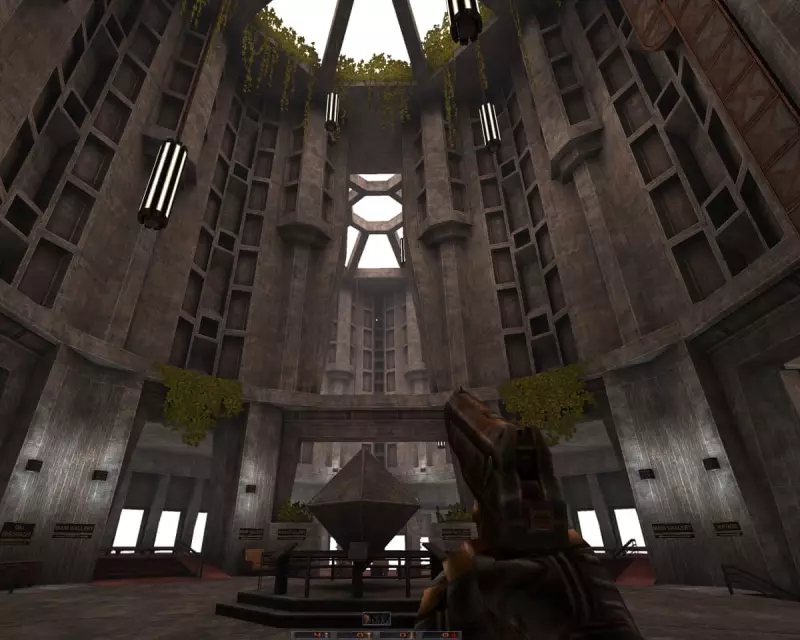
A solitary concrete spire rises from a rocky basin, guarding a rusted trapdoor that swings open to reveal a vertical shaft. This descent leads into a subterranean museum, where three vaulted grey galleries are lined with doors, each portal opening to a pocket dimension of dizzying virtual architecture and intense gladiatorial combat. Welcome to Quake Brutalist Jam, the premier community event for enthusiasts of id Software's iconic 1996 first-person shooter, Quake.
From Humble Beginnings to Ambitious Evolution
Initially launched in 2022, the Quake Brutalist Jam started as a celebration of old-school 3D level design, attracting veteran developers, aspiring designers, and modding enthusiasts to create maps inspired by the austere minimalism of brutalist architecture. The third iteration, however, marks a significant leap forward. Over an intense six-week session, contributors crafted 77 brutalist-themed maps, introducing new enemies and weapons. For context, the original Quake, developed by legends like John Carmack and John Romero, featured only 37 levels upon its release.
Ben Hale, the event's concierge and a senior environment artist on the upcoming Subnautica 2, recalls learning to build Quake levels as a child with his brother's support. The idea for a brutalism-themed jam originated from another mapper, Benoit Stordeur, inspired by concrete textures Hale designed. A community poll saw brutalism win by a wide margin, sparking the first jam, which produced 35 levels in two-and-a-half weeks. The second jam in 2023 added 30 more levels, but health issues led Hale to collaborate with co-host Fairweather, also known as Lain Fleming, a veteran modder behind projects like Dwell and Coffee Quake.

A Total Conversion That Redefined the Game
Fleming suggested moving beyond mere level creation to provide new tools, leading to a total conversion mod that became far more ambitious than anticipated. What was planned as a six-month project expanded into a two-year endeavour, involving a team of about 15 contributors. The result is an almost entirely new toolset for Quake, with virtually every weapon modified or replaced, including a shotgun with bouncing projectiles, a rebar-launching gun, and a cluster-missile launcher. Enemies mix redesigned classics with entirely new foes, enhancing the gameplay experience.
This overhaul proved immensely successful, attracting more than double the participants of previous jams. Hale had to redesign the Start map, adopting a museum or gallery approach to accommodate the tightly packed maps. The community's contributions range from quickfire experiments and high-intensity slaughtermaps to narrative-driven exploration levels and gargantuan gun-fests lasting over an hour.
Highlighting Community Creativity and Innovation
One standout map, Escape from KOE-37, is an epic three-hour adventure inspired by Half-Life, featuring its own storyline and over 1,000 enemies. Creator Mazu, a veteran mapper, spent about 400 hours on it, focusing on environmental puzzles and interactive set-pieces. Such maps underscore the remarkable work of community members in a genre that professional game design has largely abandoned. Linear, single-player first-person shooters have become rare in mainstream development, making the complex 3D mazes of games like Quake a potential lost art.
Yet, events like Quake Brutalist Jam 3, alongside mods such as Arcane Dimensions and The Immortal Lock, are not only preserving this style but often surpassing past achievements. Fleming notes that decades of level history allow designers to refine their work to a razor's edge, twisting 3D geometry in ways unimaginable 30 years ago.
Inclusivity and Professional Contributions
Quake Brutalist Jam 3 is not exclusive to hardcore fans; this year's Start map includes a section for newcomers with little mapping experience. It also features contributions from industry professionals like Robert Yang, a game designer and former teacher at New York University's Game Centre. Yang describes the event as "the underground Met Gala of concrete murderzone design," emphasising its role in nurturing new talent and showcasing creativity.

For his map, One Need Not Be a House, Yang drew inspiration from architect Louis Kahn's brutalist masterpieces, creating an open-ended level reminiscent of adventure games like Myst. He looked to Halo: Combat Evolved's The Silent Cartographer for non-linear design, allowing players to mix and match routes and power-ups. Yang admires how the jam hints at an alternative, community-driven approach to game-making, free from profit motives, comparing it to a socialist utopia where handcrafted games are a public good.
Looking Ahead to Independent Projects
Hale, Fleming, and the organisers plan to take a break from Quake modding to develop their own independent video game. Hale expresses a deep love for the community but a growing desire to create something new. This shift highlights the jam's impact in fostering collaboration and innovation, potentially paving the way for future community-led projects that redefine gaming culture.