Mother's Heartbreaking Plea for Social Media Ban After Son's Suicide
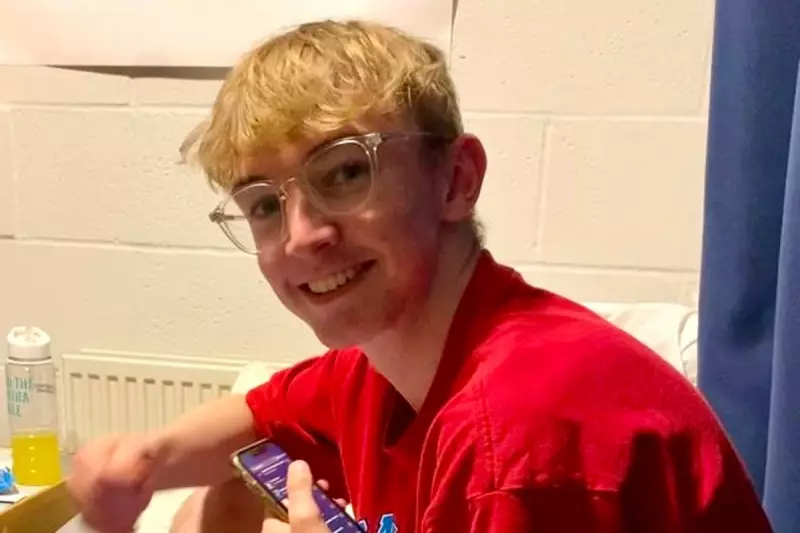
Jane Johnson believes social media played a significant role in her son's tragic suicide, and she is now campaigning for a ban on platforms for children under 16. Her 19-year-old son Leo took his own life in February 2023 while studying Oceanography at Plymouth University, after battling depression that his mother attributes partly to his online activity.
The Transformation of an Adventurous Teenager
Leo Johnson was described by his mother as an "adventurous" and "sociable" young man who loved outdoor activities, particularly scuba diving. He had moved from his West Midlands home to pursue his passion through a university degree in Plymouth. However, Jane noticed his attention becoming increasingly consumed by his smartphone in the months leading up to his diagnosis with depression in November 2022.
"He knew social media wasn't good for him," Ms Johnson told The Independent. "He knew he was spending too much time online. He was comparing his life to what he was seeing - he wanted more than he had."

The 'Drip, Drip, Drip' Effect of Comparison Culture
Ms Johnson believes her son's death wasn't caused by exposure to dangerous trends or dark web content, but rather by what she describes as a "drip, drip, drip" of comparison culture. She says Leo constantly measured his life against the curated experiences he saw online, leaving him feeling unsatisfied and emotionally numb despite living what appeared to be an exciting life filled with diving expeditions and boat-based lectures.
After his depression diagnosis, Leo began deleting social media accounts and encouraged friends to do the same, telling them he "wanted to spend more time outdoors." Police investigations after his death found no evidence of involvement with sinister online communities, reinforcing his mother's belief that the harm came from mainstream platform use.
Understanding 'Digital Anhedonia'
At Leo's inquest, doctors described him as "anhedonic" - a medical term referring to emotional apathy and inability to experience pleasure, often associated with depression. Ms Johnson believes her son was suffering from "digital anhedonia," a concept first coined by Professor Shaheen E. Lakhan, a clinical neuroscience professor at FIU Herbert Wertheim College of Medicine in Florida.
Professor Lakhan explains that digital anhedonia results from "chronic exposure" to digitally delivered rewards that are "faster, more frequent, more personalized, and often more emotionally charged than anything the offline world can consistently provide." This constant algorithmic stimulation can train the brain to expect high-intensity rewards, making everyday experiences seem dull by comparison.
Teenage Brains at Particular Risk
The neuroscience professor emphasizes that adolescent brains are "uniquely vulnerable" to this phenomenon due to their developmental stage. "During adolescence, dopamine-mediated circuits that drive motivation and novelty-seeking are highly active, while the prefrontal cortex, the system responsible for impulse control and long-term judgment, is still maturing," he explained.
This combination creates what Professor Lakhan describes as a perfect storm: "If you train the brain on instant algorithmic reward, you can unintentionally teach it that real life isn't worth the effort." Research shows consistent associations between heavy social media use and outcomes linked to reward-system disruption, including depressive symptoms and sleep problems.
Political Pressure for Change
The Labour government under Sir Keir Starmer is facing increasing pressure to implement stricter social media regulations for children. This follows House of Lords support for an amendment to the schools bill that would introduce an under-16s ban. The government has announced a three-month consultation on whether to follow Australia's approach and ban social media for children, with Prime Minister Liz Kendall stating "nothing is off the table."

A Department for Science, Innovation and Technology spokesperson confirmed: "We're launching a national consultation on bold measures to protect children online, from banning social media for under-16s to tackling addictive design features. We want to hear from families like this one, because when it comes to children's safety, nothing is off the table."
A Mother's Warning to the Nation
Ms Johnson believes urgent action is needed to prevent similar tragedies. "I think we are sleepwalking into a huge potential future disaster," she warned. "I don't think the government is doing enough to legislate and protect young people. Somebody does have to make a bold move."
Her call for regulation comes as three major social media companies - Meta's Instagram, ByteDance's TikTok, and Google's YouTube - face a landmark trial in Los Angeles this week, accused of deliberately addicting and harming children through their platform designs.
The government points to the Online Safety Act as providing some of the world's strongest online protections, requiring platforms to shield children from harmful content with significant fines for non-compliance. However, officials acknowledge this legislation "wasn't the end of the conversation" regarding children's digital safety.
Ms Johnson remains hopeful that proper regulation could help other families avoid her devastating loss: "If governments can stand strong and do something about it then we have the potential to turn it around."