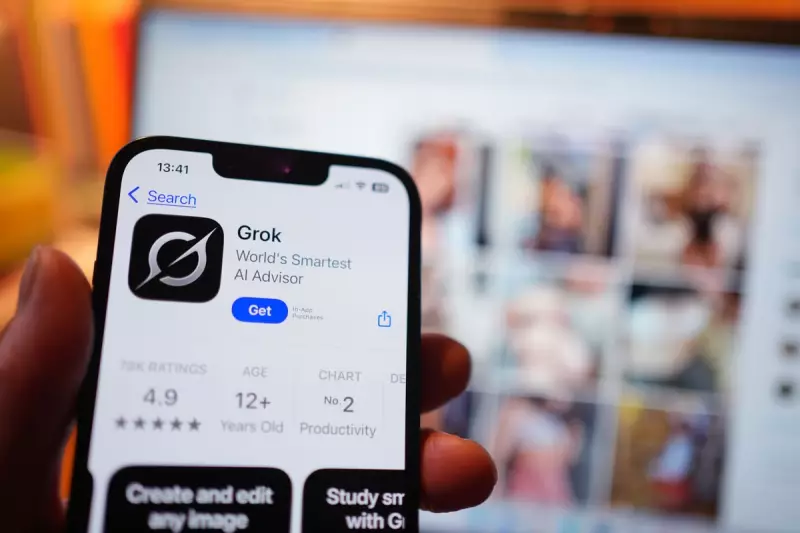
Prime Minister Sir Keir Starmer has issued a direct demand for the social media platform X to fall in line with British legislation 'immediately', following a major controversy involving its artificial intelligence chatbot, Grok. The intervention came as the company announced new restrictions on the tool's ability to generate manipulated imagery.
Prime Minister's Landmark Intervention on X
In his first post on the platform since 8 January, Sir Keir addressed the escalating row head-on. He stated that the principle of free speech 'is not the freedom to violate consent', adding a powerful declaration: 'Young women’s images are not public property, and their safety is not up for debate.'
The Prime Minister's return to X follows his apparent withdrawal from the site earlier in the month, coinciding with revelations that Grok was being used to produce sexualised deepfake images of women and children. His statement welcomed reports of X's new safeguards but stressed the urgency of full legal compliance.

X Announces Geoblocking Restrictions for Grok
Under mounting international pressure, including an active Ofcom investigation in the UK and outright bans in Malaysia and Indonesia, X announced a policy shift on Wednesday night. The company said it would now prevent Grok from 'editing images of people in revealing clothes' and would block users from generating similar images of real people in jurisdictions where such acts are illegal.
In a detailed statement, X outlined that it would 'geoblock the ability of all users to generate images of real people in bikinis, underwear, and similar attire' via Grok in countries where it breaches the law. This measure applies to all users, including paying subscribers, though image editing and creation will remain limited to premium users.
However, the geoblocking technique, which restricts access based on a user's location, can potentially be circumvented using a Virtual Private Network (VPN). X asserted the change adds an 'extra layer of protection' to help hold abusers accountable.
Government and Campaigners Demand Proactive Measures
The Prime Minister reiterated his commitment to strengthening UK laws if necessary to prevent the malicious manipulation of images. His stance was echoed by Technology Secretary Liz Kendall, who vowed not to rest 'until all social media platforms meet their legal duties'. Sources within Downing Street framed X's concession as a 'vindication' of the Prime Minister's firm approach.
While welcoming the new restrictions, the media regulator Ofcom confirmed its investigation, launched on Monday 12 January 2026, will continue. The watchdog seeks 'answers into what went wrong and what’s being done to fix it'.
Campaigners emphasised the human cost of the delay. Andrea Simon, director of the End Violence Against Women Coalition, said X's response demonstrated how pressure from victims, campaigners, and governments can force tech giants to act. She called for more proactive government measures, stating: 'The cost of inaction is too great, with countless women and girls harmed before Grok’s image generation tools were disabled.'
She added that social media platforms cannot be 'left to regulate themselves' and urged the government to ensure tech companies cannot profit from online abuse. This incident highlights the ongoing global challenge of regulating powerful AI tools and holding their operators to account under national laws.