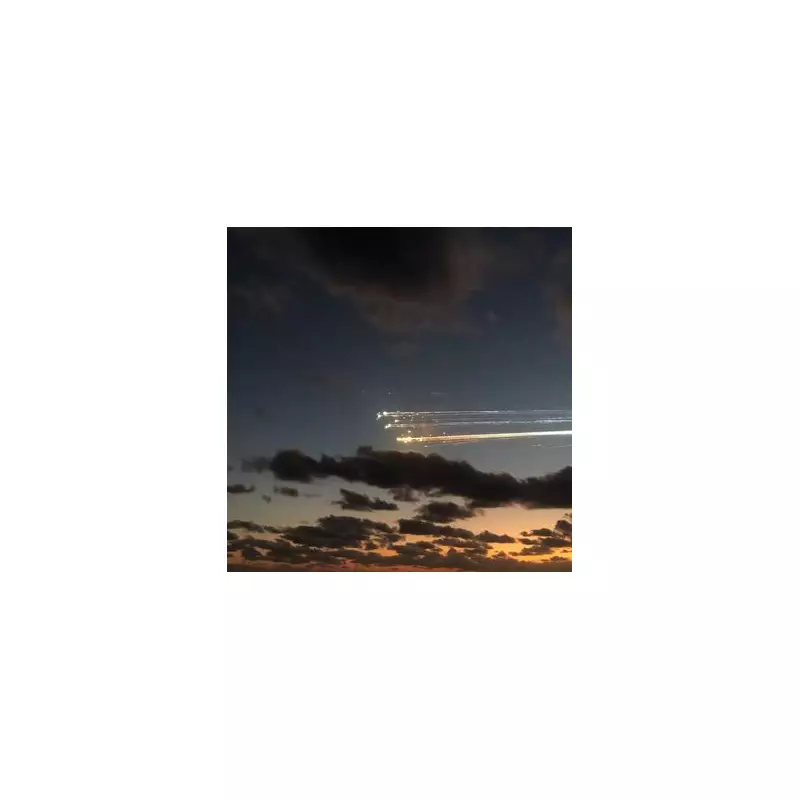
The Federal Aviation Administration (FAA) has implicated Elon Musk's SpaceX in a significant safety lapse, finding that a dramatic rocket explosion earlier this year created a debris cloud that nearly endangered hundreds of commercial airline passengers.
Mid-Air Detonation Over the Caribbean
On January 16, SpaceX conducted the seventh test launch of its massive, uncrewed Starship rocket from its facility in Boca Chica, Texas. The vehicle, central to Musk's ambitions for Mars colonisation, lifted off successfully but met a spectacular end when it detonated in the atmosphere over the Caribbean.
While such failures are an acknowledged risk in experimental rocketry, the aftermath of this particular SpaceX rocket explosion escalated into a far more serious incident. The blast created an extensive field of debris that lingered in crucial airspace for nearly an hour.

Emergency Diversions and a Mayday Call
The resulting hazard had immediate and dangerous consequences for commercial air traffic. Three passenger airliners, carrying a total of 450 people, were forced to take emergency action to avoid the debris cloud.
One of the flights was instructed by air traffic controllers to declare an emergency to land at San Juan airport. The pilot's response was captured on radio: "In that case we declare emergency: Mayday. Mayday. Mayday." The incident forced last-minute diversions and the emergency landing, highlighting the grave and immediate risk to public safety.
FAA Cites SpaceX for Failure to Notify
The FAA investigation uncovered a critical procedural failure. SpaceX did not alert FAA officials of the incident in a timely manner following the catastrophic in-flight breakup. This lack of notification hampered the agency's ability to manage the airspace risk promptly.
Regulators confirmed that the company has since complied with the FAA's recommendations, but the findings underscore a serious breach in communication protocols during a high-risk event. The investigation centred on the threat posed to public safety and the integrity of national airspace, rather than the rocket's test failure itself.
This event marks another contentious chapter for SpaceX's Starship programme, which continues its development phase amidst intense scrutiny over its safety and regulatory compliance, even as it pushes the boundaries of spaceflight technology.