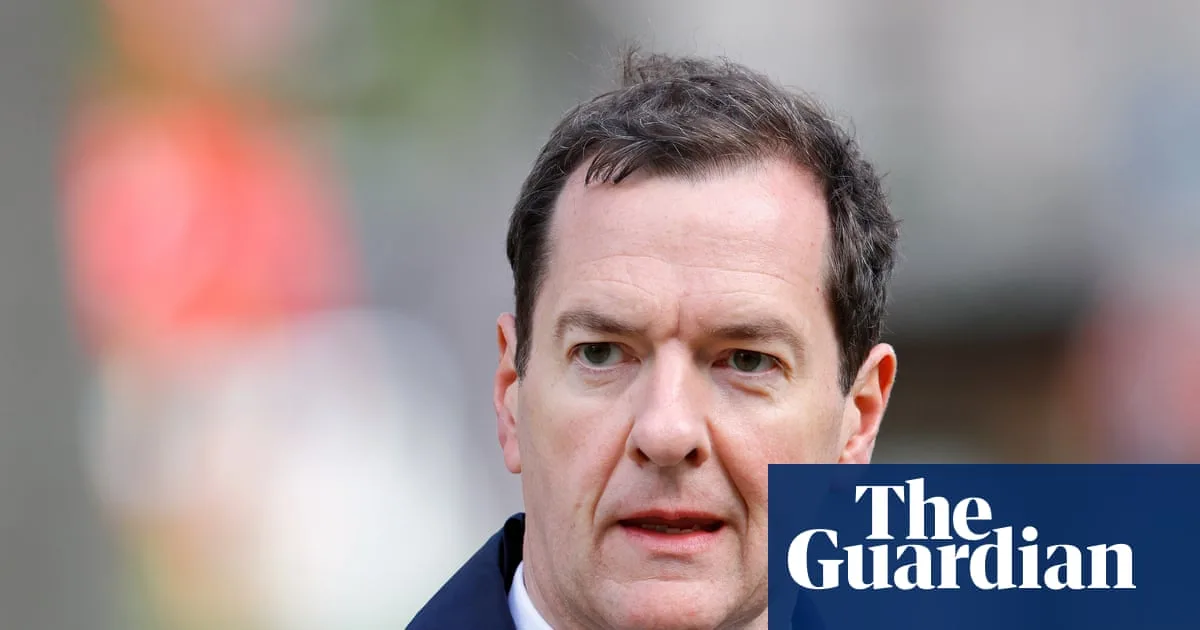
George Osborne Joins OpenAI as Strategic Advisor in Major Political-Tech Move
George Osborne joins OpenAI as strategic advisor

In a striking move that bridges the worlds of high-level politics and cutting-edge technology, former Conservative Chancellor George Osborne has been appointed to a senior strategic role at OpenAI, the company behind the revolutionary ChatGPT.

From the Treasury to Tech Titan

The announcement, made on Monday, 16th December 2024, confirms that Osborne will serve as a strategic advisor to the artificial intelligence firm. This position will see the ex-Chancellor, a key architect of UK austerity policies during the coalition government, providing guidance on OpenAI's global strategy and policy engagements.

Osborne, who served as Chancellor of the Exchequer from 2010 to 2016, has maintained a significant profile since leaving frontline politics. He currently holds the position of chair of the British Museum and is a partner at the boutique investment bank Robey Warshaw. His new advisory role at OpenAI is not expected to be a full-time executive position but represents a major commitment.

The appointment underscores the growing trend of prominent political figures transitioning into influential roles within the powerful technology sector, particularly in the fast-evolving field of artificial intelligence.

Navigating the AI Policy Landscape

OpenAI's decision to bring Osborne on board is widely interpreted as a strategic play to bolster its policy and government relations expertise. The company, which has faced intense scrutiny from regulators worldwide over the potential risks and societal impacts of its technology, requires adept navigation of complex political landscapes.

Osborne's deep experience in UK government, his extensive network of contacts in Westminster, Whitehall, and on the international stage, and his understanding of economic policy are considered invaluable assets. His insights are expected to help shape OpenAI's approach to critical issues like AI safety, regulation, and international cooperation.

In a statement, an OpenAI spokesperson highlighted Osborne's "unique perspective on global politics and the economy," suggesting his counsel will be crucial as the company continues to develop and deploy advanced AI systems.

Reactions and Implications for the UK

The news has sparked considerable discussion within both political and tech circles in Britain. Some observers see it as a natural progression for a politically astute figure to engage with one of the century's most transformative technologies. Others may question the influence former ministers wield in shaping the rules for industries they later join.

For the UK, Osborne's high-profile appointment places a British political heavyweight at the heart of a leading AI company. This could potentially afford the UK a degree of informal access and influence in ongoing global debates about AI governance. However, it also highlights the ongoing "revolving door" between senior public office and lucrative private sector roles.

Osborne's move follows a broader pattern of politicians leveraging their experience in the tech world, joining firms that are increasingly subject to government oversight and regulation. His role will be closely watched as governments, including the UK's, grapple with formulating effective and balanced AI policy frameworks.

The former Chancellor's foray into artificial intelligence marks a significant moment, signalling that the expertise required to steer powerful technologies like ChatGPT now explicitly includes the nuanced understanding of statecraft and international diplomacy that career politicians like Osborne possess.