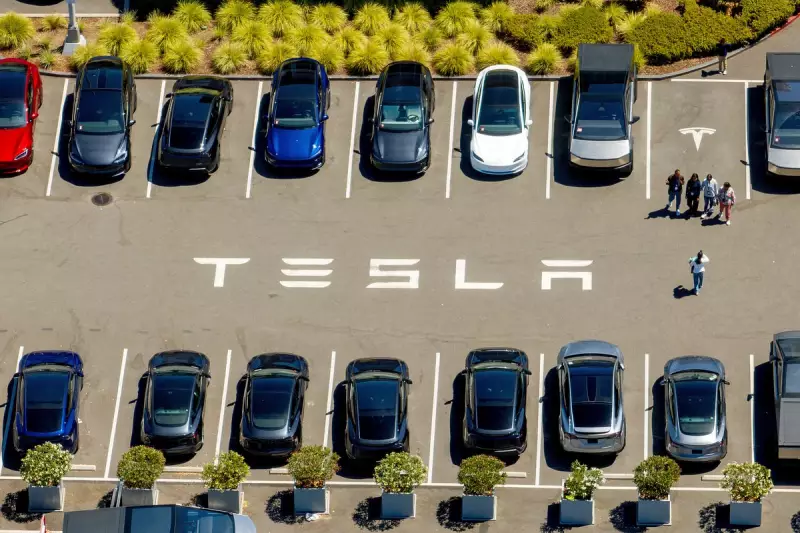
California's automotive regulators have issued a stark warning to Tesla, threatening to suspend the company's licence to sell its electric vehicles in the state for 30 days. The move comes after a judge ruled that the Elon Musk-led automaker has been misleading consumers with its marketing of self-driving technology.
Judge Rules on Deceptive Marketing Practices
The potential suspension, which could take effect early next year, was recommended by Administrative Law Judge Juliet Cox in a decision released late on Tuesday, 16 December 2025. Judge Cox presided over five days of hearings in Oakland, California, in July and concluded that Tesla had engaged in years of deceptive marketing.
The ruling specifically cited Tesla's use of the terms "Autopilot" and "Full Self-Driving" (FSD) to promote technology that does not make its vehicles autonomous. This, the judge found, misled consumers about the system's true capabilities, which still require active human supervision.

A 90-Day Window to Avoid Suspension
Tesla now has a 90-day window to make significant changes to how it markets its driver-assistance systems. The company must more clearly convey the technology's limits to avoid the sales licence suspension in its key Californian market.
Steve Gordon, Director of the California Department of Motor Vehicles (DMV), stated, "Tesla can take simple steps to pause this decision and permanently resolve this issue — steps autonomous vehicle companies and other automakers have been able to achieve."
While the judge also recommended suspending Tesla's manufacturing licence at its Fremont plant, California regulators have indicated they will not impose that part of the penalty.
Broader Context: Lawsuits, Sales Slump, and AI Hopes
This regulatory action is not an isolated incident. Tesla faces numerous lawsuits alleging that its characterisation of self-driving technology has created a false sense of security, leading to fatal accidents. Although the company has settled or won several cases, a Miami jury earlier this year found Tesla partly responsible for a lethal crash in Florida involving Autopilot and ordered it to pay over $240 million in damages.
The threat comes as Tesla contends with a global sales downturn. Vehicle sales decreased by 9% from 2024 through the first nine months of 2025, attributed to increased competition, an ageing model lineup, and fallout from Elon Musk's controversial political engagements.
Despite these challenges, Tesla's stock price reached an all-time high of $495.28 in early trading on Wednesday, 17 December, before retreating. This paradox highlights how investors are increasingly focused on Musk's ambitions for artificial intelligence and robotics, including a future fleet of self-driving 'robotaxis'.
Tesla has recently begun testing its robotaxi concept in Austin, Texas, both with and without human safety monitors in the vehicles. However, the company's long-promised vision of a fully autonomous network remains unfulfilled, as regulators in California and elsewhere continue to scrutinise the gap between marketing claims and technological reality.