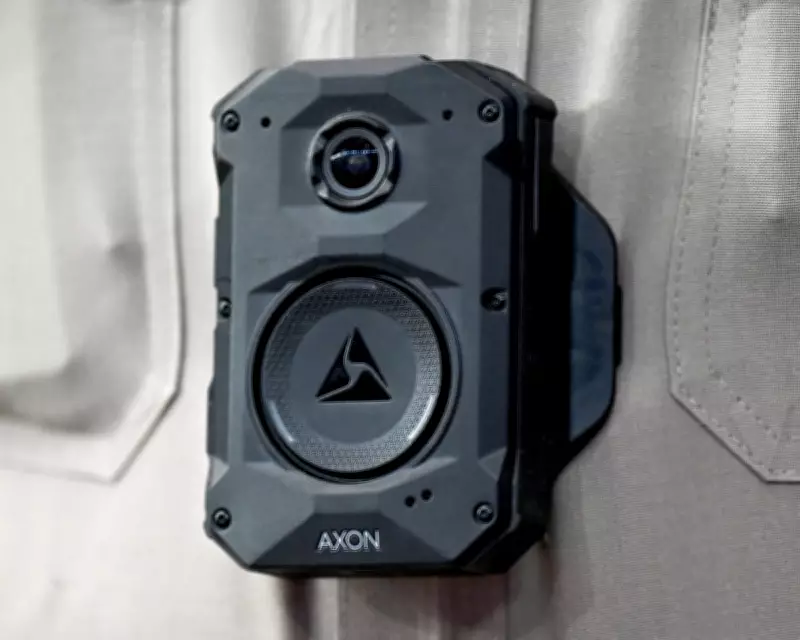
Axon Reports Record Revenue as DHS Plans Body Camera Expansion
Axon, the leading manufacturer of body cameras in the United States, announced record-breaking financial results on Tuesday, with revenue soaring to $797 million, a 39% increase from the previous year. The company, also known for its Taser devices, exceeded Wall Street expectations and highlighted significant growth opportunities tied to federal law enforcement initiatives, particularly within the Department of Homeland Security (DHS).
Federal Funding and Privacy Concerns
Congress has proposed allocating $20 million for body cameras for Immigration and Customs Enforcement (ICE) officers, following aggressive lobbying by Axon, which spent over $1.4 million in advocacy efforts last year. This move comes as DHS seeks to rapidly acquire and deploy body cameras nationwide, with an existing $5.1 million contract with Axon already in place for devices and cloud storage licenses.
However, data privacy experts warn that this expansion could lead to increased surveillance of immigrants and protesters rather than ensuring accountability for officers. Spencer Reynolds, a national security attorney at the NAACP Legal Defense Fund, expressed concerns, stating that body cameras could turn every agent into a surveillance tool, with DHS selectively releasing footage for propaganda purposes.

Axon's AI-Powered Ecosystem and Market Dominance
Axon has evolved from a Taser producer to a comprehensive, real-time, AI-powered crime center. CEO Rick Smith described the company as the "world's largest global sensor network," focusing on analyzing data in real-time to assist law enforcement decisions. This ecosystem includes features such as transcribing dispatch calls, integrating video from license plate readers and drones, and drafting automated police reports.
Andrew Guthrie Ferguson, a law professor at George Washington University, noted that while body cameras are visible, the real revenue lies in data storage and analytics. Axon's software and services revenue grew 40% to $343 million in the fourth quarter, underscoring the importance of its AI-driven offerings.
Facial Recognition and Ethical Dilemmas
Axon is revisiting facial recognition technology for body-worn cameras after pausing its deployment in 2019 due to bias and accuracy concerns. A limited program with the Edmonton police in Alberta is underway, though Smith emphasized this is not a full launch. Facial recognition has faced backlash for jeopardizing civil liberties, especially with DHS's use of apps like Mobile Fortify, which scans faces amid fears of building a terrorist database.
Ferguson pointed out that Axon's ethical pause allowed competitors to gain market share, but the company now sees opportunities as other firms face privacy controversies.
Expansion into License Plate Readers and Community Backlash
Axon entered the automated license plate reader market last year, with executives noting they have "barely scratched the surface." This move follows controversies surrounding competitors like Flock Safety, which has been criticized for aiding immigration enforcement and abortion-related pursuits. In Denver, the mayor proposed replacing Flock's readers with Axon's after community pushback, citing better security and privacy promises.
Joshua Isner, Axon's COO, stated that the company's track record on privacy and ethics has been a deciding factor for customers switching from other vendors. However, activists remain skeptical, with Juan Sebastian Pinto, an AI regulation organizer in Denver, calling the change "not much of an improvement" and potentially worse.
Political Influence and Legislative Efforts
Democratic senators Ruben Gallego and Mark Kelly of Arizona introduced a bill last month mandating body cameras for all DHS officers. FEC data shows Gallego has received over $20,000 in campaign donations from Axon's CEO and executives since 2017, though he declined to comment. While Democrats advocate for body cameras with data protections, current DHS proposals lack these safeguards, and Republicans have shown support as part of spending negotiations.
Emily Tucker, executive director at the Center on Privacy & Technology at Georgetown Law, argued that only independent control of footage can prevent abuse, stressing that DHS cannot be trusted with the data.

As Axon continues to expand its technological footprint, the balance between law enforcement efficiency and civil liberties remains a critical issue, with privacy advocates urging caution in the face of rapid deployment and data integration.