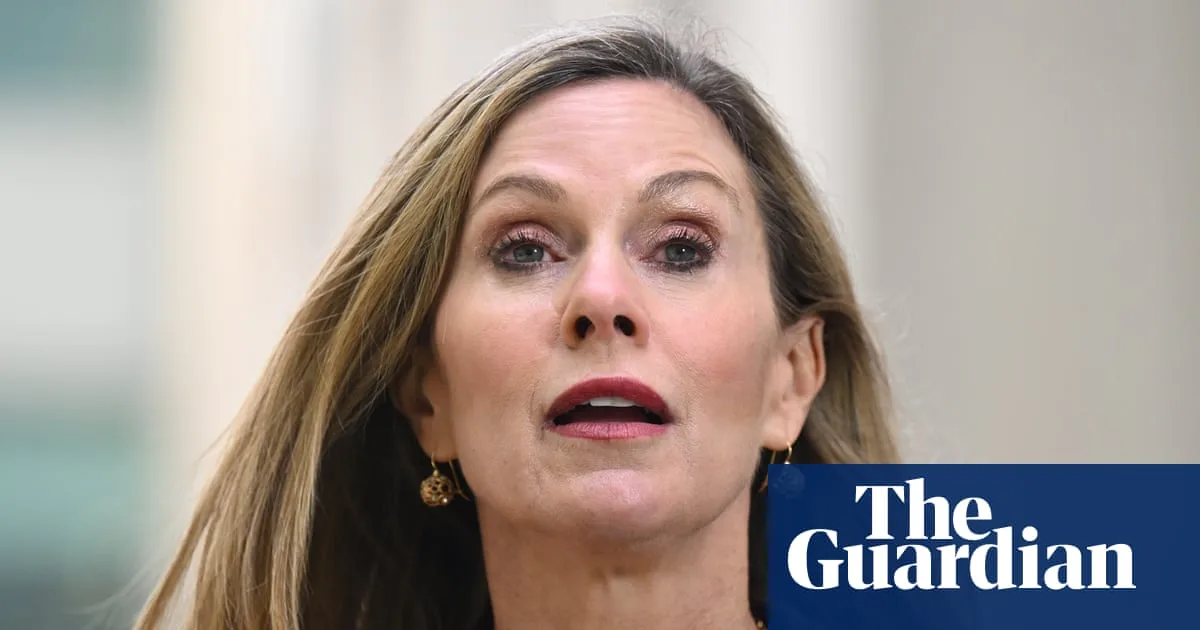
Australia's top online safety regulator has found herself at the centre of a transatlantic political storm after being called to testify before the United States Congress. Julie Inman Grant, the nation's eSafety Commissioner, appeared before a committee chaired by Republican Jim Jordan to explain and defend her office's sweeping powers under Australia's Online Safety Act.
A Contentious Appearance on Capitol Hill
The hearing, held by the House judiciary committee's subcommittee on the weaponisation of the federal government, was framed by Chairman Jordan as an examination of potential governmental overreach into free speech. Inman Grant, a former Twitter and Microsoft executive, faced pointed questions about her authority to order the global removal of harmful content from platforms, even when hosted outside Australia.
She was compelled to attend after being issued with a subpoena. During the session, Inman Grant robustly defended her role, stating her mission was to protect citizens, particularly children, from serious online harms such as terrorism and child sexual abuse material. "My job is to keep Australians safe from the worst online harms," she told the committee, emphasising that her actions were grounded in legislation passed by a democratically elected parliament.
Powers and International Tensions
The core of the controversy lies in the powers granted to the eSafety Commissioner by the 2021 Online Safety Act. This legislation allows the commissioner to issue takedown notices to tech companies for content deemed seriously harmful. A high-profile and legally complex case involved Inman Grant's order to social media platform X (formerly Twitter) to remove a video of a violent stabbing incident in Sydney. While X geo-blocked the content for Australian users, it challenged the global removal order in court.
This case became a focal point for US lawmakers concerned about the extraterritorial reach of foreign laws. Critics, including Chairman Jordan, argue that such powers could be used to censor speech globally and set a dangerous precedent for authoritarian regimes. Inman Grant countered that her office operates with transparency and is subject to judicial review, noting that the vast majority of her work involves compelling platforms to enforce their own terms of service against clearly illegal material.
Broader Implications for Internet Governance
The hearing underscores a growing global clash over who controls the digital public square. As nations like Australia and the UK enact stricter online safety laws, a tension has emerged with the US's stronger tradition of free speech protections under the First Amendment. The session became a proxy debate on this fundamental divide.
Inman Grant warned that a purely hands-off approach creates a "digital Wild West," where platforms are not held accountable for the real-world damage caused by content on their services. She pointed to the shared challenges of disinformation, cyber-bullying, and child exploitation as issues requiring coordinated, international responses rather than regulatory fragmentation.
The outcome of this political and legal tussle has significant implications. It may influence how other countries draft their own online safety regulations and could impact the operational decisions of global tech giants as they navigate an increasingly complex patchwork of national laws. The scrutiny from a powerful US congressional committee also signals that national regulators pursuing aggressive digital policy agendas can expect international political pushback.