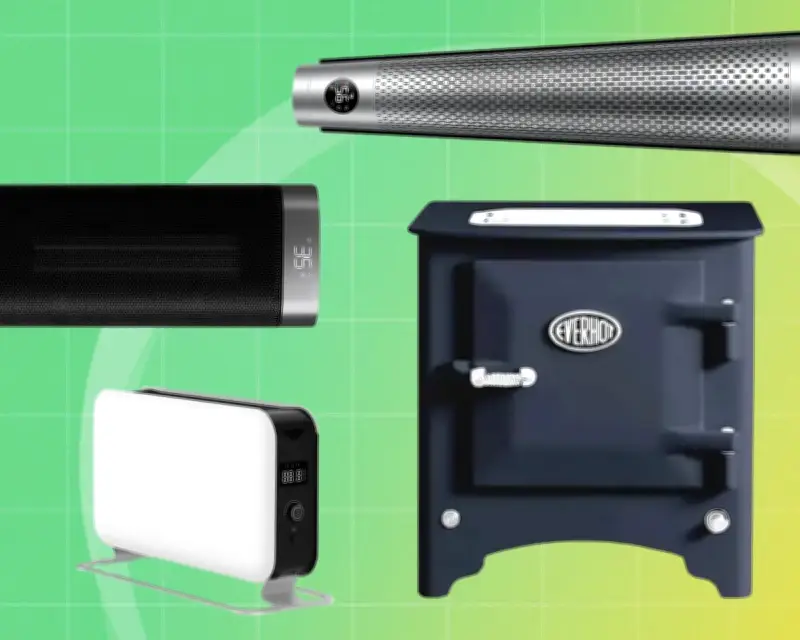
Twelve electric heaters were tested in a living room to find the best models for heating a single space without turning on the central boiler. The Dreo PTC fan heater Solaris 718 was named the best overall, praised for its quiet operation and powerful performance, while the Russell Hobbs Oscillating ceramic 2kW heater was selected as the best budget option.
The test involved running each heater at its maximum temperature in a closed room, measuring air temperature at regular intervals with a digital thermometer. Noise levels, surface temperatures, and energy usage were also recorded. The reviewer, Pete Wise, tested models from brands including Russell Hobbs, Everhot, Dreo, and Mill.
Top performers and their test results
The Dreo Solaris 718, a 2,000W fan heater, raised the room temperature by 5.9C during testing, with an average noise level of 46dB and a running cost of 52p per hour at maximum. The Russell Hobbs oscillating ceramic heater achieved a 6.3C temperature increase, 51dB noise, and a running cost of 49p per hour. The Everhot stove-style heater, a cast-iron model with 1.5kW output, produced a 3.8C rise, 34dB noise, and cost 41p per hour. The Mill wifi max portable heater 1,500W, described as the most efficient, raised the temperature by 7C, with a noise level of 26dB and a running cost of 39p per hour.
Other models tested included the Swan 700W plug-in mini fan heater, the Duux Threesixty 2 ceramic heater, the Devola wifi-enabled smart glass panel heater, and the VonHaus small oil-filled radiator. The Swan heater was noted for its quick warming but noisy operation. The Duux was praised for efficient heating but had a buggy app. The Devola offered extensive smart features but had non-intuitive remote controls. The VonHaus was quiet and inexpensive but had a modest heat output.
Buying advice and running costs
Electric heaters vary widely in price, from under £50 to over £1,000. The amount to spend should depend on how often the heater will be used. For occasional use, a model under £100 should be sufficient. For regular use in a single room, spending more may provide a better design and advanced features such as smart connectivity. For reference, installing a new plumbed-in radiator typically costs between £200 and £600.
Electricity costs more than gas in the UK relative to the power delivered, so electric heaters are not cheap to run. However, using one in a single room could be more cost-effective than heating the whole home. Lower-wattage models with simple functionality tend to have lower running costs. Based on testing, the Swan 700W plug-in mini fan heater was the cheapest to run. The Mill wifi max portable heater was considered the most efficient for medium to large rooms, while the VonHaus oil-filled radiator was deemed most efficient for small rooms.
Ceramic, fan, and infrared heaters each have pros and cons. Ceramic heaters use fans to distribute warm air quickly, with noise levels varying by design. Fan heaters heat up almost instantly but are often relatively noisy. Infrared heaters warm people and objects directly, providing targeted warmth but with a patchy heat distribution. All three types can keep a room warm, but the best choice depends on the user's priorities.
When an electric heater reaches the end of its life, the best disposal option is to take it to a local recycling centre for processing as Waste Electrical and Electronic Equipment. Alternatively, it can be listed for free on local marketplace websites as a “spares or repairs” item. The article was originally published on 7 November 2024 and was amended on 14 October 2026 to add information, update running costs in line with energy prices, and refresh prices throughout.