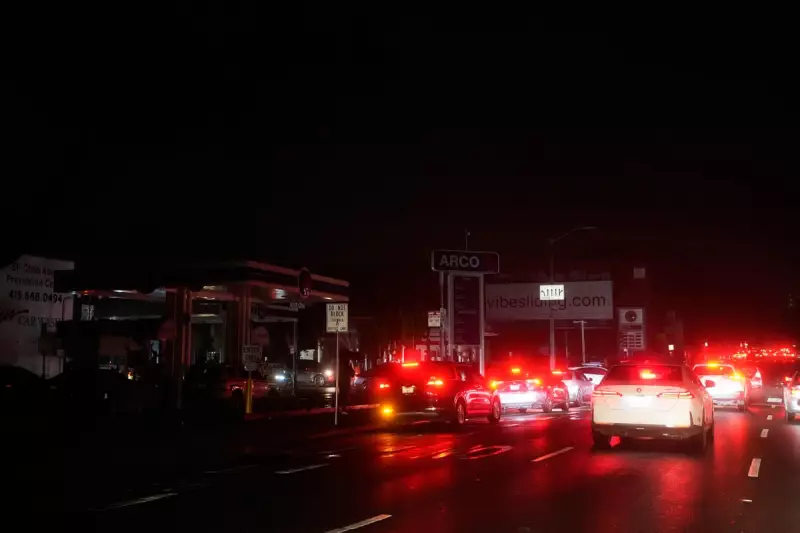
A major power failure in San Francisco over the weekend exposed a critical flaw in the city's autonomous vehicle network, as dozens of Waymo robotaxis ground to a halt, blocking key intersections and causing significant traffic disruption.
Chaos on the Streets
The incident occurred on Saturday 21 December 2025, when a fire at a Pacific Gas and Electric Co (PG&E) substation triggered a mass outage affecting 130,000 homes and businesses—nearly one-third of the utility's customers in the city. With traffic lights disabled across multiple districts, Waymo's fleet of self-driving cars encountered a scenario they struggled to handle.
Social media was quickly flooded with videos showing the vehicles' erratic behaviour. Some cars activated their hazard lights and stopped abruptly before entering junctions, while others came to a complete standstill in the middle of intersections, forcing human drivers to swerve dangerously around them.

One resident, Tyler Cervini from the Mission District, described a scene of five Waymo vehicles crowding an intersection near his apartment. "My Uber driver had to swerve through them to pick me up," Cervini said. "He seemed extremely frustrated by what was going on."
Company Response and Systemic Failure
Faced with the escalating gridlock, Waymo was compelled to suspend its robotaxi service on Saturday evening. Operations did not resume until Sunday afternoon. The company stated that its vehicles are programmed to treat non-functioning traffic signals as four-way stops, but conceded the scale of the outage created "unusual conditions."
However, experts argue the problem was more profound. Professor Philip Koopman, an emeritus professor at Carnegie Mellon University and a leading authority on autonomous vehicle safety, characterised the event not as a software bug, but as an "operational management failure."
"Waymo should have suspended service earlier—as soon as their vehicles started having issues," Koopman stated. He highlighted the alarming implications: "If you have thousands of robotaxis that stop, you have a problem. What if this had been an earthquake? You would have thousands of robotaxis blocking the road."
Revived Safety Concerns
This weekend's chaos has revived longstanding concerns about the technology's readiness. Prior to California regulators granting Waymo full commercial approval in August 2023, San Francisco's transport and fire department officials had flagged dozens of reports about robotaxis making sudden, inexplicable stops.
Beyond mere inconvenience, these road-blocking incidents are viewed as a potential impediment to emergency services responding to life-threatening situations. The event raises urgent questions about the resilience of autonomous systems during large-scale infrastructure failures or natural disasters.
Waymo, which began as a secret Google project in 2009 and now operates hundreds of cars in San Francisco, said it was "committed to ensuring our technology adjusts" and noted it had coordinated with city officials during the outage. The company's fleet is on track to complete over 14 million rides this year, more than triple last year's total.
As of Monday, PG&E crews were still working to restore power to thousands of affected customers, while the city was left to ponder the vulnerabilities of its increasingly automated transport future.