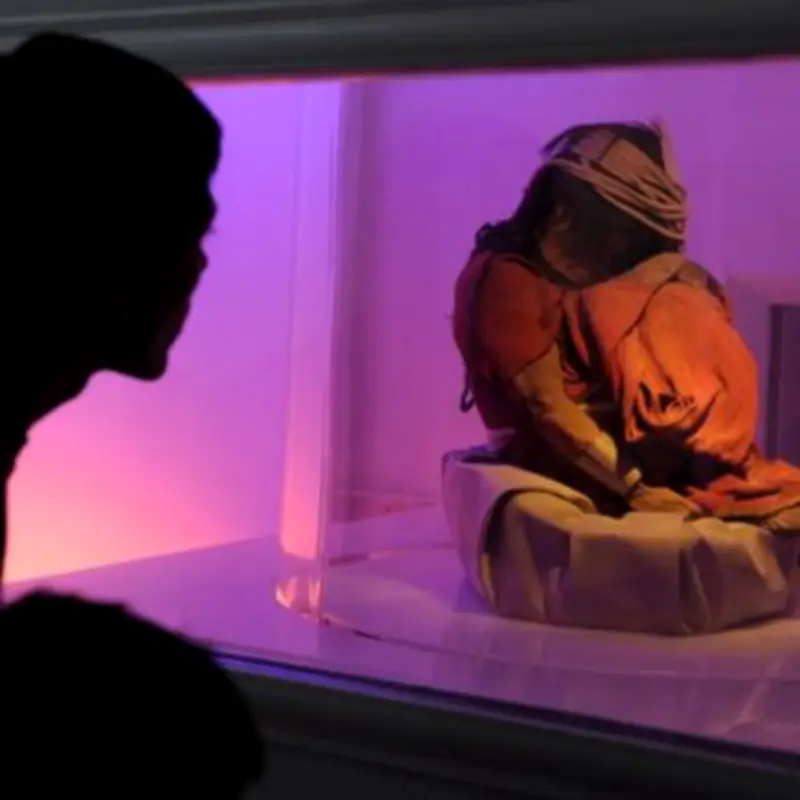
Archaeologists have uncovered the harrowing final months of three Incan children who were sacrificed in a ritual atop the Llullaillaco volcano in Argentina. The children, aged four to 13, were given coca leaves and alcohol to make them compliant before their deaths, according to a new analysis of their hair samples.
The Discovery
The mummies were discovered in 1999 at a shrine near the summit of the 6,739-metre volcano. They were remarkably well-preserved due to the freezing temperatures. The children, known as the Maiden (13), Llullaillaco Boy (4), and Lightning Girl (5), were part of a sacrificial ceremony known as capacocha, which was considered a great honor by the Incas.
Drug and Alcohol Consumption
Hair analysis revealed that the children consumed coca leaves and alcohol for months before their deaths. The Maiden, who was treated as a revered figure, began consuming these substances nearly two years prior to her sacrifice, while the younger children started only nine months before. Her intake peaked six months before death, and alcohol consumption spiked in her final weeks.
Lead author Andrew Wilson, an archaeologist at the University of Bradford, said: "The Maiden was perhaps a chosen woman selected to live apart from her former life, among the elite and under the care of the priestesses." He added that the drugs likely made her more comfortable with her impending death, and she was probably sedated when she died.
The Sacrifice
The children's diets also changed drastically, shifting from peasant food to an elite diet of maize and dried llama meat, apparently to fatten them up. The Maiden died sitting cross-legged, with a full stomach, wearing a feathered headdress and with artefacts arranged on her knees. However, experts are unsure how she died, though she may have succumbed to the cold.
In contrast, Llullaillaco Boy had bloodstains on his cloak and bindings suggesting he was smothered. Lightning Girl showed fewer signs of violence but did not receive the same care as the Maiden.
Ritual as Social Control
While the sacrifice was considered an honor, researchers believe it instilled terror and grief. Parents were forbidden from showing sorrow when surrendering their children. This practice served as a method of social control within the Incan empire.