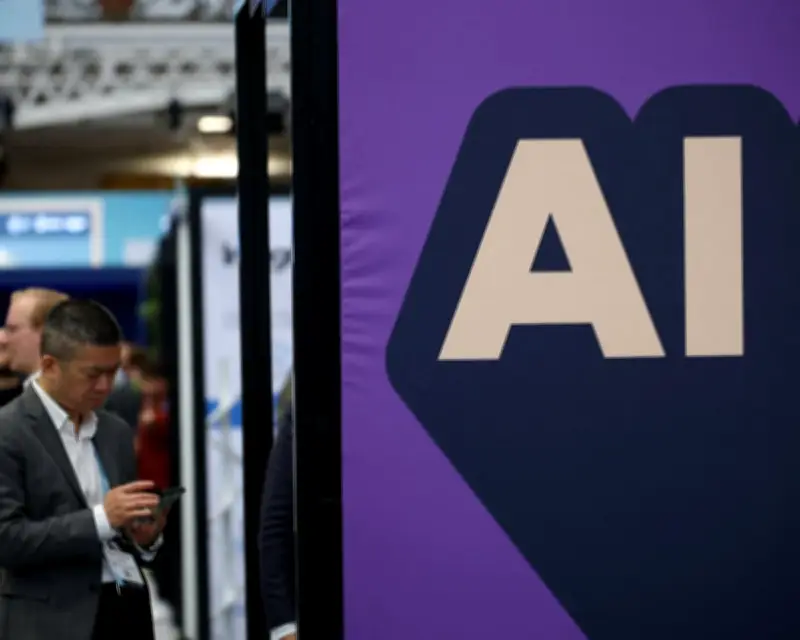
The issue of AI sovereignty was a central theme at London Tech Week, as countries worldwide seek to assert control over a technology dominated by the US and China. The UK government made several announcements aimed at bolstering its position in the AI economy, focusing on infrastructure, skills, and regulation. However, questions remain about the feasibility and impact of these proposals.
1. The Big Hardware Push
The government pledged £1.1bn for AI hardware, specifically cutting-edge semiconductor chips used by models like ChatGPT and Claude. The stated ambition is to "build globally competitive AI hardware companies in the UK." However, the reality is complex. Almost all advanced AI chips are produced by Taiwan Semiconductor Manufacturing Corporation (TSMC). US companies like Nvidia and Google design chips but rely on TSMC for fabrication, which costs tens of billions per foundry. The £1.1bn is insufficient to build a foundry in the UK.
Instead, the funds could bolster domestic chip designers like Arm Holdings, based in Cambridge but listed in New York. The government vaguely mentions a "strategic industry partnership" with Arm. A £400m procurement opportunity for UK chip makers is the strongest component, but industry experts note that much of this was already announced in previous years. Mark Boost, CEO of Civo, warned that without deliberate contract structuring, the money might flow to established overseas vendors.
2. AI Skills and Company Adoption
The government committed £20m to map how AI changes entry-level work and provide practical advice for businesses. A "bridge AI" scheme will fund UK companies to buy domestic AI products, and the "tech town" program pioneered by Barnsley will expand. Bespoke plans for sectors like advanced manufacturing and creative industries were published.
Bouke Klein Teeselink of King's College London noted that few people use AI tools to their full potential, leaving productivity untapped. However, he argued that private sector adoption will be more efficient than government-backed programs, which may move too slowly.
3. AI Defence and US Chip Investments
Britain's chief of defence staff announced the Rapid AI Delivery Taskforce (RAID) to develop AI models for defence, emphasizing that humans remain accountable for decisions. Two tech companies, AMD and Nebius, announced investments in the UK. AMD pledged "up to £2bn" for AI innovation with universities, while Nebius committed approximately £1.7bn for AI infrastructure, which appears to involve Nvidia chips.
4. Ordering Apple and Google to Tackle Nudity
The government demanded that big tech providers like Apple and Google detect and block nude images for children via technical solutions or built-in features, with criminal liabilities and fines for non-compliance. This is more stringent than earlier requests to remove non-consensual nudes.
Currently, companies like Google and Meta use digital watermarking to flag terrorist content and child sexual abuse material, relying on user reports. To block nudes for children, companies would likely need to verify ages and identities of all users and scan content more extensively. This raises privacy concerns; Signal and Mullvad warned of "dystopian" age verification and content scanning that could enable mass censorship and threaten activists' privacy.
5. Looming Action on Social Media
The government is expected to announce an under-16 ban on high-risk social media apps next week, following Australia's blanket ban on platforms like Facebook, Instagram, X, TikTok, and Snapchat. Features like disappearing messages may also face age restrictions.
Age verification remains a challenge. Companies like Google and Meta are exploring solutions, with Meta suggesting app store-based verification. Google is working on "age assurance" measures, potentially requiring IDs for unknown users. AI-powered facial age estimation has been circumvented by children painting on moustaches.
These announcements reflect the UK's ambition to lead in AI while addressing safety concerns, but implementation details and potential unintended consequences remain significant hurdles.