A pioneering UK investigation into the impact of restricting social media access for children has been announced, as governments worldwide consider regulatory action on the issue. The large-scale experimental study, called the IRL trial, will involve approximately 4,000 children across 30 secondary schools in Bradford, England.
Study Design and Methodology
Researchers from the University of Cambridge and the Bradford Centre for Health Data Science will focus on students in years 8, 9, and 10. All participants will complete an initial questionnaire assessing their mental health, sleep patterns, friendships, and family interactions before downloading a research app on their primary device.
Randomised Intervention Groups
Each year group within participating schools will be randomly assigned to one of two conditions. In the control group, the app will simply monitor and record students' social media usage patterns without imposing restrictions.
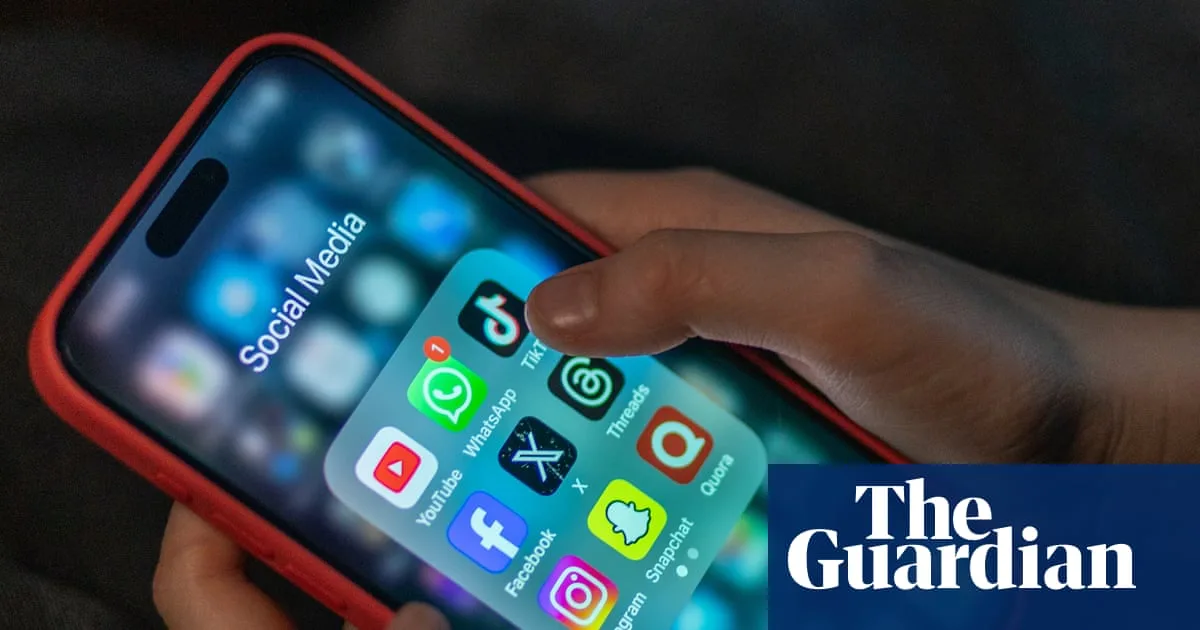
In the intervention group, the app will actively limit access to major social media platforms including TikTok, Instagram, Facebook, X, LinkedIn, Reddit, YouTube, and Snapchat to just one hour per day. Additionally, a curfew will be imposed from 9pm to 7am, during which access to these platforms will be completely restricted.
Key Design Features
Crucially, all students within a particular year group at each school will experience the same intervention. This design accounts for the social dynamics of adolescent friendship groups, recognising that restricting social media for an individual teenager might have different effects than restricting it for their entire peer network simultaneously.
Messaging applications including WhatsApp will remain unrestricted throughout the study, as researchers acknowledge their importance for family communication and emergency contact.
Research Objectives and Outcomes
After the six-week intervention period, students will complete another comprehensive questionnaire. The research team plans to begin an initial pilot phase in April, with the full study commencing in October and first results expected by summer 2027.
The primary outcome measure will be participants' levels of anxiety, with secondary outcomes including depression symptoms, sleep quality, experiences of bullying, time spent with friends and family, and social comparison tendencies.
Mechanisms of Impact
Researchers will explore the mechanisms through which social media restrictions might affect young people by examining which specific applications are used most frequently, patterns of usage throughout the day and night, and how these relate to psychological wellbeing and social functioning.
Global Context and Policy Implications
The study announcement comes as governments internationally consider regulatory approaches to children's social media use. In December, Australia became the first country to implement a ban on social media access for children under 16, with pressure mounting on other governments including the UK to consider similar measures.
Professor Amy Orben of the University of Cambridge, who co-leads the study, emphasised that while there is existing evidence suggesting certain aspects of social media can be harmful to most children, there has been no large-scale experimental research exploring the population-level effects of limiting social media time among generally healthy children.
This study represents a world-first attempt to address this evidence gap through rigorous experimental methodology.
Independent from Government Consultation
The research team clarified that their trial is independent from the UK government's recent announcement of a consultation on whether to ban under-16s from social media platforms. However, Professor Orben noted that the study results could provide valuable evidence for policymakers in the UK and other countries debating appropriate regulatory approaches.
The researchers acknowledge certain limitations to their methodology, including the possibility that participants might access social media through devices belonging to other people or choose not to participate fully in the intervention. Despite these challenges, they hope the findings will significantly advance understanding of how social media restrictions affect adolescent development and wellbeing.