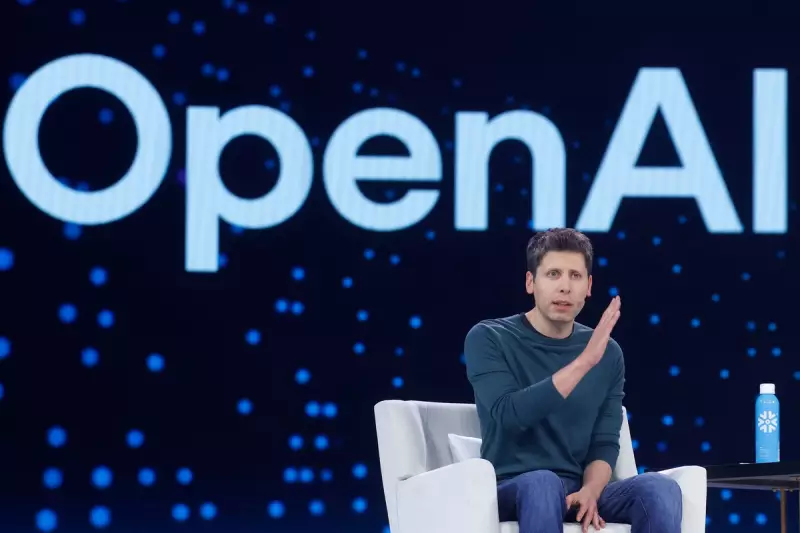
Sam Altman, the chief executive of OpenAI, is reportedly in a state of private panic. The week marking ChatGPT's third anniversary has been overshadowed by a multi-front crisis, prompting Altman to issue an internal 'code red' alert to staff. This emergency declaration comes not only from external pressures but from a seismic shift in the competitive landscape that now threatens ChatGPT's dominance.
The Gathering Storm: Breaches, Lawsuits, and Staggering Forecasts
The celebratory mood was quickly dampened by a series of severe setbacks. An investment report predicted OpenAI would still not be profitable by 2030, a daunting projection for one of the world's most valuable startups. Compounding this, the company suffered a data breach that exposed personal details of its users, while its lawyers were forced to deny disturbing allegations that its AI chatbot acted as a 'suicide coach' in a tragic teen case.
Yet, Altman's 'code red' memo, sent on Monday, 1 December 2025, was triggered by an even more immediate threat: the blistering advances of rivals. Companies like Anthropic, DeepSeek, and Meta are making significant strides, while Apple prepares a revamped Siri and Amazon's Rufus gains traction. However, the most formidable challenge is emanating from Google.

Gemini's Ascent and the Battle for Users
The November launch of Google's Gemini 3 was hailed as a 'new era of intelligence', shattering benchmark records including the demanding 'Humanity's Last Exam'. Publicly, Altman congratulated Google, but privately he conceded ChatGPT had lost its market lead. He told employees, "We know we have some work to do, but we are catching up fast."
The user numbers tell a compelling story. While ChatGPT boasts over 800 million users, Gemini's count has surged to around 650 million, a near 50% jump from July. This figure excludes the roughly 2 billion people accessing Gemini indirectly through Google Search. Analytics from Similarweb indicate users are now spending more time on Gemini's platform.
High-profile defections underscore the trend. Salesforce CEO Marc Benioff, a three-year daily ChatGPT user, declared after trying Gemini 3: "I'm not going back. The leap is insane." For OpenAI, stagnating growth could be catastrophic. An HSBC report projects a need for 3 billion ChatGPT users by 2030 to approach forecast revenues, with 10% paying for premium tiers—a target that seems increasingly ambitious.
A Bubble Poised to Burst?
The potential fallout extends far beyond one company. The Bank of England's latest financial stability report warns UK share prices are at their 'most stretched' since 2008, with Governor Andrew Bailey drawing parallels to the dotcom bubble. Google's own CEO, Sundar Pichai, recently acknowledged 'irrationality' in AI investment levels, warning no company would be immune from an implosion.
"The governor's parallel to the Dotcom bubble is spot on, but the reality is more insidious," said Rohit Parmar-Mistry, an AI expert at Pattrn Data. "We are funding a global gambling addiction with debt the real economy cannot afford... If this bubble bursts, it might finally flush out the hype merchants."
The fear is that OpenAI, the company that inflated the AI bubble with ChatGPT's 2022 launch, could be the pin that pops it. A collapse could trigger deserted data centres, trillions in lost wealth, and a global economic recession.
OpenAI's Secret Weapon and a Legacy at Stake
OpenAI is not conceding defeat. The firm is secretly developing a mystery hardware device with Jony Ive, the designer behind the iPhone. Altman claims it will add $1 trillion in value and ship "faster than any company has ever shipped 100 million of something before" upon its launch next year. Speculation ranges from smart glasses to a clothespin—the latter offering a literal metaphor for popping the bubble should it fail.
Nick Turley, head of ChatGPT, has addressed the competitive pressure, stating new products "push us to move faster and keep raising the bar." The focus remains on making ChatGPT "more capable, intuitive and personal."

Yet, the stakes could not be higher. If OpenAI fails and Google achieves in AI the dominance it has in search, Altman's company risks following early internet pioneers like AltaVista and Ask Jeeves into the history books—fondly remembered, but ultimately a relic of a bygone era.