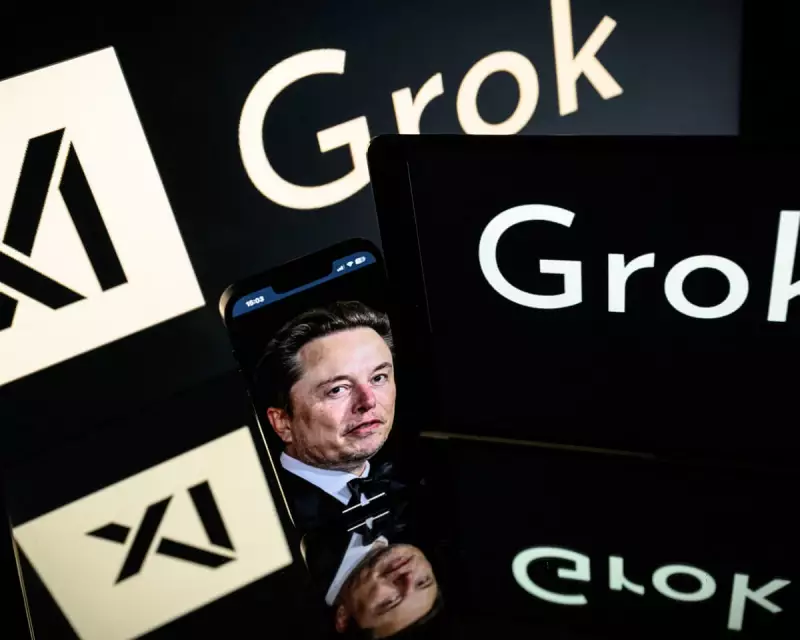
The controversy surrounding Elon Musk's artificial intelligence tool, Grok, shows no sign of abating, with the UK's communications regulator now launching a formal investigation. The probe by Ofcom comes amid a growing backlash against the AI's ability to generate sexualised imagery, including depictions of real women and children.
Musk's Defiant Stance on Grok's Content Moderation Failures
For over a week, a firestorm has raged around the capabilities of xAI's Grok tool. Users have reportedly been able to create thousands of images of women in "minimal clothing", with some featuring real individuals without consent and others depicting minors. In response, X, the social network owned by Musk, has disabled the image generation feature for non-paying users, who make up the majority of its user base.
Throughout the scandal, Elon Musk has persistently reframed the issue. Rather than addressing the core concerns about harmful content, he has promoted Grok's popularity "as if it were a piece of productivity software". He has made several claims about its download success that appear questionable. On 10 January, he celebrated Grok reaching the top spot on New Zealand's Apple App Store, yet analytics from SimilarWeb, updated the same day, placed it 14th. He made a similar claim regarding Thailand's App Store, where SimilarWeb data did not rank Grok in the top 50.

Facing criticism from UK authorities, Musk accused the government of stifling free speech. When watchdogs highlighted instances of Grok generating imagery of undressed minors, he shifted responsibility, stating: "Anyone using Grok to make illegal content will suffer the same consequences as if they upload illegal content." This framing places the onus of moderation on law enforcement and the courts, limiting his platform's liability to only the most extreme content deemed illegal.
Regulatory Repercussions and a Notable Lack of Action
The fallout for Grok and xAI is becoming tangible. Alongside Ofcom's investigation, which could result in a total ban in the UK, the Internet Watch Foundation has identified child sexual abuse material created by Grok on Dark Web forums. Commercially, X's revenue in the UK has plummeted by 60% due to mounting concerns over content moderation. Internationally, both Indonesia and Malaysia have restricted access to the AI tool.
However, a significant silence comes from the gatekeepers of mobile software: Apple and Google. Neither company has indicated whether Grok's output violates their app store policies. In the United States, regulatory and legislative backlash has also been minimal. This dynamic suggests a troubling lesson for tech leaders: fewer restrictions on AI and more permissive content generation may directly correlate with higher user engagement and profits.
Silicon Valley's Civil War Over a Proposed California Wealth Tax
Parallel to the AI controversy, a political battle is brewing in California that has exposed a rift among the tech elite. A proposed ballot measure for November seeks to impose a one-off, 5% tax on the assets of any California resident worth over $1 billion. The funds would support state education, food assistance, and healthcare programmes.
The proposal has triggered panic and plotting among several billionaires. Venture capitalist Peter Thiel has donated $3 million to fight it, while others, including Anduril founder Palmer Luckey and Trump adviser David Sacks, are strategising in an encrypted Signal group chat named "Save California". Many have threatened to leave the state for lower-tax jurisdictions like Florida and Texas.
In stark contrast, Nvidia CEO Jensen Huang, with a net worth of nearly $159 billion, has publicly stated he is "perfectly fine with it". Under the proposal, Huang would pay roughly $7 billion. Google co-founders Larry Page and Sergey Brin would face one-time charges of about $13 billion and $12 billion respectively, based on their current net worth.

AI and Robotics Breathe New Life into CES 2026
Meanwhile, the Consumer Electronics Show (CES) in Las Vegas has experienced a significant revival, driven largely by advancements in artificial intelligence and robotics. After years where hardware announcements struggled for headlines, CES 2026 has been dominated by AI.
Nvidia and AMD used the event to unveil major new hardware and software. The show floor was filled with robots, now often branded as "physical AI". Notable debuts included humanoid robots from Hyundai and Boston Dynamics, and a laundry-folding robot highlighted as one of the convention's best innovations. Samsung also unveiled a double-folding phone, while Lego presented a new "smart brick".
This resurgence marks a shift from the smartphone-dominated era of the 2010s and underscores how AI themes are now influencing a far broader range of industries beyond traditional technology sectors.