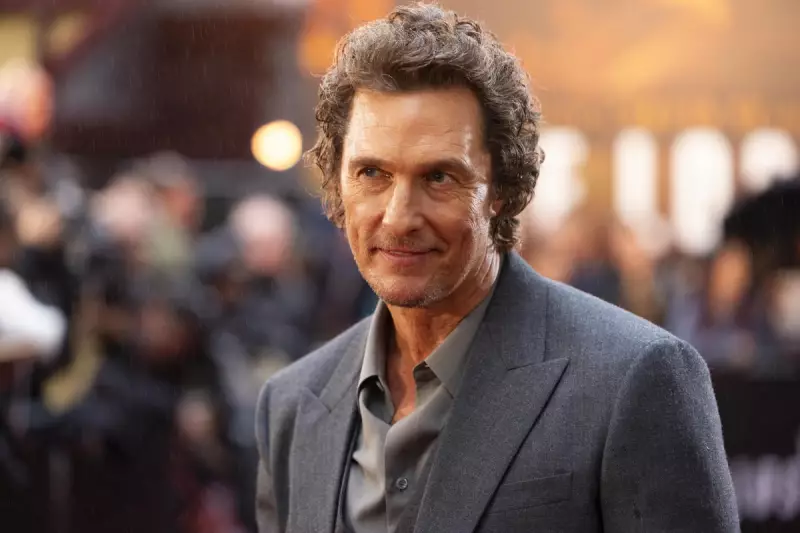
Hollywood star Matthew McConaughey has launched a significant legal offensive against the rise of artificial intelligence deepfakes, filing to trademark his iconic three-word catchphrase and other key aspects of his personal likeness.
Securing a Signature: The Eight Trademarks
The actor, known for his distinctive Southern drawl, has secured eight separate trademarks to create a robust shield against unauthorised digital replication. The filings, submitted on Thursday 15 January 2026, extend far beyond the commercial use of his name.
They specifically encompass his voice, his characteristic smile, and specific audio and video clips that are uniquely his. The most detailed registration is for his signature phrase, "alright, alright, alright," which includes legal protection for the exact pitch variations he uses when saying it.

A Legal Arsenal for the Digital Age
This proactive strategy is designed to give McConaughey and his legal team clear grounds to pursue lawsuits in federal court. The protection covers general misuse of his image and voice across the internet, not just instances where they are used to sell products.
This move establishes a precedent for ownership and consent in an era where AI tools can effortlessly clone a person's identity. Interestingly, McConaughey is no stranger to the technology's potential, having previously partnered with AI voice firm ElevenLabs to create a synthetic version of his own voice for use in his personal newsletter.
The Broader Implications for AI Regulation
McConaughey's action highlights the growing tension between rapid technological innovation and individual rights. By legally defining elements of his persona, he is setting a boundary that AI developers and users must now navigate.
His approach provides a potential blueprint for other public figures seeking to control their digital doubles. The case underscores an urgent need for clearer regulations around AI-generated content and the right to one's own likeness in the virtual space.
This legal manoeuvre turns his casual, laid-back catchphrase into a formal banner in the war against digital impersonation, marking a pivotal moment in the intersection of celebrity, intellectual property, and artificial intelligence.