When two balaclava-clad men on a motorbike mounted the pavement to rob me, recently, I remained oblivious. My eyes were pinned to a text message on my phone, and my hands were so clawed around it that they didn’t even bother to grab it. It wasn’t until an elderly woman shrieked and I felt the whoosh of air as the bike launched back on to the road that I looked up at all. They might have been unsuccessful but it did make me think: what else am I missing from the real world around me?
Before I’ve poured my first morning coffee I’ve already watched the lives of strangers unfold on Instagram, checked the headlines, responded to texts, swiped through some matches on a dating app, and refreshed my emails, twice. I check Apple Maps for my quickest route to work. I’ve usually left it too late to get the bus, so I rent a Lime bike using the app. During the day, my brother sends me some memes, I take a picture of a canal boat, and pay for my lunch on Apple Pay. I walk home listening to music on Spotify and a long voice note from a friend, then I watch a nondescript TV drama, while scrolling through Depop and Vinted for clothes.
I’m constantly contactable, I have no personal boundaries, and my attention span disappeared a long time ago. Since the first iPhone in 2007, smartphones have become indispensable to modern life, with the average person in the UK spending four hours and 20 minutes online per day. “Social media provides frictionless access to an infinite universe of mostly free digital drugs,” says Anna Lembke, author of Dopamine Nation. “And the algorithm tailors the experience for each unique brain, making it very reinforcing, while also injecting just enough novelty in the infinite scroll to overcome boredom and tolerance. All these features combined keep us clicking and swiping long after we want to.” Over time we develop tolerance, which means “we need more of it and a more potent form to get the same effect.”
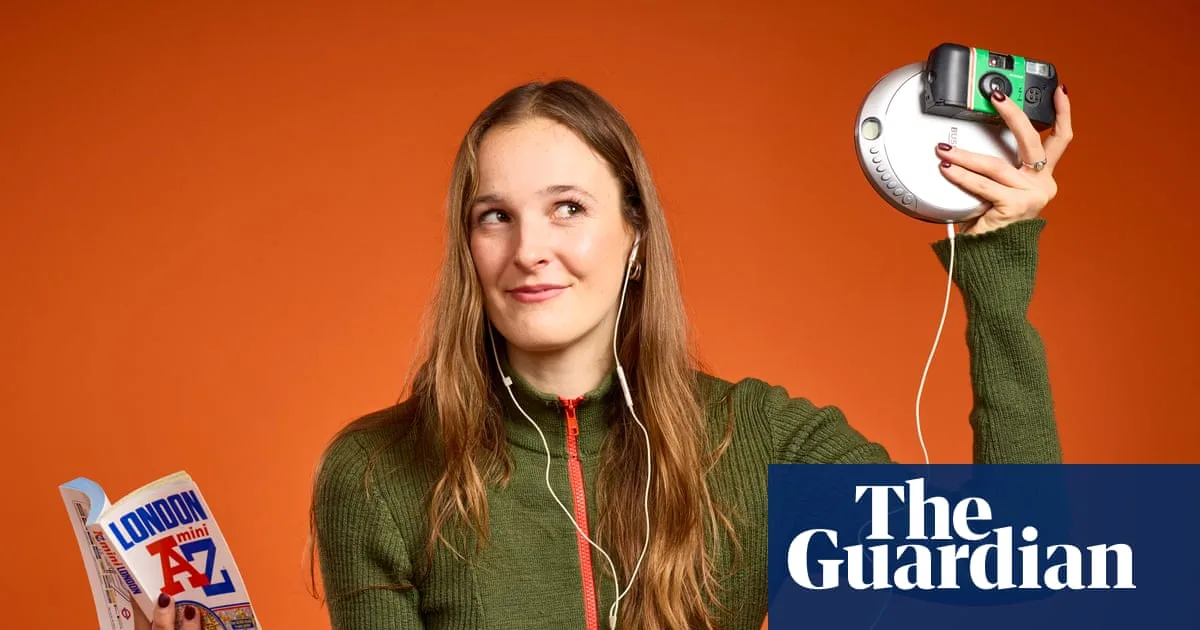
Increased screen time has been associated with depression, anxiety and poorer sleep. But is it possible to live lo-fi in a hi-tech world? For a month, I tried: swapping my iPhone for a Nokia which I can only use to text, call and play Snake; also, a Walkman and a film camera. I picked up physical copies of books, newspapers and magazines; I used a London A-Z for directions, and hunted down my physical bank cards or tried to use cash. The only screen time exception was for work, where from 9-5 I used my laptop to respond to emails and write.
“You’re going to look like such a performative hipster,” my flatmate Ben says, as I’m setting up my new devices. He’s right. I leave the Walkman behind, but my bag is still heavier than usual with my book, notepad, A-Z and wallet. I haven’t taken the bus into work yet from my new home so I follow a hand-drawn map to the stop and run for a bus. I stupidly didn’t write down the bus number but that one sounds familiar. It’s not the one, two friendly strangers tell me, but I can swap on to another at Angel. “We’ve outsourced our memory to our phones,” says Nicholas Kardaras, author of Digital Madness and a former assistant clinical professor of psychology at Stony Brook University, New York. “And unfortunately the ease and comfort of being lubricated by technology just means our human skills atrophied. It is use it or lose it.”
The bus is crawling. Normally, I would have looked up a different route. I try to message a friend back but it’s difficult having to click each button multiple times for the letter I want. “Hard work,” I manage. I read for the rest of the journey. On my lunch break, my sister and I go for a walk around the park. When she leaves me to do another lap, I have an urge to check Instagram and my emails but I’m only getting the odd SMS. I’m craving the back-and-forth WhatsApps with friends telling me fun facts about their day. I feel a little unsettled, but I try to focus on the changing leaves on the trees. I have thoughts that wouldn’t usually have the time to surface. How stressful. After work, I go to see the saxophone player cktrl at the ICA. I’m a little worried about collecting the tickets without access to the Dice app I bought them on, but I show them my passport instead. I would normally join the throngs of people filming a song or two, so I could upload some blurred clips with poor sound to social media.