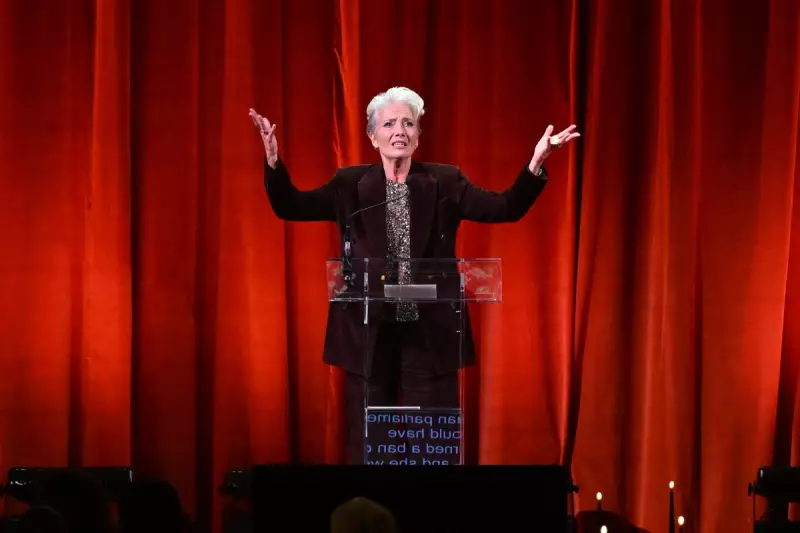
Dame Emma Thompson, the celebrated British actress and screenwriter, has issued a compelling warning about the dangers of artificial intelligence in creative industries during a candid appearance on The Late Show with Stephen Colbert.
The Human Element Under Threat
Speaking with characteristic wit and wisdom, Thompson expressed deep concerns about AI's potential to fundamentally alter creative expression. "It's going to kill creativity," she stated emphatically, highlighting how technology might strip away the essential human elements that make storytelling meaningful.
A Veteran's Perspective on Technological Change
The double Oscar-winner, whose career spans over three decades, shared her observations about how technology has already transformed the acting profession. She recalled the seismic shift from traditional film to digital formats, noting how the industry adapted while preserving the craft's core values.

"We went from film, which is a very expensive and very slow process, to digital, which is very cheap and very fast," Thompson explained, drawing parallels to the current AI revolution sweeping through entertainment sectors.
Beyond Efficiency: The Soul of Storytelling
While acknowledging AI's practical applications, Thompson questioned whether technological efficiency should trump artistic integrity. Her concerns extend beyond mere technical replacement to the deeper implications for human connection and emotional truth in creative works.
The fundamental question she poses resonates throughout the entertainment industry: at what point does technological advancement begin to compromise the very essence of what makes art meaningful to human experience?
A Growing Industry Conversation
Thompson's comments arrive amid intense debate within Hollywood and global creative communities about AI's role in filmmaking, writing, and performance. Her perspective adds significant weight to ongoing discussions about ethical boundaries and protective measures for artists.
As one of Britain's most respected acting talents, her warning serves as both caution and call to action for creatives navigating this new technological landscape.