The global race to develop Artificial General Intelligence (AGI) is underpinned by a staggering financial gamble, with experts warning that a failure to deliver could trigger a severe economic crash reminiscent of the 2008 crisis. Trillions of dollars are being poured into datacentres, chips, and talent, all predicated on the expectation that AI will soon achieve human-level intelligence across a vast array of tasks.
The Stakes of the AGI Promise
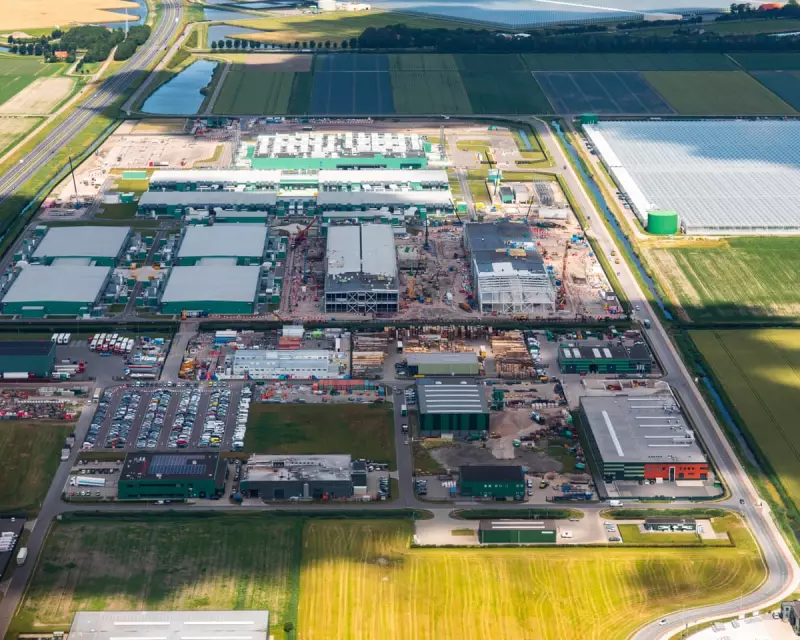
The figures involved are astronomical. An estimated $2.9 trillion is being spent globally on datacentres, the critical infrastructure for AI. Chipmaker Nvidia, which powers advanced AI systems, boasts a market capitalisation exceeding $4 trillion. The competition for top talent is equally fierce, with reports of signing bonuses as high as $100 million being offered by Meta to engineers from rivals like OpenAI.
This colossal investment is driven by the promise of AGI—a theoretical state where AI systems can perform white-collar jobs in fields like law and accounting, potentially replacing human labour and unlocking unprecedented profits. David Cahn, a partner at Sequoia Capital, starkly summarised the pressure in October, stating that "nothing short of AGI will be enough to justify the investments now being proposed."

A Wall of Risk: Warnings from AI Pioneers
However, one of the founding figures of modern AI, Yoshua Bengio, has sounded a clear alarm. He warns that progress towards AGI could unexpectedly stall, leading to a disastrous financial correction. "There is a clear possibility that we will hit a wall," Bengio states. "That could be a real [financial] crash. A lot of the people who are putting trillions right now into AI are also expecting the advances to continue fairly regularly at the current pace."
This sentiment is echoed by David Bader of the New Jersey Institute of Technology, who cautions that current spending is focused on "scaling up" existing chatbot technology. He argues that if AGI requires a fundamentally new approach, the current strategy is futile. "It’s like trying to reach the moon by building taller ladders," Bader says.
Debt, Bubbles, and Systemic Vulnerability
The financial exposure extends far beyond equity markets. Analysts at Morgan Stanley estimate the $2.9 trillion datacentre spend will be partly funded by cash-rich tech giants, but the remainder must come from other sources. This includes the risky private credit market, which has already provided $29 billion to Meta for a single datacentre.
According to JP Morgan, AI-related sectors now account for roughly 15% of US investment-grade debt, surpassing the banking sector. High-yield "junk" debt and asset-backed securities are also fuelling the boom. Bader warns of potential "contagion across multiple debt markets simultaneously" if AGI timelines slip.
Stock markets are also precariously reliant on AI hype. The "Magnificent 7" tech stocks—Alphabet, Amazon, Apple, Tesla, Meta, Microsoft, and Nvidia—now constitute over a third of the S&P 500's value. The Bank of England has warned of "the risk of a sharp correction" due to these inflated valuations, with the IMF noting they are nearing dotcom bubble levels.
Even industry leaders acknowledge the speculation. Alphabet's CEO Sundar Pichai has spoken of "elements of irrationality," while Amazon's Jeff Bezos described a "kind of industrial bubble."
The Optimistic Counterview
Not all observers believe the spending is reckless. Technology analyst Benedict Evans argues the investment is manageable in a global context, comparing it to the steady $600 billion annual spend on oil and gas extraction. He contends that transformative gains from current generative AI tools, even without achieving full AGI, could justify the expenditure by revolutionising industries like advertising, software, and search.

Ultimately, the world is caught in a trillion-dollar dilemma. The successful development of AGI carries profound and alarming consequences for society and the economy. Yet, as leading experts highlight, the cost of not getting there—of hitting a technological and financial wall—could be equally devastating.