AI Must Augment Rather Than Replace Human Workers to Avoid Economic Doom
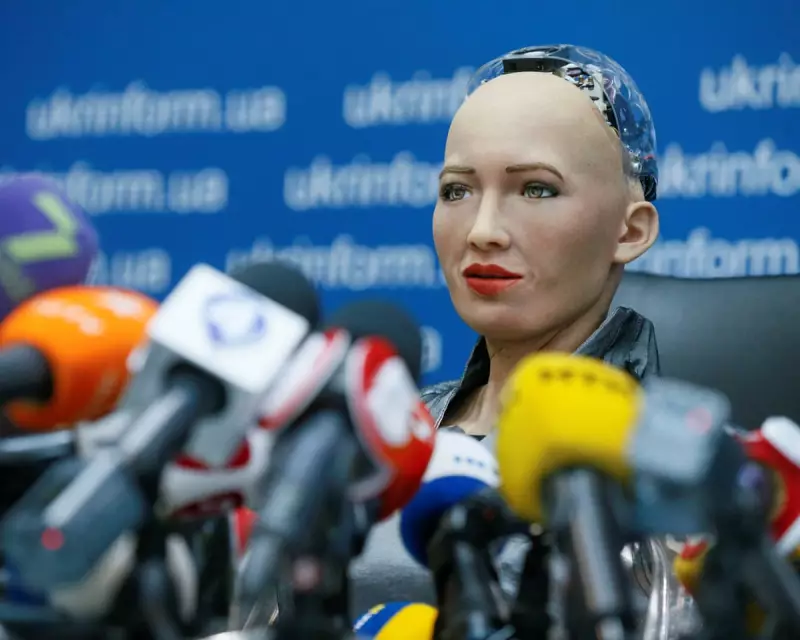
In a striking visual from a recent news conference, a humanoid robot took centre stage, symbolising the rapid advance of artificial intelligence. This image underscores a critical debate: policymakers are being urged to nudge companies towards developing technologies that put powerful tools in human hands, rather than replacing workers entirely. The call comes amid warnings that without this shift, human labour could face severe consequences, as tech risks losing its social acceptance unless it demonstrably improves lives.
Davos Debates and Dystopian Visions
At the World Economic Forum in Davos, Elon Musk sparked controversy by enthusiastically envisioning a future with "more robots than people," even suggesting robots could watch over children. However, critics argue that such a vision neglects the essential human connection and love that give life meaning. Musk's comments highlight how major decisions about technological progress are often driven by a small, powerful group of individuals, predominantly men, raising concerns about accountability and oversight.
Notably, discussions at Davos frequently sidestepped pressing issues. For instance, Larry Fink, the WEF's interim co-chair, failed to question Musk about the Grok chatbot's generation of millions of sexualised images, as reported by a New York Times investigation. Similarly, Meta's Mark Zuckerberg was absent, possibly avoiding scrutiny over the $70bn invested in the metaverse with limited returns, and the misuse of Meta's smart glasses for covert filming.

IMF Warns of an AI 'Tsunami' in the Labour Market
Kristalina Georgieva, managing director of the International Monetary Fund, delivered a stark warning at Davos, stating that the failure to regulate tech is a top concern. She emphasised that AI is transforming our world faster than we can adapt, with a looming "tsunami" in the job market as roles are transformed or eliminated. Georgieva stressed that work provides dignity and purpose, making the AI shift profoundly consequential beyond mere economics.
The IMF advocates for governments to invest in education and reskilling, implement robust competition policies to prevent innovation benefits from concentrating in few hands, and strengthen welfare safety nets. This approach aims to prepare populations for inevitable changes while ensuring equitable distribution of gains.
The Augmentation vs. Automation Dichotomy
Erik Brynjolfsson, director of Stanford's digital economy lab, chaired a WEF session on "jobless growth," pointing to research indicating AI-related job losses among young US workers, particularly in sectors where automation supersedes augmentation. He argues that the Turing test, which focuses on replicating human intelligence, sets a misguided goal. Instead, AI should augment human abilities, allowing workers to retain economic and political power and share in the value created.
Brynjolfsson urges policymakers to use tax incentives and regulations to steer companies towards technologies that enhance human skills. This perspective was echoed by Microsoft CEO Satya Nadella, who highlighted AI's potential benefits, such as freeing up doctors to spend more time with patients. However, Nadella cautioned that tech must prove it improves lives to maintain "social permission," or risk backlash if it merely enriches a few firms.
Business Realities and Union Calls for Action
A PWC poll of UK chief executives revealed that while 81% prioritise AI investments, only 30% have seen cost reductions, suggesting intense pressure to cut costs, likely targeting wages. This dynamic underscores the urgency for a balanced approach. Trade unions, like the AFL-CIO led by Liz Shuler, are demanding an urgent conversation on sharing productivity gains broadly. Shuler warned that if AI aims to de-skill or replace workers without a path forward, it could spark societal unrest.
Ultimately, the consensus among experts is clear: to avoid a dystopian future, AI must be harnessed to augment human work, not replace it. Policymakers, businesses, and unions must collaborate to ensure technology serves society, preserving jobs and enhancing human potential in an era of rapid change.