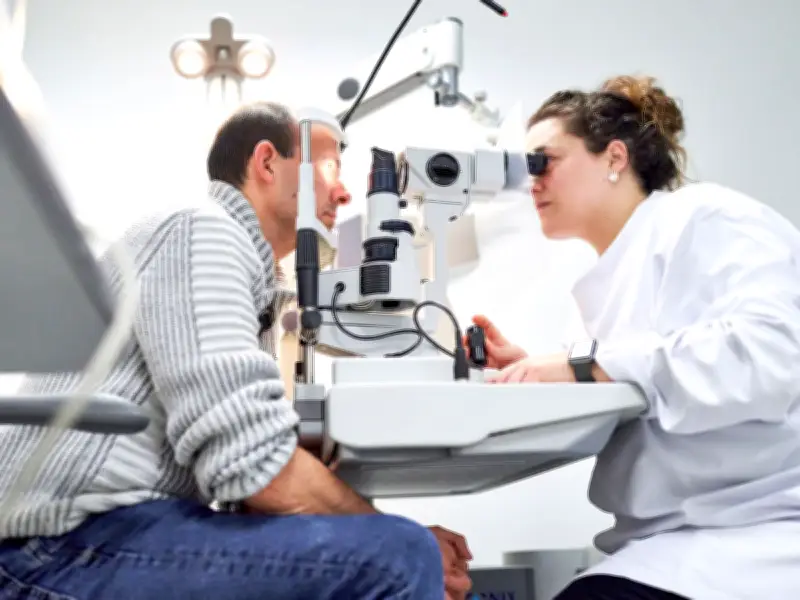
A simple eye test, enhanced by artificial intelligence, could soon detect diseases like heart attack, Parkinson's disease, and dementia long before symptoms appear, according to scientists at the University of Manchester.
Study Overview
The research, published in Nature Cardiovascular Research, analyzed health data from over 68,000 participants in the UK Biobank. Researchers developed an AI tool to explore links between eye health and disease risk, using scans commonly performed at opticians.
Lead author Dr. Tom Julian, an eye doctor and researcher at the University of Manchester and Manchester Royal Eye Hospital, stated: “Our findings show that the eye can reveal a remarkably broad picture of whole‑body health, offering a way to identify those at risk of heart and brain disease before they occur.”
Types of Scans Used
The study utilized two types of eye scans: optical coherence tomography (OCT), which provides 3D images of the inner eye lining, and color fundus photographs (CFP), which are simple photographs of the back of the eye. The team found that OCT was more strongly linked to neurological traits, while CFP was associated with cardiovascular traits.
Key Findings
- Eye features are linked to genes involved in neurodegenerative disease pathways, including Parkinson's and dementia.
- Eye scans can indicate blood pressure, blood vessel stiffness, and heart function.
- Associations were found between the eye and brain size, as well as tiny changes in brain tissue structure detected via MRI.
- Connections between the eye and fat-related molecules in the blood suggest links to general health.
Dr. Panos Sergouniotis, who oversaw the research, commented: “While more work is needed before these tests could arrive on the high street, we hope and believe that routine eye tests will one day be used as part of health screening for disease prevention.”
Professor Frangi, from the National Institute for Health and Care Research (NIHR) Manchester Biomedical Research Centre, added: “Using scans available on every high street, an eye test may become much more than a way to check your glasses prescription.”
The research was supported by the NIHR Manchester Biomedical Research Centre, the BHF Manchester Centre of Research Excellence, and other funders.