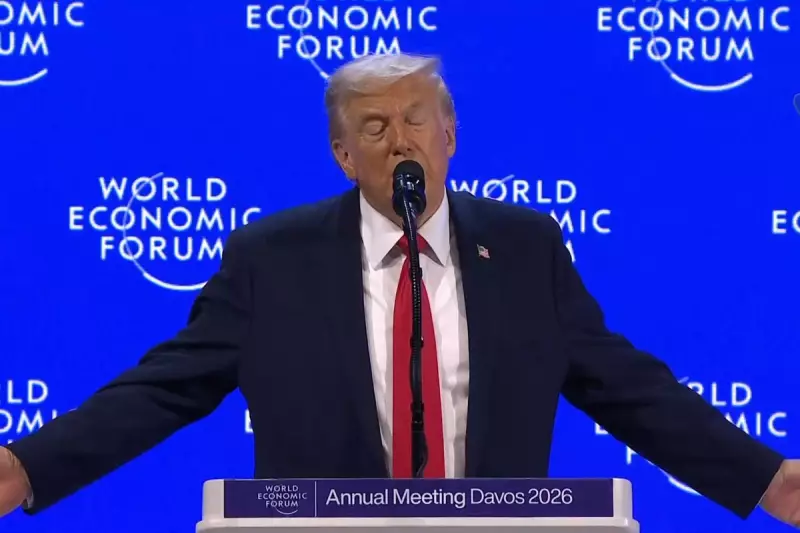
The World Economic Forum in Davos, Switzerland, has become the stage for a stark warning from a leading artificial intelligence executive, who has branded a recent US decision to permit advanced AI chip sales to China as "crazy" and fraught with peril.
Anthropic CEO Sounds Alarm on National Security
Dario Amodei, the Chief Executive Officer of AI research company Anthropic, delivered a scathing critique of the Trump administration's move to authorise Chinese sales of Nvidia's powerful H200 AI chip. Speaking at the prestigious global gathering, Amodei drew a dramatic parallel, suggesting the action was akin to "selling nuclear weapons" and posed "incredible national security implications" for the United States.
Contrasting Views on Chinese AI Capabilities
This dire assessment was not universally echoed at the forum. Demis Hassabis, CEO of Google's DeepMind, offered a more measured perspective on the competitive landscape. He indicated that Chinese AI firms currently lag behind their leading US and European counterparts, estimating the gap to be approximately six months in terms of technological advancement.

The controversial approval, granted just last week, concerns Nvidia's second most powerful AI processor. It is noteworthy that Nvidia itself supplies chips to Amodei's company, Anthropic, for developing its own AI models, adding a layer of industry insight to his criticism.
Conditions and Context of the Chip Deal
The agreement for these sensitive exports is not without restrictions. It mandates that Chinese customers must demonstrate they have "sufficient security procedures" in place and explicitly prohibits any military applications of the technology. President Donald Trump has defended the policy, asserting that such controlled sales are a strategic tool to maintain America's AI lead on the global stage.
This debate unfolds against a backdrop of broader geopolitical tensions, with President Trump having previously articulated ambitions for the US to acquire Greenland, citing the need to counter potential territorial advances by China and Russia. The Davos discussions highlight the intricate and high-stakes intersection of technology, commerce, and international security in the modern era.