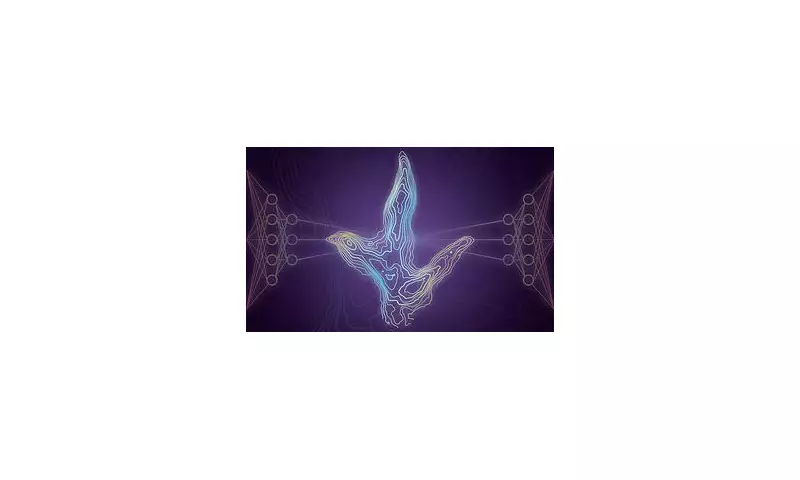
A groundbreaking artificial intelligence application developed by researchers at the University of Edinburgh is fundamentally reshaping our understanding of avian evolution and the origins of flight. The innovative tool, named DinoTracker, has been deployed to meticulously analyse fossilised dinosaur footprints dating back more than 200 million years, yielding results that challenge long-held scientific timelines.
Revolutionising Paleontology with Artificial Intelligence
For over a century, paleontologists have struggled with the subjective interpretation of dinosaur tracks, relying on manual methods that inevitably introduced human bias. The Edinburgh team sought to overcome this persistent challenge by creating DinoTracker, an advanced AI application that utilises sophisticated algorithms to recognise and classify dinosaur footprints with unprecedented objectivity.
To train their revolutionary system, researchers fed the application nearly 2,000 fossil footprints alongside millions of artificially generated variations designed to mimic natural changes such as sediment compression and edge displacement. Remarkably, subsequent testing has demonstrated that DinoTracker can now identify dinosaur footprints with approximately 90 percent accuracy, even when dealing with contentious or poorly preserved specimens.

Uncanny Resemblances and Evolutionary Implications
One of the most startling discoveries made possible by the AI application concerns the striking similarities between certain dinosaur tracks and footprints left by modern birds. The analysis revealed that several fossilised tracks share what researchers describe as 'uncanny' features with both extinct and contemporary avian species.
According to the study authors, these findings suggest two possible interpretations: either birds originated approximately 60 million years earlier than current scientific consensus maintains, or some dinosaur species independently evolved feet that coincidentally resembled those of birds. This revelation has profound implications for our understanding of evolutionary timelines and the development of flight capabilities.
Scottish Footprints and Broader Applications
The research team further applied their AI tool to mysterious footprints discovered on Scotland's Isle of Skye, which have perplexed scientists for years. DinoTracker's analysis suggests these tracks may have been created around 170 million years ago by some of the earliest known relatives of duck-billed dinosaurs.
Professor Steve Brusatte, a co-author of the study, emphasised the significance of this technological advancement: 'This study represents an exciting contribution to paleontology and provides an objective, data-driven method to classify dinosaur footprints – something that has stumped experts for over a century. It opens up exciting new possibilities for understanding how these incredible animals lived and moved, and when major groups like birds first evolved.'
Dr Gregor Hartmann of the Helmholtz-Zentrum research centre, another study co-author, highlighted the tool's broader potential: 'Our method provides an unbiased way to recognise variation in footprints and test hypotheses about their makers. It's an excellent tool for research, education, and even fieldwork.'
Future Directions and Scientific Impact
Looking forward, the research team anticipates that DinoTracker will significantly enhance our comprehension of dinosaur behaviour, movement patterns, and evolutionary relationships. The application's ability to analyse footprints with minimal human bias promises to revolutionise how paleontologists approach fossil evidence and interpret Earth's ancient history.
Professor Brusatte summarised the achievement's significance: 'This computer network might have identified the world's oldest birds, which I think is a fantastic and fruitful use for artificial intelligence.' The development represents a powerful convergence of cutting-edge technology and traditional paleontology, offering new methodologies to investigate questions that have remained unanswered for generations.