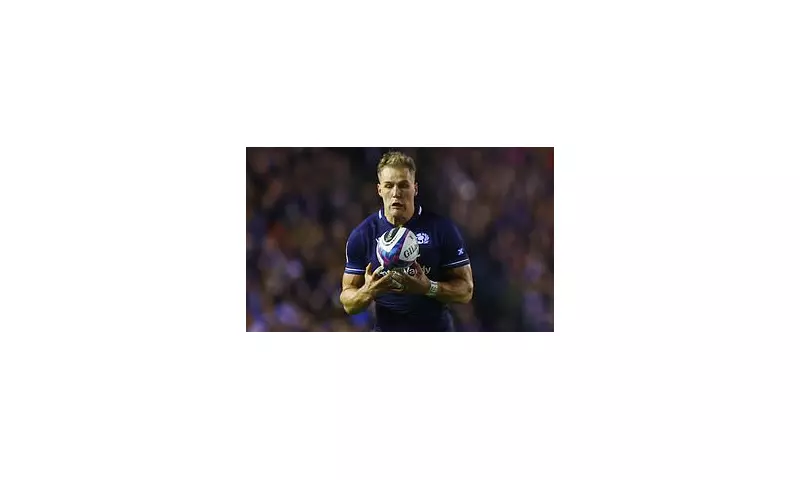
Scotland's Six Nations Selection Conundrum: Van der Merwe's Form Crisis
If you were to compile a highlight reel of Scotland's most memorable moments in the Six Nations championship over recent seasons, Duhan van der Merwe would undoubtedly feature as a central figure. Since emerging as the destructive force in Scotland's attacking line during late 2020 and 2021, no player has scored more tries in the competition than Van der Merwe's impressive tally of 16. His calcutta cup heroics have become the stuff of legend, particularly his stunning try at Twickenham in 2023 and a remarkable hat-trick against England at Murrayfield the following year.
The powerful winger has delivered crucial scores in historic away victories in Paris and Cardiff, establishing himself as a truly box-office player whose combination of explosive power and clinical finishing has provided Scottish rugby fans with countless unforgettable moments. However, as this year's Six Nations championship approaches with Scotland's opening match against Italy in Rome scheduled for February 7, head coach Gregor Townsend finds himself grappling with an uncomfortable reality.
Current Form Raises Serious Questions
Based purely on current performances, there is a compelling argument that Van der Merwe should not feature in Scotland's starting lineup when the championship begins. The winger was dropped from the squad during the Autumn Tests and has since failed to produce the kind of form that would justify an immediate recall. This decline follows a disappointing series for the British and Irish Lions during their tour of Australia last summer, marking a significant downturn for a player who had previously been virtually undroppable.

There were hopes that Van der Merwe would return to Edinburgh and rediscover his peak form and fitness, but this anticipated resurgence has simply not materialised. He has managed just four appearances since the autumn internationals and has been largely anonymous in those outings. Persistent injuries have hampered his efforts to regain his best form, creating a perfect storm of circumstances that has seen other players surge ahead in the selection pecking order.
Strong Competition for Wing Positions
The Glasgow Warriors duo of Kyle Steyn and Jamie Dobie now represent the primary contenders for wing positions, alongside the ever-dangerous Darcy Graham. Steyn captains a Warriors side currently performing as well as any team in European rugby and offers a more rounded skillset than the powerful but currently struggling Van der Merwe. Meanwhile, Dobie presents an intriguing option with his versatility - primarily a scrum-half, his rapid pace and finishing ability have made him a genuine threat on the wing, while his capacity to cover multiple positions adds significant value to any matchday squad.
Towness has spoken positively about Dobie's development, noting: "He's really flourished. We were discussing about a season ago or 18 months ago, he's got all the attributes to be a very good winger." The Scotland coach highlighted Dobie's bravery, defensive capabilities, aerial skills, and finishing prowess as particularly impressive attributes that have emerged during his time on the wing.
Selection Puzzles Beyond the Backline
The composition of Townsend's 40-man squad reveals several other selection surprises that have raised eyebrows among observers. The recall of veteran lock Jonny Gray and hooker Dave Cherry appears particularly curious given their recent histories. Gray, now 31, has been a peripheral figure at Bordeaux and hasn't featured for Scotland in nearly a year, while Cherry, at 35, is playing in France's second division with Vannes.
These selections seem to prioritise experience over form, especially when considering the omission of in-form players like Gregor Hiddleston, who has been outstanding for Glasgow but will instead feature with the 'A' team. Similarly, Cam Henderson's excellent performances for Leicester Tigers and Alex Samuel's contributions for Glasgow have been overlooked in favour of more established names.

The continued inclusion of Grant Gilchrist, who will be 37 by the time of the next World Cup, further suggests a selection policy focused on immediate needs rather than long-term development. This approach appears at odds with building towards future tournaments, though Townsend has defended his decisions by emphasising the importance of current momentum and cohesion.
Building from Club Success
Towness has placed significant emphasis on selecting players from teams enjoying strong domestic form, particularly Glasgow Warriors. "There's players that have hit form individually and in the case of Glasgow, the club's in great form right now," the coach explained. "It should count for a lot. You have a group that are feeling good about their own performances. The club is building momentum. There's cohesion there, too."
This philosophy has seen Edinburgh's Liam McConnell and Freddy Douglas rewarded for their club form, while Northampton's Rory Hutchinson will provide midfield competition alongside established figures like Sione Tuipulotu, Huw Jones, and Stafford McDowall. Adam Hastings and Fergus Burke will offer cover at fly-half behind the mercurial Finn Russell.
With five matches scheduled across six weeks, Townsend anticipates using thirty or more players throughout the championship, suggesting that even those initially omitted may yet feature as the tournament progresses. For Van der Merwe, who turned 30 last summer, there remains time to force his way back into contention, but his immediate focus must be on regaining form and fitness in the limited opportunities available before Scotland's campaign begins.