Ireland's Scrum Under Intense Scrutiny After Troubling Six Nations Performances
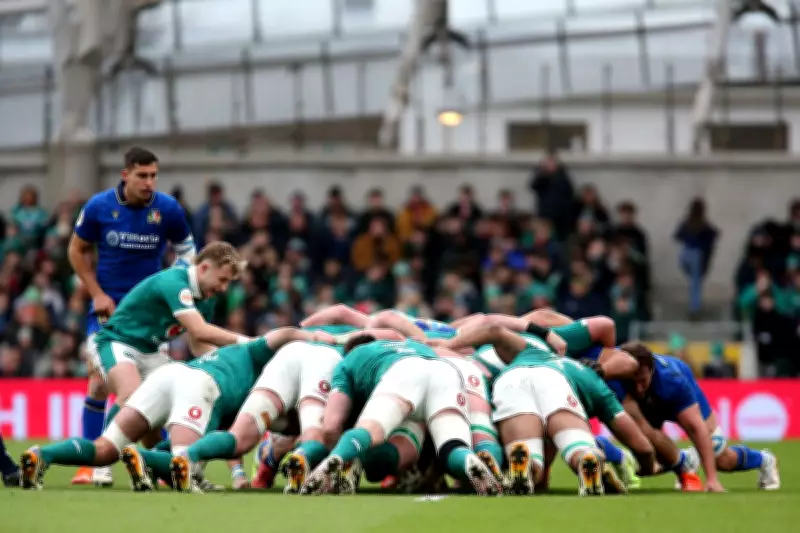
The most striking image from the second round of the Six Nations wasn't a spectacular try or dramatic tackle. It was the sight of Tadhg Furlong, Ireland's veteran tighthead prop and nine-time British and Irish Lion, being hoisted skywards by Italy's scrum. For any rugby observer, a prop's backside pointing toward the clouds signals serious scrummaging problems.
This incident during Ireland's 65th minute against Italy underscored a day of scrum dominance for the Azzurri, raising alarm bells about Ireland's set piece capabilities. While Ireland eventually overcame Italy, the scrum issues represent a worrying trend that England will be eager to exploit in their upcoming Six Nations encounter.
A Pattern of Set Piece Struggles
This wasn't an isolated incident. Ireland's scrum has been exposed in consecutive home fixtures, with the problems tracing back to November when South Africa's pack dismantled Andy Farrell's side so comprehensively that both Andrew Porter and Paddy McCarthy received yellow cards for persistent scrum offences.

The Springboks appeared to prioritize sending a message at scrum-time over scoring points, demonstrating how opponents now view Ireland's set piece as a vulnerability to target.
There is some mitigation for Ireland's struggles. Italy's scrum has developed remarkably over the past year, troubling even South Africa to such an extent that Rassie Erasmus replaced both his props within 25 minutes of their November encounter.
"It's phenomenal how quickly they've come on over the last year," Farrell acknowledged. "Part of the reason I think South Africa were so dominant against us is because Italy put them massively under pressure the week before and there was a reaction to that."
Injury Crisis and Development Concerns
Ireland's injury list compounds their scrum problems. Andrew Porter, Paddy McCarthy, and Jack Boyle are all currently absent, forcing Jeremy Loughman to start as what appears to be Farrell's fourth-choice loosehead. The recent retirement of Cian Healy, who took 137 caps of experience with him, has left a significant void.
While England and France also have prop injuries, Ireland's situation appears particularly acute. Porter's absence represents a major blow, as his unorthodox scrummaging style, though not always favored by referees, had formed a successful partnership with Furlong that anchored Ireland's scrum for years.
The issues extend beyond the front row. Scrummaging requires coordination throughout the pack, and Ireland's struggles against South Africa coincided with the absence of Joe McCarthy, their largest lock. When McCarthy was replaced against Italy after 51 minutes, the scrum deteriorated further, only stabilizing when the similarly substantial Edwin Edogbo entered the fray 18 minutes later.
Systemic Problems in Prop Development
Deeper concerns exist about Ireland's prop development system. The prolonged reliance on Healy, who played past his 37th birthday, highlighted limited emerging options. Leinster's recruitment of French prop Rabah Slimani further underscored domestic development issues.
Statistics reveal the extent of the problem. Across 2025, Ireland ranked bottom among Six Nations teams for percentage of penalties won on their own scrum feed at just 13 percent. By comparison, England achieved 27.3 percent during the same period.
In the United Rugby Championship, three of Ireland's four provincial sides - Ulster, Munster, and Connacht - rank in the bottom six of European teams for scrum win percentage against opposition feeds.
England's Scrum Transformation
England's situation presents a stark contrast. Not long ago, they faced similar questions about their set piece efficacy, relying on veterans Joe Marler and Dan Cole as short-term solutions. Their transformation has been remarkable, with the scrum emerging as a bright spot even during disappointing team performances.
Scrum coach Tom Harrison has emphasized creating a "clean" unit that "gets to the contest" without conceding penalties during the engagement process. England's front-rowers can be heard repeating this mantra during matches via referee microphones.

"Control is a big one," explained prop Joe Heyes in November. "We want to be a ruthless scrum; we don't want to be doing stupid things and giving away ridiculous penalties for overleaning or going too early. We're much more self-disciplined."
Heyes, incidentally Irish-qualified, has made 174 club appearances for Leicester compared to Tom Clarkson's 68 at Leinster, despite being just a year apart in age. This disparity in experience highlights different development pathways.
The Saturday Showdown
With modern rugby's emphasis on contestable kicking leading to more knock-ons and scrum opportunities, a strong set piece has never been more valuable. England will undoubtedly fancy their chances against Ireland's struggling scrum this Saturday.
The question remains whether Ireland can address their technical issues and personnel challenges in time. Their scrum problems appear both immediate and systemic, combining injury absences with longer-term development concerns that opponents like England are perfectly positioned to exploit.
As both teams prepare for their Six Nations clash, the scrum contest may prove decisive, with England's transformed set piece unit facing an Irish pack searching for answers after several difficult outings.