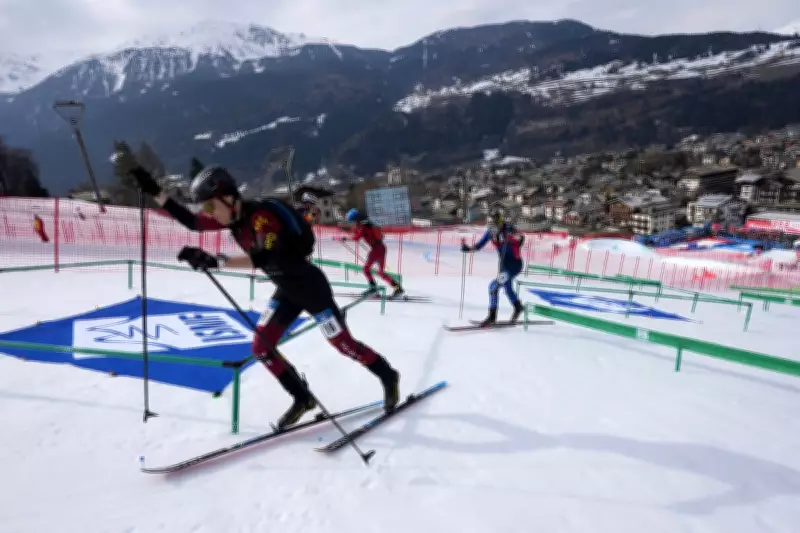
Ski Mountaineering's Historic Olympic Debut at Milan-Cortina 2026
The 2026 Winter Olympic Games in Milan and Cortina d'Ampezzo, northern Italy, will witness a significant sporting milestone with the introduction of ski mountaineering, commonly referred to as 'skimo'. This endurance discipline marks the first new sport added to the Winter Games program since skeleton debuted at the 2002 Salt Lake City Olympics.
What Is Ski Mountaineering?
Ski mountaineering is a demanding endurance sport where athletes ascend mountains using skis equipped with climbing skins, carry their equipment over steep sections unsuitable for skinning, and then descend challenging alpine terrain. At the Olympic level, competitions will take place at the Stelvio Ski Centre in Bormio, featuring thirty-six elite athletes competing across two distinct events.
The Olympic format includes an individual sprint race lasting approximately three to four minutes and a mixed relay event with longer, more rigorous courses. Participants alternate between uphill climbing with specialized ski skins, boot-packing through technical sections, and high-speed downhill skiing, testing their endurance, technical skills, and strategic pacing.

Expanding the Winter Olympic Program
Alongside ski mountaineering, the 2026 Games will introduce several new medal events, including women's doubles luge, women's large hill individual ski jumping, freestyle skiing dual moguls, and alpine skiing team combined. However, skimo stands out as the sole new sport addition, broadening the Winter Olympics' athletic scope.
With fifty-five of one hundred nine medals awarded for skiing events at the 2022 Winter Olympics, questions arise about adding more skiing disciplines. The International Olympic Committee addressed this by approving skimo and three additional skiing events while removing one existing event, aiming to refresh the program.
Historical Roots and Modern Evolution
Ski mountaineering boasts ancient origins dating back over a millennium, evolving from practical mountain travel into organized competition. The sport emerged in the late nineteenth century Alps as an adventure activity before formalizing with events like Italy's Trofeo Mezzalama in 1933.
The first world championships occurred in 2002 in France, followed by biennial championships alternating with continental events. An annual World Cup circuit has professionalized the sport, governed by the International Ski Mountaineering Federation. Skimo gained exposure at the Lausanne 2020 Winter Youth Olympics before achieving full Olympic status.
Unique Athletic Demands and Accessibility
Skimo distinguishes itself by emphasizing upward, human-powered vertical movement, unlike most Winter sports focusing on downward or horizontal motion. This places unique physiological demands on athletes, rewarding pacing, resilience, and energy management strategies.
The sport offers relative accessibility through widely available equipment like climbing skins and micro-spikes, making it more affordable than many mountaineering disciplines. However, risks remain significant as most activities occur off-piste, exposing participants to avalanches, weather hazards, and navigation challenges.
As Olympic exposure increases participation, safety education becomes crucial. Experts recommend proper training, supervised routes, and responsible practices to prevent accidents while democratizing the sport.
Canadian Prospects and International Competition
Canada shows promising development on the international skimo circuit, with athlete Emma Cook-Clarke achieving sixth-place finishes in team and women's sprint events at the 2025 world championships. Although Canada narrowly missed Olympic qualification for 2026, future success could emerge with sustained investment.
Current favorites include Switzerland in women's sprint, France in mixed relay, and Spain in men's sprint. Long-term growth requires grassroots development and international experience, particularly as Canada's elite program remains emergent compared to established European nations like Norway.

Environmental Significance and Olympic Future
Skimo's inclusion reflects evolving Olympic priorities around sustainability, accessibility, and athletic challenge. As climate change threatens snow reliability in host regions, the sport offers a test case for environmental goals, with athletes using human power rather than energy-intensive lift systems.
This shift aligns with broader trends toward environmentally conscious winter sports, suggesting the Olympics may increasingly embrace sustainable practices. While travel and construction emissions remain concerns, skimo represents a meaningful step toward reducing the Games' environmental footprint.
The debut of ski mountaineering at Milan-Cortina 2026 not only introduces a thrilling new discipline but also signals potential directions for the Winter Olympics' future, balancing athletic innovation with environmental responsibility.