Russia Set for Winter Paralympics Return Under National Flag After 12-Year Absence
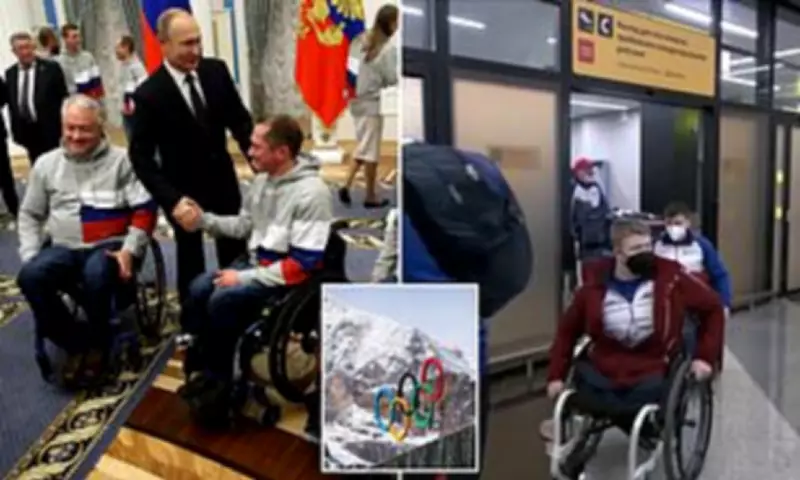
Russian athletes are poised to compete under their own flag at the Winter Paralympics for the first time in twelve years, following a landmark decision by the sport's governing body. The International Paralympic Committee has allocated six quota places to Russia's National Paralympic Committee for the Milano Cortina 2026 Games in Italy, marking a significant reversal of previous suspensions.
Quota Allocations and Team Composition Details
The IPC confirmed that Russian slots have been granted across three disciplines for the upcoming Winter Paralympics. The team will feature one woman and one man in para alpine skiing, alongside one woman and one man in para cross-country skiing, with two additional male snowboarders completing the roster. This allocation represents a cautious but notable reintegration of Russian competitors into the global Paralympic movement.
Historical Context of Russia's Paralympic Bans
This development signals a major comeback for Russia, which was initially banned from the Paralympics in 2016 after investigations uncovered a widespread state-sponsored doping programme. The country faced a subsequent suspension in 2022 following President Vladimir Putin's full-scale invasion of Ukraine, which led to widespread international condemnation and sporting sanctions.

The last occasion Russian athletes participated under their national flag at a Winter Paralympics was during the Sochi 2014 Games, which Russia hosted for both the Olympic and Paralympic events. In the intervening years, any Russian competitors allowed to take part have done so under a neutral banner, without national symbols or anthems.
Controversy and Political Implications of the Decision
IPC President Andrew Parsons has previously asserted that athlete participation decisions are "not linked to participation in wars," while acknowledging that Russia and Belarus had utilised Paralympic sport to promote what Moscow terms its "special operation" in Ukraine. Parsons indicated there is now "less evidence" of the Games being exploited for wartime propaganda purposes, though the decision remains contentious.
Last year, the United Kingdom joined thirty-two predominantly European nations in issuing a joint statement expressing "serious concern" after IPC members voted to partially lift suspensions on Russia and Belarus. The move has sparked debate about the intersection of sports governance with geopolitical conflicts.
Parallel Developments in Olympic Reintegration Efforts
This Paralympic decision coincides with broader indications that Russia may be gradually reintegrated into international sporting competitions. Earlier this month, Olympic chiefs hinted that Russia could soon be permitted back into the Games, with only thirteen Russian athletes currently competing as neutrals at this month's Winter Games following the nation's ostracisation after the 2022 Ukrainian invasion.
International Olympic Committee President Kirsty Coventry recently emphasised a desire to separate athletes from governmental actions, stating during an IOC Session: "We are a sports organisation. We understand politics and we know we don't operate in a vacuum. But our game is sport."
Coventry added: "That means keeping sport a neutral ground. A place where every athlete can compete freely, without being held back by the politics or divisions of their governments. In a world that is increasingly divided, this principle matters more than ever."
Russian Response and Future Outlook
Following Coventry's remarks, Russian IOC member Shamil Tarpischev noted improving relations between his nation and Olympic authorities, telling German media: "It was emphasised in her speech that the political component shouldn't play a role. Because sport is inspiration and the future. So far, everything is going smoothly and honorably."
Tarpischev added: "Compared to the Paris Games, it's much easier now. There's more understanding, and communication with IOC members isn't as tense." This sentiment suggests a potential thaw in sporting diplomacy, though significant discussions and scrutiny are expected to continue as the 2026 Winter Paralympics approach.