Puerto Rico's Flag Flies High Amid Identity Debate at Super Bowl and Olympics
Puerto Rico's Identity Debate at Super Bowl and Olympics

Puerto Rico's Flag Flies High Amid Identity Debate at Super Bowl and Olympics

Puerto Rico is making a significant impact this week on two of the world's most prominent stages: the Super Bowl halftime show and the Winter Olympics. These events provide rare opportunities for the island to showcase its flag globally, yet the question of who is entitled to represent Puerto Rico remains deeply complicated, intertwined with its history, identity, and status as a U.S. territory rather than a full-fledged state. Reactions to recent performances illustrate an evolving acceptance of who can wave the flag.

Contrasting Figures: Bad Bunny and Kellie Delka

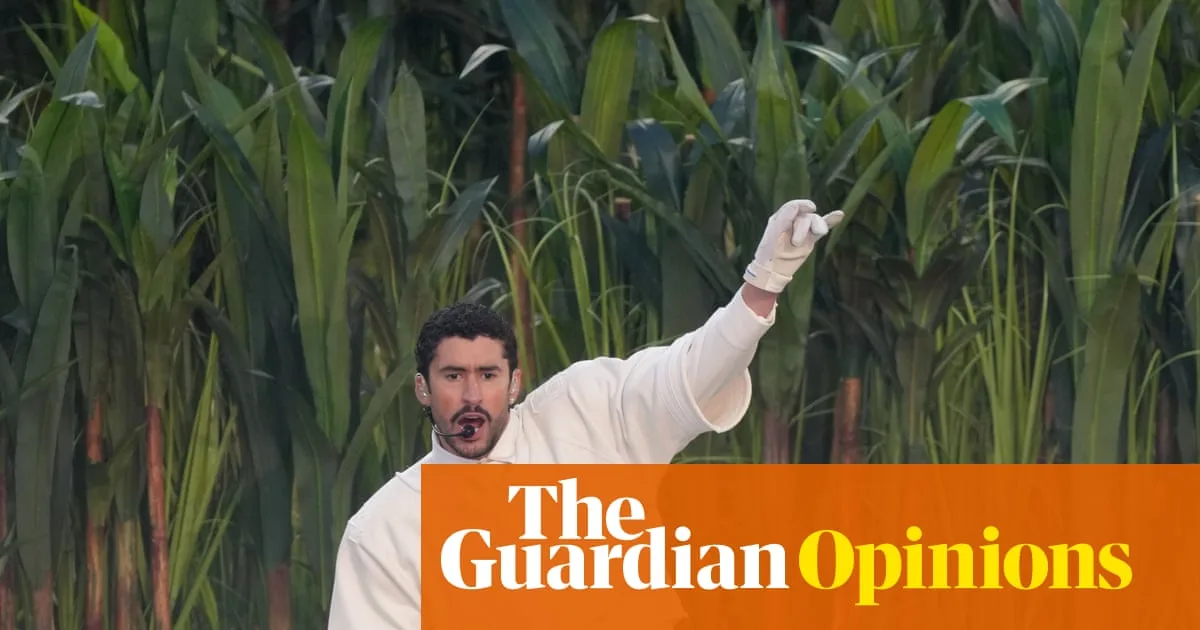
Bad Bunny, a six-time Grammy award winner, consistently centres Puerto Rican culture in his music, using Spanish lyrics, local slang, and references to island politics and daily life. Despite this, his work has achieved mainstream success in the United States. In contrast, Kellie Delka, a native Texan with no prior connections to Puerto Rico before moving there eight years ago, carried the island's flag at the Olympics opening ceremony. Although people born in Puerto Rico are U.S. citizens, the territory fields its own Olympic team, and this year, Delka is its sole representative, competing in skeleton events.

After training runs, Delka told The Associated Press that her focus on racing prevented her from watching the halftime show, but she expressed hope that Bad Bunny might be watching her at the Games. She added, "I hope the whole island's watching." This highlights the ongoing debate about representation, which dates back decades.

Historical Context and Residency Requirements

Decades before Delka, Michael "Mike" González, an American, was part of Puerto Rico's 2002 bobsled team. However, just before the Salt Lake City Games, it emerged that he could not prove he met the island's residency requirements. This led to the withdrawal of the two-man team and a scandal that resulted in the Olympic committee revoking recognition of Puerto Rico's entire winter sports federation, preventing any athlete from representing the territory in the Winter Games for 16 years.

According to Antonio Sotomayor, an associate professor at the University of Illinois Urbana-Champaign and author of "The Sovereign Colony: Olympic Sport, National Identity, and International Politics in Puerto Rico," there has always been debate over who qualifies as Puerto Rican, especially as more generations grow up off-island and may not speak Spanish. He noted, "When you have athletes that do not speak the one element that mostly differs us from the U.S., it rubs the wrong way for many people."

Demographics and Olympic Criteria

Recent U.S. census data from 2024 shows that 6 million people in the U.S. identify as Puerto Rican, second only to Mexican among specific Latin American origins. Despite being U.S. citizens, Puerto Ricans cannot vote in presidential elections and have limited representation in Congress. The island's Olympic committee requires athletes to be born in Puerto Rico, have a parent or grandparent born there, or live there for at least two consecutive years. While most Olympians come from the island, exceptions exist.

For example, hurdler Jasmine Camacho-Quinn competed for Puerto Rico at the 2020 Tokyo Olympics as a tribute to her mother's heritage, despite growing up in South Carolina with Puerto Rican cultural influences. She won gold, but some Puerto Ricans expressed skepticism. Conversely, tennis star Gigi Fernández, born in Puerto Rico, chose to represent the U.S. in the 1992 and 1996 Olympics, citing doubts about Puerto Rico's qualification chances in doubles. She faced criticism from fans, especially after Puerto Rican tennis player Mónica Puig won the island's first Olympic gold in 2016.

Cultural Fidelity in Music and Sport

Similar dynamics are evident in Puerto Rican music. Ricky Martin, whose birth name is Enrique Martín Morales, initially sang in English to break into the U.S. market but later praised Bad Bunny for staying true to his roots. In a letter to Puerto Rican newspaper El Nuevo Día, Martin wrote, "You won without changing the color of your voice. You won without erasing your roots. You won by staying true to Puerto Rico." During his halftime show, Bad Bunny invited Martin to perform "Lo Que Le Pasó a Hawaii," a song that critiques American cultural colonization.

Delka's situation is not unique; tropical countries often recruit widely for Winter Games athletes. For instance, Nicolas Claveau-Laviolette represents Venezuela despite living mostly in Canada, and Richardson Viana skis for Haiti after being raised in France. Delka, a former track and field athlete from Texas, moved to Puerto Rico after being recruited by the island's winter sports federation. She does not claim to be Puerto Rican but has made the island her home and is learning Spanish, though she admits to forgetting her lessons under pressure.

Delka's training involves weightlifting and running under the tropical sun, often in a bikini, as she prepares for skeleton races where she reaches speeds of 80 mph. Her helmet features an eye symbol meant to watch over Puerto Rico from space, and she aims to finish in the top 15, confident in her ability to surprise in a sport decided by seconds.

Public Reception and Social Media Response

Acceptance of foreign-born athletes in Puerto Rico has been gradually increasing, particularly for diaspora members like Camacho-Quinn. Sotomayor explained, "Even if they don’t know the Spanish language, they still uphold, protect, defend, celebrate many other cultural markers of Puerto Rico. That’s mostly what matters at this point." Delka reports that her neighbours embrace her once they learn how long she has lived on the island.

Social media reactions after the opening ceremony were positive, with Delka waving the flag and wearing a skirt inspired by traditional dance attire. At a Bad Bunny watch party in San Juan, some attendees were unaware of Delka's participation, but Juan Carlos Lugo from Guaynabo stated, "As long as she wears the Puerto Rican flag on her chest and represents, I am proud."

This week's events underscore the complex interplay of identity, culture, and representation for Puerto Rico, as it navigates its unique status on the global stage.