Norway's Winter Olympic Dominance: Tradition, Depth and Development Explained
Norway's overwhelming supremacy in cross-country skiing and other winter disciplines at the Milan Cortina Olympics can be traced directly to its exceptional depth, sophisticated development systems, and a winning culture meticulously cultivated over many decades. This analysis comes from both experts and passionate fans observing the Games.
A Medal Tally That Tells a Story
Outside the Olympic cross-country stadium nestled in the Dolomite mountains, Norwegian flags adorn the railings like festive bunting on a national holiday. Supporters from the Scandinavian nation have established a nearby camp, maintaining a live tally of medals secured by their athletes. Following each triumph, a gold sticker is proudly affixed to their board.
There have been numerous occasions to do so: Norway commands the medals table with an impressive haul of 33—comprising 15 gold, eight silver, and 10 bronze medals. This consistent dominance inevitably prompts a recurring question: How does Norway, with a population of just 5.6 million, emerge as such a formidable superpower on snow at the world's premier winter sports event?

The Klaebo Phenomenon and Team Synergy
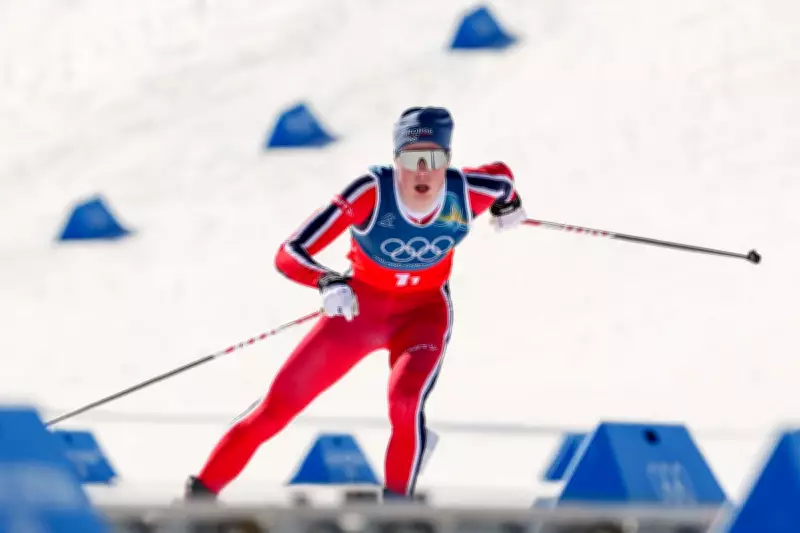
The spearhead of Norway's Olympic campaign this year is Johannes Hoesflot Klaebo, a cross-country skier who functions as a veritable gold medal machine. He has secured five gold medals at the Milan Cortina Games, elevating his career total to a Winter Games record of 10 golds.
Klaebo clinched his fifth gold on Wednesday in the fiercely contested men's team sprint, narrowly holding off a late surge from the American team to cross the line in 18 minutes and 28.9 seconds. The 29-year-old athlete, competing in his third Olympics, emphasized that the collective experience amassed by his team is the crucial ingredient for victory.
"In a team sprint, much of the strategy involves maintaining a leading position and skiing with maximum efficiency. Our experience teaches us that races are typically decided on the final lap," Klaebo explained. "Fortunately, I have found myself in that pivotal position numerous times now, and I feel entirely comfortable there. Our approach was simply to enjoy the moment and stay in contention—when it boiled down to the final sprint, that's when it truly mattered. Today, our execution was perfect."
A System Built for Success
Many observers contend that Klaebo's extraordinary golden streak is the direct result of a sporting system that has few, if any, rivals in the winter sports arena. Katerina Neumannova, a retired Czech Olympic champion, identifies Norway's structural framework as the bedrock of its achievements. Cross-country skiing ranks among the nation's most popular sports, featuring hundreds of clubs and a vast number of children who begin training at a very young age.
"When you have such a large pool of children, so many dedicated trainers, and so many clubs spread across the entire country, it becomes significantly easier to identify and nurture exceptional talent," Neumannova told The Associated Press.
She further noted that Norway has benefited from the absence of the banned Russian team, a concentrated group of talented team officials providing robust support to athletes, and even the lack of reliable snow in lower latitudes affecting mainland Europe. Moreover, the profound depth of public participation ensures a consistent pipeline of elite competitors.
"Other nations often experience noticeable gaps between athletic generations, but the Norwegian team maintains remarkable stability," Neumannova argued. "When one athlete concludes their career, younger talents are already prepared and emerging to take their place."
New Talent Rising to the Occasion
Klaebo's race partner on Wednesday was Einar Hedegart, a 24-year-old Olympic debutant who had already shared gold in an earlier relay event and secured bronze in the 10-kilometer interval start. "There is undoubtedly some pressure that accompanies racing alongside Johannes, so achieving success here today brings both relief and immense joy," Hedegart remarked after the race.
"To win two gold medals in my first Olympic championship is monumental," he added. "It is an incredibly gratifying and profound feeling."

Tradition as the Foundation
A substantial portion of Norway's supremacy originates from its deep-seated tradition as the cradle of Nordic skiing. Ten medals—six of them gold—have been earned in cross-country skiing, with an additional nine secured in biathlon. Ski jumper Anna Odine Stroem achieved a clean sweep in both the normal and large hill events, adding a silver in the mixed team competition. Jens Luraas Oftebro captured both Nordic combined titles.
The medal success extends even further: Norway claimed two victories in freestyle skiing, picked up two more in Alpine skiing, and completed a full set in speedskating with a gold, silver, and bronze medal.
A Cultural Spirit Embedded in Snow
Finn Dahl, a superfan who handled marketing for the 1994 Lillehammer Olympics in his home country, attributes Norway's success to a way of life intrinsically intertwined with snow. He explained that children frequently embark on family trips to the mountains, where skiing is simply the normal, everyday method of transportation.
"It is a natural way of moving from one cabin to another," Dahl said. "It is a spirit, it is embedded within you. This cultural connection to winter and skiing from a very young age fosters a unique affinity and skill set that translates directly to competitive excellence on the world stage."