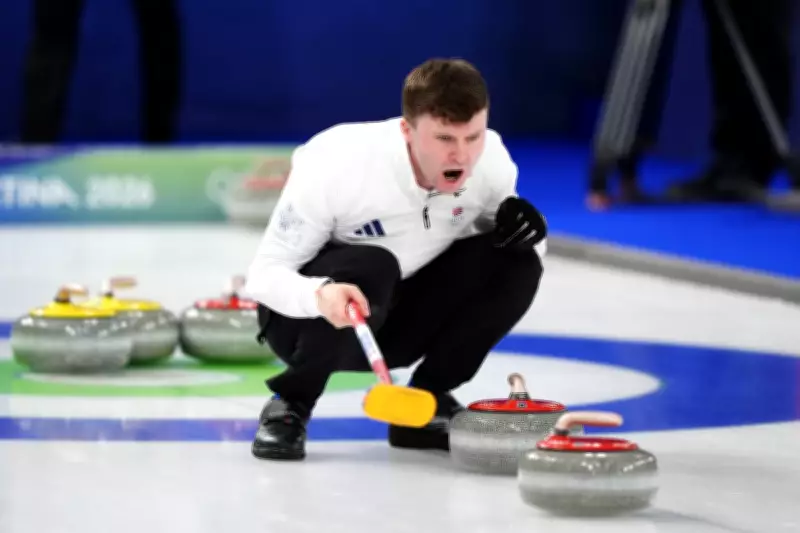
Great Britain's men's curling team finds themselves in a nerve-wracking position at the Winter Olympics, having done all they can on the ice but now forced to watch helplessly as their fate is decided by others.
The Crucial Victory That Kept Hopes Alive
Just when their Olympic dreams appeared to be slipping away following a disappointing run of form, Bruce Mouat's rink delivered a commanding performance that reminded everyone why they entered the tournament as world champions and favourites. Their comprehensive victory over the United States team provided exactly the boost they needed, finishing their round-robin campaign with a 5-4 record from nine hard-fought games.
The British team displayed the kind of dominance that had been expected of them throughout the Cortina competition, needing just six ends to secure their win against an American side struggling under pressure. Mouat, widely regarded as the world's best player on his day, demonstrated his exceptional skill by stealing points in the opening two ends and capitalising on opponent Daniel Casper's errors.

The Frustrating Waiting Game
Despite this impressive display, the victory came with a bitter aftertaste of frustration for Team GB. Having completed their round-robin matches, they must now endure an agonising wait while other teams determine whether they advance to the semi-finals. Switzerland and Canada have already secured their places in the medal rounds, leaving Britain, Norway, Italy, and the USA competing for the remaining two spots.
"It is a horrible position to be in," admitted Mouat, reflecting on the uncertainty. "Having to watch other games and hope they go our way is not the position we wanted to be in but so far so good. We need tomorrow to be the same. We will keep our fingers and our toes crossed and see what happens."
The Complex Qualification Scenario
Britain currently sits third in the standings, but their position remains precarious with both Norway and host nation Italy having one game remaining. The qualification mathematics creates a fascinating scenario: if either Italy (playing unbeaten Switzerland) or Norway (facing Canada, who have lost just once) lose their final matches, Britain will advance. However, if both European teams win, Britain's Olympic campaign will end prematurely.
Team member Hammy McMillan acknowledged the psychological challenge of this situation: "We treat it as two events, qualifying for the semis and then the knock-outs. It's pretty much a clean slate. Everything that's happened this week so far is forgotten about and you've literally got two games."
Historical Parallels and Pressure
There are encouraging historical parallels for the British team to consider. Team GB chef de mission Eve Muirhead, present at the venue, can remind them that her own squad limped to a 5-4 round-robin record in Beijing before going on to claim gold. However, more recent history provides a cautionary tale: just last week in mixed doubles, Mouat and partner Jen Dodds qualified top of their table only to be eliminated in the semi-finals by a Swedish team that had scraped through.
The pressure on this British rink is immense, having arrived in Cortina as tournament favourites and carrying the expectation of completing their medal collection. "We've been very open and honest about what our goal is this week," McMillan stated. "And our goal is to come here and to be standing at the top of the podium. It's the only medal in the last eight years we don't have. So yeah, it will be extremely disappointing if that doesn't happen."
The Performance That Changed Everything
Following their disappointing loss to Canada, the British team knew victory against America was absolutely essential. They responded with what many observers considered their best performance of the entire tournament. The turning point came in the third end when American skip Daniel Casper overthrew his final stone, leaving Britain sitting four stones and taking a commanding 6-0 lead.

Although Casper managed to pull back a couple of points before halfway, Mouat had found his rhythm and delivered another three points in the sixth end, prompting the traditional early handshakes that signal concession in curling. This dominant display served as a timely reminder to rivals that Britain remains capable of blowing any team out of the water when they find their form.
As the team prepares for a tense 24-hour wait, they can take comfort from having delivered when it mattered most. Now, their Olympic destiny rests not in their own hands, but in the outcomes of matches between their competitors - a situation no athlete desires but one they must endure with stoic patience.