F1 2026 Rules Revolution: Overtake Mode, Active Aero and New Power Units Explained
The 2026 Formula 1 season, commencing in March, represents the most substantial overhaul of technical regulations in over a decade. As final pre-season testing unfolds this week, teams and enthusiasts alike are grappling with a comprehensive suite of changes that promise to redefine competitive dynamics. Following McLaren's championship double in 2025, ahead of rivals Mercedes, Red Bull, and Ferrari, the new rules threaten to reshuffle the established order.
Aston Martin and Williams have long targeted 2026 as a potential breakthrough year, while newcomers Audi and Cadillac aim for strong debuts when the season begins in Australia on 8 March. Amidst these strategic shifts, Formula One has taken steps to simplify the terminology surrounding the new systems, providing clarity for commentators, analysts, and fans.
Key New Mechanisms for Drivers
Overtake Mode: This innovation replaces the Drag Reduction System (DRS), which is being retired after fifteen years of service. While the fundamental objective remains identical—facilitating overtaking—the implementation differs. Overtake mode grants additional power to any car within one second of the vehicle ahead, but with a single detection point per circuit. Drivers can deploy this power boost in a concentrated burst or distribute it strategically across an entire lap.

Boost Mode: An energy deployment tool from the Energy Recovery System (ERS), boost mode provides maximum power from both the engine and battery at the driver's command. Unlike overtake mode, it can be activated anywhere on the track, serving equally well in offensive maneuvers to pass rivals or defensive actions to protect position.
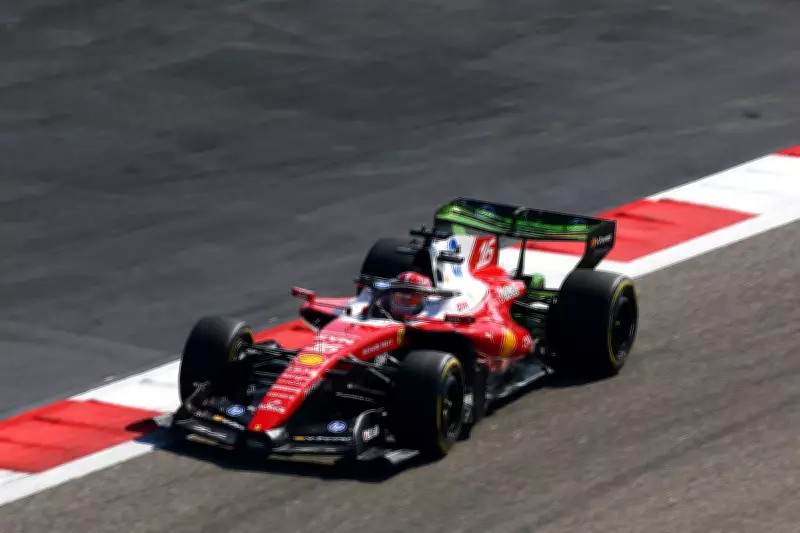
Active Aerodynamics: For the first time in Formula 1 history, front and rear wings will feature dynamically adjustable angles that change automatically based on whether the car is on a straight or navigating a corner. The wings open to reduce drag on straights (X mode) and close to increase downforce in corners (Z mode). This system aims to optimize power utilization through enhanced grip, compensating for a 15-30% overall reduction in downforce resulting from the removal of ground-effect floor tunnels used from 2022 to 2025.
Recharge Methods: Drivers can replenish their batteries through three primary methods:
- Energy recovered during braking
- Throttle lift at the end of straights (lift and coast technique)
- Applying partial power while cornering
Comprehensive Technical Regulation Changes
While the FIA regularly updates Formula 1 regulations, with the last major revision occurring in 2022, the 2026 modifications are arguably the most significant in the sport's history. The changes encompass chassis, aerodynamics, tires, and power units, fundamentally altering car design and performance.
Chassis and Aerodynamics:
- Smaller and Lighter: Wheelbases are reduced by 200mm to 3400mm, width decreases by 100mm to 1900mm, floor width is cut by 150mm, and minimum weight drops by 30kg to 770kg. These adjustments aim to enhance agility and responsiveness.
- Reduced Downforce: Overall downforce decreases by approximately 15-30% due to eliminated ground-effect tunnels.
- Reduced Drag: A 40% reduction in overall drag improves straight-line speed.
- Active Aerodynamics: Movable wings replace DRS, providing configurable high and low downforce settings to match track demands.
Tires: While retaining 18-inch wheels, front tires narrow by 25mm and rear tires by 30mm, reducing drag and minimizing weight.
Power Unit:

- 50/50 Power Split: A balanced distribution between internal combustion engine (ICE) and electric power marks a significant shift.
- Simplified Hybrid System: The MGU-H component, which recovered energy from exhaust and turbo, is eliminated. Meanwhile, MGU-K power surges from 120kW to 350kW, enhancing overtaking capability and straight-line acceleration.
- Sustainable Fuel: All teams will utilize advanced sustainable fuels without compromising performance, supporting Formula 1's net-zero by 2030 target.
The power unit transformation represents the most radical aspect of the new regulations. Although the engine remains a 1.6-liter V6 turbo hybrid, the hybrid component's contribution doubles to roughly 50% of total power, resulting in a nearly 300% increase in electrical output overall.
Additional changes include a 30kg weight reduction to 768kg, a 20cm shorter length, and a 10cm narrower width, which should improve racing on tighter circuits. However, concerns persist that drivers may need to frequently employ lift-and-coast techniques on straights to recharge energy, potentially compromising the spectacle of ultimate speed in the world's premier single-seater championship.