The San Francisco 49ers' dramatic playoff victory over the Philadelphia Eagles has been overshadowed by a devastating injury to star tight end George Kittle and the resurgence of a wild conspiracy theory surrounding the team's fitness woes.
A Costly Victory and a Season-Ending Blow
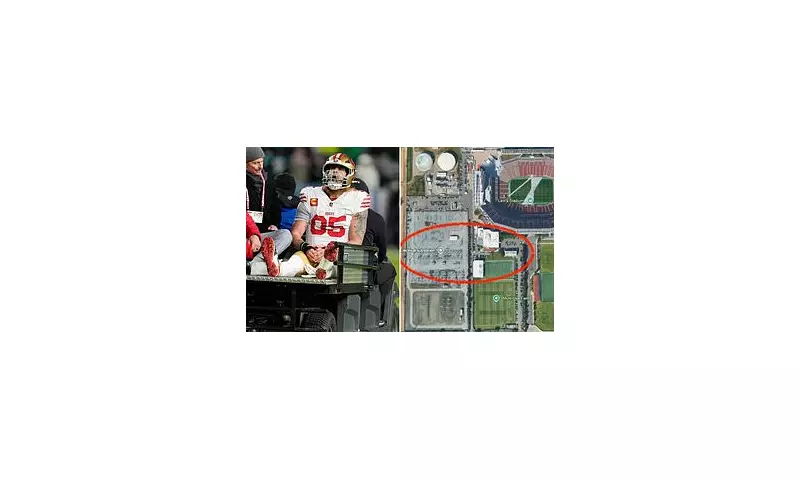
During the first half of the 49ers' 23-19 win against the reigning Super Bowl champions, George Kittle suffered a catastrophic Achilles tear. The 32-year-old was carted off the field after making just a five-yard catch, his first of the game. Head coach Kyle Shanahan later confirmed the injury, stating Kittle would require surgery.
This injury immediately rules him out for the remainder of the postseason and throws his availability for the entire 2026 campaign into serious doubt. In a poignant postscript to the incident, The Athletic's Dianna Russini reported that Kittle requested a bottle of Patron tequila be sent to the locker room, which was emptied within four hours.

The Electromagnetic Field Theory Goes Viral
Incredibly, Kittle's injury occurred just days after a viral conspiracy theory attempting to explain the 49ers' persistent injury problems gained massive traction online. The theory, propagated by researcher Peter Cowan, a self-described quantum biology practitioner, posits that the team's ailments are caused by chronic exposure to low-frequency electromagnetic fields.
Cowan claims these fields, emanating from a large electrical substation situated directly next to the 49ers' Levi's Stadium and practice facility, can 'degrade collagen, weaken tendons, and cause soft-tissue damage' even at levels deemed safe by regulators. He argues this subtle damage culminates in catastrophic ruptures during routine plays.
His social media thread, which has amassed nearly 10 million views, included Gaussmeter readings purporting to show elevated magnetic field levels near the team's facilities. Cowan cites the team's dismal injury record as evidence: the 49ers have been in the top five of the Adjusted Games Lost metric for 10 of the past 11 seasons.
He also notes that since moving to Levi's Stadium in 2014, the team has recorded seven full Achilles or patellar ruptures and over 40 major hamstring or calf tears, alongside recurring high-ankle injuries.
Substance or Speculation?
The financial impact of the 49ers' injury crisis is staggering. In the 2025 season alone, the team lost an estimated $95 million in salary cap value to players on injured lists. This sustained misfortune has even become a dark joke among players; retired guard Jon Feliciano admitted in October that squad members have quipped about the substation being the root of their woes.
However, it is crucial to note that there is no established scientific proof linking electromagnetic field exposure to increased NFL injury rates. The theory remains a speculative, though widely discussed, online phenomenon rather than a clinically proven cause.
Kittle now faces a gruelling rehabilitation process to return for the 2026 season, joining a growing list of NFL stars like Aaron Rodgers and Kirk Cousins who have recently suffered the same debilitating injury. Meanwhile, the 49ers must navigate the rest of their playoff run without a key offensive weapon, as the whispers about the substation next door grow louder.