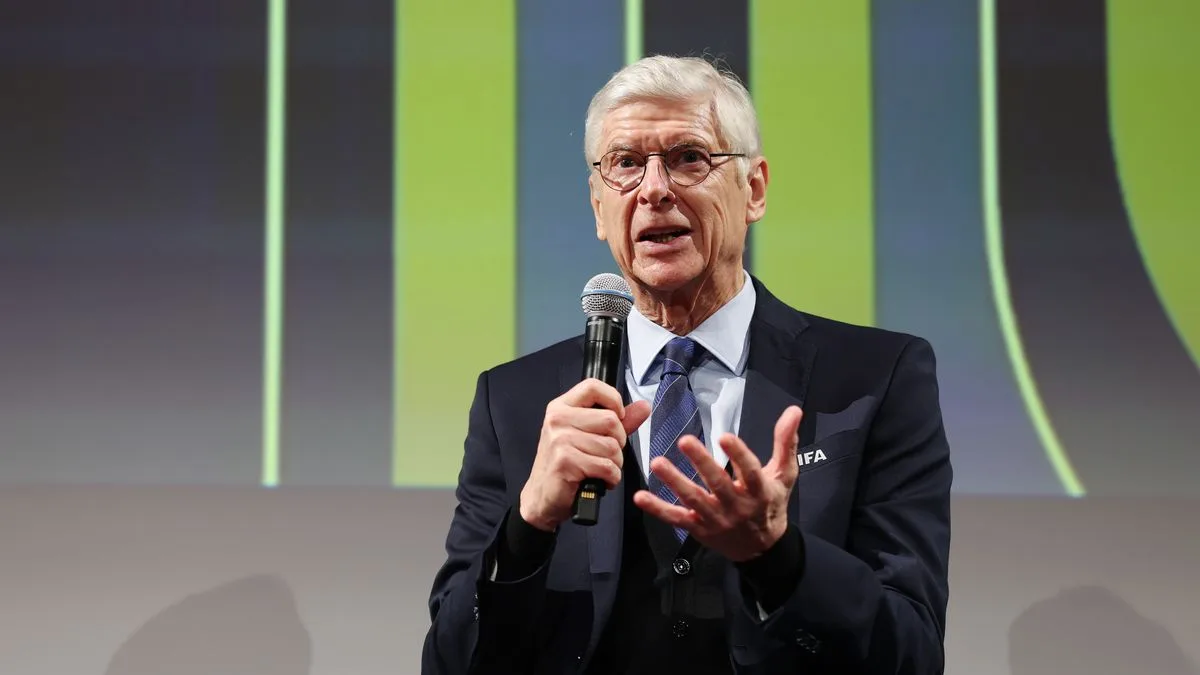
Arsene Wenger has publicly defended FIFA's decision to expand the upcoming World Cup to 48 teams, while admitting he initially harboured concerns about the format.
Wenger's defence of global expansion
The former Arsenal manager, now FIFA's Chief of Global Football Development, made his comments during a panel discussion ahead of the 2026 World Cup draw in the United States. The tournament, set to be hosted across the USA, Canada, and Mexico next summer, has faced criticism for its enlarged scale.
Wenger framed the move as a natural evolution for the competition as it approaches its centenary in 2030. "It is the natural evolution," he stated. "We started with 13 teams, then 16, until '82 was the first time with 24 teams, '98 the first time with 32 teams. So the evolution is always more teams, more people participating. Now I believe 48 teams is the right number."
He emphasised the goal of globalising football, pointing out that even with 48 teams, it represents less than a quarter of FIFA's 211 member associations. "That means one team out of four has a chance to participate," Wenger added, highlighting the inclusion of populous nations.
Criticism and concerns over the format
The expansion has not been without its detractors. Match of the Day presenter Mark Chapman recently launched a scathing critique of the plans and the resulting complex draw process. "This is going to be a complicated draw because of FIFA’s decision to expand this tournament," Chapman said, before bluntly adding, "Do you know what? I'll jump in. It's s***. It's a really s*** idea."
Chapman argued that the previous smaller group formats, like the famous 1982 group containing Argentina, Brazil, and Italy, created epic early-tournament clashes that the new 12-group structure may dilute.
From fear to confidence in competitive balance
In a revealing admission, Wenger confessed that he too had reservations about the competitive gap between nations in such a large tournament. "I was a little bit scared before that there may be a big difference between the teams," he said.
However, he claimed his fears were allayed by the recent FIFA Under-17 World Cup, which also featured 48 teams. "In fact we realised that the difference quality-wise between the different countries had been reduced," Wenger explained. He attributed this narrowing gap to FIFA's global education and development programmes, which have raised standards worldwide.
The 2026 World Cup draw takes place on Friday, 5 December 2025, and will set the stage for the largest finals in the competition's history. Wenger's comments serve as a firm rebuttal to critics, positioning the expansion as an inevitable and positive step for football's global future.