Lindsey Vonn's Olympic Crash Ignites Urgent Ski Safety Technology Debate
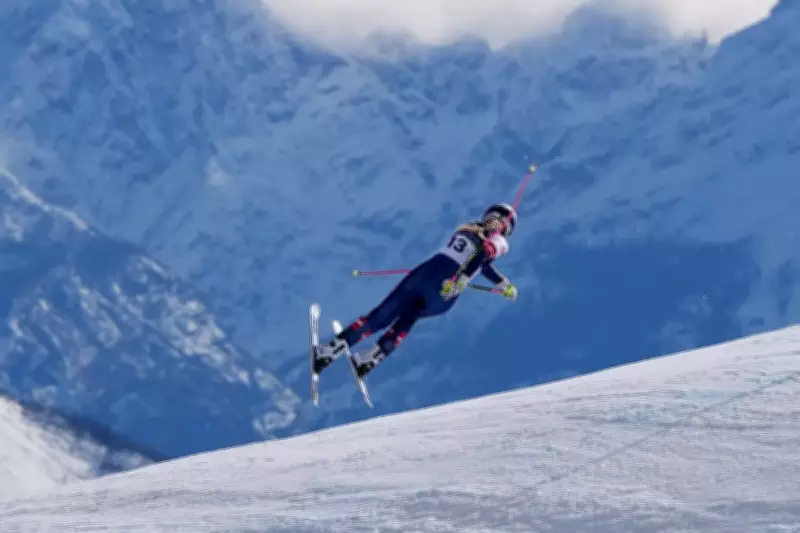
The horrific crash suffered by skiing legend Lindsey Vonn at the Milan Cortina Winter Olympics has forcefully reopened a long-stalled debate about fundamental safety technology in elite downhill racing. During her catastrophic "pinwheeling fall," Vonn's skis remained stubbornly attached to her boots as she slid to a stop, screaming in agony before being airlifted from the course. This incident, resulting in a complex tibia fracture requiring multiple surgeries, has cast a harsh spotlight on the critical—and arguably antiquated—role of ski bindings.
The Stubborn Problem of Ski Release
The fundamental design of ski bindings has remained largely unchanged for over fifty years. Once a skier steps in toe-first and locks the heel, significant pressure is required for the system to release the boot. While recreational skiers benefit from bindings calibrated for easier release to prevent leg injuries, elite racers like Vonn often have their bindings "cranked down" to maintain ski attachment at extreme speeds, deliberately making release less likely. Few insiders were surprised Vonn's skis stayed on, but the agonizing question persists: should they have?
Peter Gerdol, the FIS women’s race director, believes a smarter system could have prevented the severity of Vonn's injury. "Her skis would have definitely popped off," Gerdol stated, explaining how an attached ski can act as a dangerous lever, twisting the leg and causing catastrophic knee or bone damage. Vonn herself had torn her ACL just nine days prior in another crash where her skis also failed to detach.

The Push for "Smart" Binding Technology
The proposed solution is a "smart" binding system, leveraging advanced algorithms to automatically release skis the moment a racer loses control. This technology could draw upon the same algorithm that triggers the safety airbag system, which became mandatory for speed events this season after years of development.
"It’s still going to take time to develop," Gerdol noted, "but the idea is that the binding would be triggered by the same algorithm that prompts the air bag to inflate." The mechanism would involve the heel piece sliding back to detach the ski. Dainese and its D-Air Lab, which spent years developing the airbag algorithm initially for motorcycle racing, are now sharing this technology with major binding suppliers like Look, Tyrolia, Salomon, Atomic, and Marker to adapt it for ski release.
Complex Challenges and Financial Hurdles
However, the engineering challenge for ski release is far more complex than for airbag deployment. Marco Pastore, a Dainese representative, described it as a "very complicated project."
"If you release a binding, you’ve got to be absolutely sure you do it at the right moment," Pastore elaborated. "For the air bag you can look at the rotations and the entire body position. But with the bindings you’ve got to examine how the feet move, what the trajectory of the skis is—plus a series of other variables." Premature release could be equally dangerous, as elite skiers sometimes rely on their skis for recovery or braking.
Significant financial barriers also loom. Pastore highlighted that Dainese has not profited from the airbag system, stating plainly, "right now it’s costing us money." Sasha Rearick, former head coach of the U.S. men’s ski team, echoed that binding companies would need to "invest heavy" to develop the technology, incurring substantial costs that no single entity seems eager to bear alone.
Athlete Skepticism and Alternative Measures
The question of whether racers would embrace such technology remains open. Ski technicians deliberately set bindings at extreme pressures—Leo Mussi, technician for American downhillers, sets them at up to 200 kilograms, more than double a standard retail binding—effectively locking athletes in for performance.
Austrian racer Marco Schwarz, who suffered a serious knee injury with his skis attached, expressed caution: "The best way is to keep it simple. I don’t want to push too much into more technology." Meanwhile, officials are exploring interim solutions. Rainer Salzgeber, Head racing director, suggested simpler, quicker fixes like gate panels designed to give way upon impact.

A History of Slow Progress and Tragic Catalyst
Advancements in ski racing safety have historically been painstakingly slow. The airbag system was first tested in 2013 but only became mandatory this season, delayed by skiers' concerns over aerodynamics and comfort. The recent death of Italian skier Matteo Franzoso in preseason training tragically underscored the urgent need for action.
"Unfortunately, it always takes something serious to happen for people to say, ‘No. Now we need to do something,’" observed Pastore. This season also saw the mandatory introduction of cut-resistant undergarments across all events.
As the smart-binding project is estimated to be two to six years from implementation, broader safety measures are being considered. Rearick, now director of an international ski academy, proposed standardizing safer, slightly slower competition suits for all athletes. The path to enhanced safety in elite ski racing demands a delicate balance between cutting-edge technological innovation, practical and financial feasibility, and ultimately, athlete acceptance.