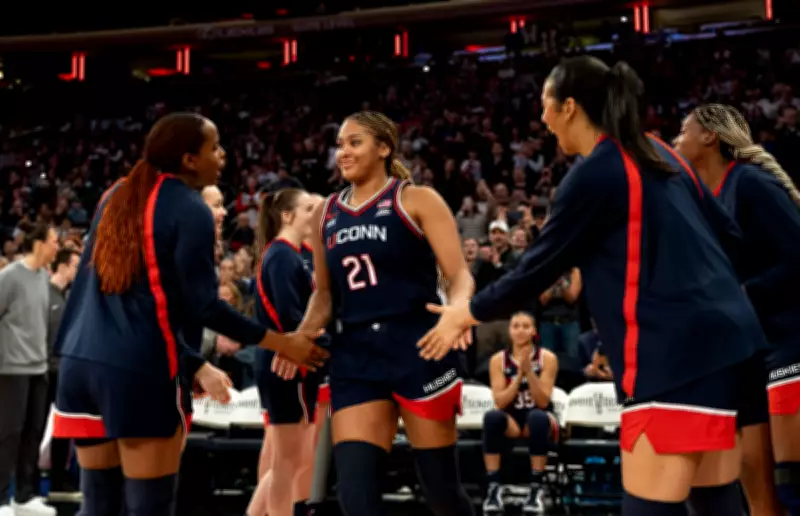
UConn Huskies' Unbeaten Streak Raises Questions About Women's Basketball Competitiveness
The UConn Huskies, led by standout player Sarah Strong, are currently pursuing an undefeated season, a feat that has become a familiar narrative in women's college basketball. This dominance, however, sparks a broader debate: are such unbeaten superteams detrimental to the sport's overall health and excitement?
The Underdog Dilemma in Modern Sports
Fans traditionally relish underdog victories, drawing inspiration from timeless tales like David versus Goliath. Yet, in reality, favorites often prevail with predictable ease, leaving little room for suspense. This dynamic poses a challenge: who, beyond loyal supporters, cheers for perennial champions? It's akin to rooting for the powerhouse team in classic sports films, which can diminish the thrill of competition.
Historical Dominance in Women's College Basketball
Since 2009, 12 Division I teams have completed undefeated regular seasons and conference tournaments, with six securing national championships. Notably, in 2014, two unbeaten teams—Connecticut and Notre Dame—clashed in the final. In Division III, 10 of the last 11 tournament winners were undefeated, and NYU boasts a 91-game winning streak, trailing only UConn's record 111-game streak from 2014 to 2017. This season, three unbeaten teams entered the Division III tournament, but Washington and Lee fell in the Elite Eight, setting up a Final Four showdown between NYU and Scranton.

In contrast, men's basketball has seen far fewer dominant teams. No Division I team has entered the NCAA Tournament unbeaten since Gonzaga in the 2020-21 season, affected by Covid-19. The last full-season undefeated team was Kentucky in 2014-15, which lost in the Final Four, and no team has achieved a perfect season since Indiana 50 years ago.
UConn's Unprecedented Success and Current Campaign
This year, UConn stands as the familiar unbeaten force in Division I, with an average margin of victory exceeding 38 points per game. The Huskies have entered the NCAA Tournament unbeaten nine times, winning the national championship on six occasions. However, there is hope for rivals: the last two times UConn reached this stage undefeated, they failed to clinch the title. Coach Geno Auriemma, in his 41st season, acknowledges the lack of tough tests this year, as key opponents like Tennessee, USC, and Notre Dame underperformed.
Only a handful of teams, such as UCLA, South Carolina, or Texas, pose a credible threat to UConn. This disparity underscores a lack of parity, with women's Division I champions consistently boasting better records than their men's counterparts over the past 28 seasons.
Broader Implications for the Sport
Since 2000, UConn has won 11 national championships, while only eight other teams have claimed titles. In men's basketball, 13 different teams have won in the same period, with eight champions in the last decade alone. This concentration of talent raises concerns about competitiveness. Comparatively, the NFL and NBA feature more varied champions due to parity mechanisms, suggesting that a sport's health correlates with broader competition.
Women's basketball is at a crossroads. The transfer portal could enhance parity by allowing players to seek better opportunities, but name, image, and likeness (NIL) deals may reinforce dominance at elite programs like UConn, which attract more media coverage and fan support.
Oddsmakers heavily favor UConn for this year's tournament, and their dominance is likely to persist. While no one can fault UConn for excellence, the sport's future depends on other programs elevating their game to foster a more competitive landscape.