The dismissal of Wilfried Nancy by Celtic after just 33 days has reignited conversations about the formidable challenges facing coaches from Major League Soccer when they make the leap to Europe. It's a path previously trodden, with stark lessons, by figures like Bob Bradley, whose own Premier League adventure was remarkably brief.
The Pioneering American: Bob Bradley's Swansea Experience
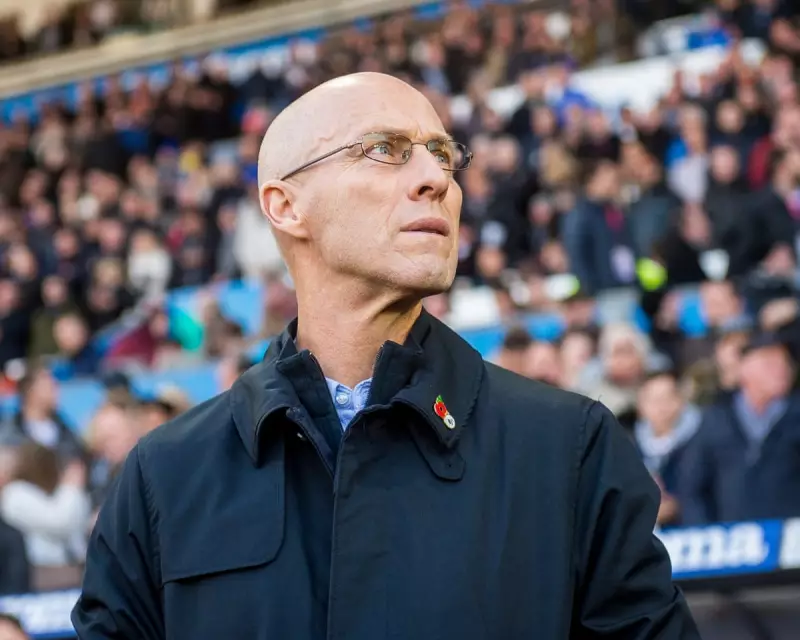
In 2016, Bob Bradley made history by becoming the first American to manage a Premier League club, taking charge of Swansea City. However, his tenure was destined not for longevity but for the record books as one of the shortest. Lasting a mere 85 days and 11 games, his appointment was a bold experiment that ended abruptly.
Bradley was no novice. His résumé included leading the United States at the 2010 FIFA World Cup, managing Egypt's national team, and successful club spells in MLS with Chicago Fire and in Europe with Norway's Stabæk and France's Le Havre. Yet, his American background was a constant, often unspoken, hurdle. "You always have to prove yourself," Bradley reflected from his New Jersey home. "And when you come from the outside, it is going to be even more the case."
The tolerance for poor results was minimal, and abuse from certain quarters of supporters, some of whom questioned the fundamental soccer knowledge of an American, was a harsh reality. Bradley's final days at the Swansea.com Stadium were a masterclass in football's fine margins. After a win over Sunderland, he felt progress was being made. Defeats to West Bromwich Albion and Middlesbrough shifted the atmosphere, and a loss to West Ham United sealed his fate. He was sacked the following day.
Proving Worth in the Crucible: Chris Armas at Manchester United
The struggle for acceptance is a common thread. Chris Armas, a former MLS midfielder and head coach, experienced it firsthand as an assistant at two of England's most intense clubs. After being contacted by Ralf Rangnick for a role at Manchester United in late 2021, Armas knew the scrutiny would be immediate and intense.
"They will form an opinion from that very first meeting," Armas said of facing a squad featuring Cristiano Ronaldo, Paul Pogba, and Bruno Fernandes. "Every time you’re in front of the group you’re on trial – and rightly so. If they’re going to follow you, then you have to show that you are worthy to lead them."
Armas later joined Jesse Marsch at Leeds United, another American navigating the Premier League's pressures. Marsch, who had been an assistant to Bradley with the US team and won MLS Coach of the Year, worked his way up through the Red Bull system in Austria and Germany before landing at Leeds. His dismissal in February 2023, with the club battling relegation, underscored the unforgiving nature of the business. Armas highlights the elevated stakes: "The stakes are higher with promotion and relegation. There is lots of money on the line and the intensity does seem higher."
A Transatlantic Divide in Culture and Margins
The challenges extend beyond the pitch and into the boardroom. Bradley recalls disruptive mid-season transfers at both Stabæk and Le Havre, where key players were sold without replacement—a stark contrast to the often more collaborative coach-front office dynamics in MLS. This commercial reality can swiftly undermine a manager's plans.
Furthermore, the margin for error in Europe is vanishingly small. Nancy's Celtic, for instance, often posted better expected goals (xG) figures than their opponents during his eight-game spell. Slightly more clinical finishing could have altered the narrative entirely, but results are the ultimate currency.
Bradley summarised the core dilemma for any new manager, especially one arriving mid-season: "You can come in and try to implement your system immediately… or figure out what is going to be the best for that group in the short term. Results in the short term are tricky, and it is results in the short term that give you the platform for what you want to do."
The post-Europe careers of these pioneers show a return to familiar grounds. Marsch now coaches Canada's national team, Bradley won an MLS Cup with LAFC, and Armas was recently appointed head coach of the Kansas City Current in the NWSL. Their experiences form a crucial blueprint. As Armas states, the respect must be earned: "We have to earn that respect. A few of us have to get that opportunity, go and do it, and do well." The door for MLS coaches in Europe's top flights remains ajar, but passing through it requires not just talent, but the resilience to survive an unparalleled trial by fire.