Tottenham Goalkeeper Antonin Kinsky Faces Champions League Debut Disaster
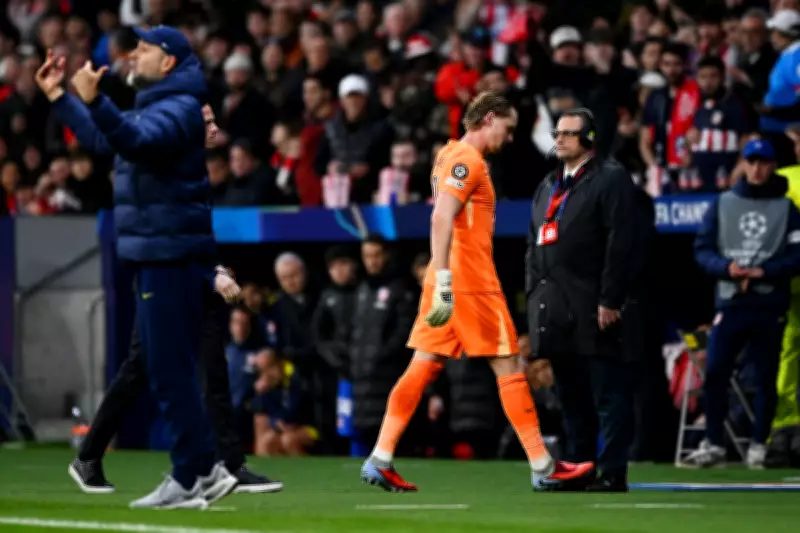
Tottenham Hotspur goalkeeper Antonin Kinsky experienced what sports psychologists describe as the ultimate "walk of shame" during his Champions League debut on Tuesday evening. The 22-year-old Czech international was substituted after just seventeen minutes of play during Tottenham's 5-2 defeat against Atletico Madrid in their last-16 first leg encounter.
Catastrophic Start in Riyadh Air Metropolitano
Selected by head coach Igor Tudor for the crucial European fixture, Kinsky's opportunity quickly turned into a nightmare scenario. The young goalkeeper's debut unraveled almost immediately when an early slip allowed Atletico Madrid's Marcos Llorente to score after just six minutes of play. The situation deteriorated further eight minutes later when Kinsky's scuffed clearance presented Julian Alvarez with an open net opportunity, resulting in Tottenham's second conceded goal within fourteen minutes.
The disastrous start prompted Tudor to make the unprecedented decision to substitute his goalkeeper after only seventeen minutes of Champions League football. Kinsky was replaced by first-choice goalkeeper Guglielmo Vicario and headed straight down the tunnel, accompanied by several Tottenham substitutes and goalkeeping coach Dean Brill.

Psychological Analysis of the Aftermath
Professor Andrew Lane, a leading sports psychologist from the University of Wolverhampton, has provided detailed insight into Kinsky's current mental state and potential recovery path. Lane acknowledges that the young goalkeeper "will not be in a very good place" psychologically following such a public humiliation, but suggests this painful experience could ultimately forge a stronger, more resilient player.
"Those types of mistakes, you will not be able to avoid them, but you have a real angry response at yourself," Lane explained to the Press Association. "(He will ask), 'Why did I fall over?', 'Why did I slip?', 'Why didn't I have the right boots on?' And you start introspecting – 'Could I have noticed this in the warm-up?'"
Concerns Over Emotional Support Systems
The psychologist expressed particular concern about what he perceived as a lack of immediate emotional support for Kinsky during his substitution. "He will be going through all of those questions and feel real intense negative emotions, then (after) he did it again and to be pulled off – that in itself is the great walk of shame," Lane stated. "(There was) not an immediate bit of emotional support from anybody as he comes off, which I think is quite surprising."
This assessment comes despite Manchester United legend Peter Schmeichel's dramatic declaration that Tudor had effectively "killed Kinsky's career" with the early substitution decision.
Pathway to Recovery and Future Prospects
Professor Lane offers a more optimistic perspective on Kinsky's future prospects, emphasizing that "He has got a future (going) forwards, absolutely." The psychologist contextualized the situation by noting that "The team have not been doing very well – and that is not all down to him. It is one game and everyone has a bad game, everyone makes mistakes."
The sports psychology expert concluded with crucial advice for Kinsky's recovery process, highlighting the educational value of difficult experiences. "Negative emotions are quite good points of learning. You can sit in that dressing room and you can just say, 'I am not going here again and I am going to make sure I am OK'," Lane explained. "You have got to that position (as a professional player) by doing lots of good things and it is about remembering those good things and looking to reproduce those again."
This psychological framework suggests that Kinsky's Champions League nightmare, while undoubtedly traumatic, could serve as a pivotal learning experience that strengthens his mental resilience and professional development moving forward.