Premier League Kick-Off Revolution Sparks Tactical Debate
The Premier League's ongoing set-piece renaissance took a dramatic new turn this week as Everton and Brentford unveiled startling rugby-style kick-off routines that left fans and pundits astonished. Both clubs implemented high-ball strategies during their respective matches against Burnley and Bournemouth, marking a significant departure from traditional football kick-off conventions.
Everton's Successful Execution
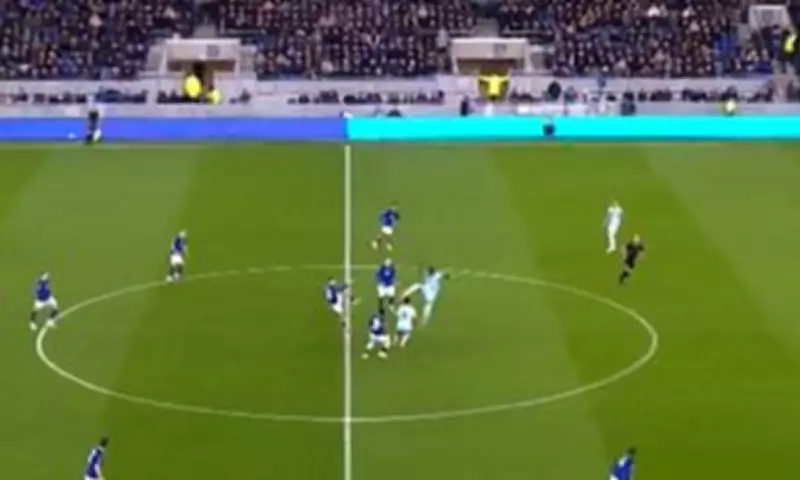
During Everton's encounter with Burnley, Kiernan Dewsbury-Hall received the initial pass before launching the ball high into the air toward Burnley's defensive line. Burnley defender Joe Worrall struggled to control the awkwardly dropping ball, managing only to head it directly to Everton's James O'Brien. This clever maneuver allowed Everton to advance nearly halfway into Burnley's territory within mere seconds of the match commencing.
Brentford's Failed Attempt
Brentford attempted a similar strategy during their away fixture against Bournemouth, but Mathias Jensen's ambitious hoof sailed directly into the waiting arms of goalkeeper Djordje Petrovic. The contrasting outcomes highlighted both the potential rewards and risks associated with these unconventional kick-off approaches.

Historical Context and Managerial Insight
The tactical innovation isn't entirely novel. Former Brentford manager Thomas Frank occasionally employed similar routines during his tenure, explaining in 2021: "Football is entertainment, and it's beneficial to introduce variety. Kick-off routines often become monotonous when teams repeat identical patterns. We're attempting something different, though defending against aerial deliveries presents considerable challenges."
This approach echoes strategies from football's past. Graham Taylor, the former England and Watford manager who championed direct football from the 1970s through the 2000s, utilized comparable kick-off tactics. More recently, Paris Saint-Germain successfully implemented similar routines during their Champions League triumph last season, inspiring English clubs to adopt these methods.
The Evolving Premier League Landscape
The Premier League has witnessed a gradual shift away from possession-focused kick-offs toward territory-oriented strategies. Many teams now deliberately kick toward corner flags or throw-in areas to pin opponents in confined spaces. This season's heightened focus on set-pieces has generated intense discussion about football's evolving nature.
Managerial Criticism and Philosophical Concerns
Liverpool manager Arne Slot recently voiced concerns about the Premier League's tactical direction: "Most Premier League matches I watch lack aesthetic appeal, though the league's competitiveness remains compelling. As a football purist who appreciates the game beyond results, I notice significant differences compared to three or four years ago."
Slot elaborated: "The emphasis on set-pieces appears particularly pronounced in England. When I watch Eredivisie matches, I observe goals disallowed and goalkeeper fouls penalized more consistently. Here, goalkeepers can be struck in the face without intervention. My football heart dislikes this trend—I reminisce about Barcelona's beautiful football from a decade ago."
The Liverpool manager concluded pragmatically: "We cannot alter this reality. Perhaps in five or ten years, trends will shift again. I wouldn't be surprised to find under-16 and Sunday League teams obsessively focusing on set-pieces—this represents our new football reality."
The Broader Implications
These developments reflect a broader philosophical tension within modern football. While tactical innovation drives competitive advantage, traditionalists lament the increasing emphasis on physicality and rehearsed routines at the expense of spontaneous creativity. As Premier League clubs continue exploring marginal gains through set-piece specialization, the debate about football's soul versus its competitive evolution intensifies with each unconventional kick-off.