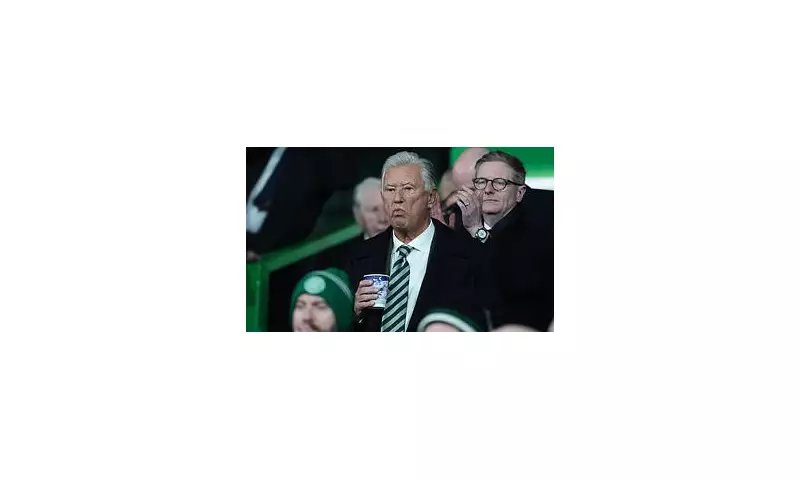
The image of Peter Lawwell, head in hands in the Hampden directors' box, captured a moment of profound despair. As St Mirren's third goal flew in last Sunday to seal a 3-1 Premier Sports Cup final defeat for Celtic, the look on the chairman's face spoke volumes. It was a look that foreshadowed the end of an era.
The Final Straw and a Sudden Departure
That defeat proved to be the catalyst. In a short statement to the London Stock Exchange on Tuesday afternoon, Celtic confirmed that Lawwell will step down as non-executive chairman on December 31. His decision brings to a close a monumental 22-year association with the club, split across two spells, the most recent of which saw him return as chairman in 2023 after a brief retirement.
In a separate statement on Celtic's website, Lawwell cited the abuse and threats made against himself and his family as key factors in his choice to walk away. This followed a period of intense acrimony, with fan protests, calls for the board's removal, and even an arson attack on his home during the toxic collapse of the 'ten-in-a-row' season in 2020-21.
A Legacy of Two Halves: Financial Empire vs. Footballing Stagnation
Assessing Lawwell's legacy is to examine a tale of two starkly different realities. On one hand, his tenure transformed Celtic's financial fortunes. He arrived as chief executive in 2003 with the club facing uncertainty, but leaves it as a domestic powerhouse with cash reserves nearing £80 million.
He oversaw a hugely successful player-trading model, bringing in fortunes for sales like Virgil van Dijk and Moussa Dembele. He redeveloped Celtic Park, built the Lennoxtown training facility, and became an influential figure in European football's corridors of power. Under his stewardship from 2003 to 2021, Celtic won 29 major trophies.
Yet, for many supporters, this legacy feels hollow. The perception of a complacent hierarchy and a stagnating club has been hard to shift. Football, as Lawwell's critics point out, is not merely about spreadsheets.
The Unfulfilled Ambition and Inevitable End
Celtic's repeated failures in Europe became a painful hallmark of the Lawwell era. Champions League qualifiers were routinely lost to clubs like Maribor, Malmo, AEK Athens, Cluj, Ferencvaros and, earlier this season, Kairat Almaty. The grand ambition seemed limited to domestic dominance in a diminished league.
His return as chairman reignited old resentments, with accusations of nepotism and a detached board. The botched summer transfer window and departure of Brendan Rodgers intensified the crisis, culminating in the farcical AGM where Lawwell told shareholders to 'behave'. Chief executive Michael Nicholson has since claimed three officials were physically assaulted after the Hampden defeat.
Peter Lawwell departs with a haul of silverware few can match, having built a financial empire and ensured Celtic's stability while rivals Rangers faced meltdown. But he also leaves a support bitterly divided and a club on the pitch that is, by his own admission, in a mess. His is a legacy of immense success and undeniable stability, yet forever shadowed by a profound and lingering sense of what might have been.